DESIGN FRAMEWORK
MĀTAURANGA MĀORI & BIODIVERSITY
Mātauranga Māori frames biodiversity design as a relational, place-based practice grounded in Indigenous knowledge systems, where cultural values, ecological understanding, and long-term stewardship are integrated to guide decisions and outcomes.
→ LEARN MORE
DESIGN FOR BIODIVERSITY PROCESS
A step-by-step design process that moves from understanding place and ecological context through to selecting and integrating targeted design interventions, then evaluating and adapting outcomes over time.
→ LEARN MORE
+
DESIGN FOR BIODIVERSITY
DESIGN PRINCIPLES
A comprehensive way to expand practice and understand design for biodiversity strategies, concepts, and techniques in architecture and urban design. Adapted and expanded from the Biodiversity Sensitive Urban Design (BSUD) framework (Garrard et al., 2018).
DESIGN FOR BIODIVERSITY
STRATEGY TYPES
Design for biodiversity strategies are specific design interventions that support ecological health, habitat quality, and species diversity across urban and built environments. Strategies can be explored in relation to different spatial scales, synergies with other design goals, common spatial challenges, and ways to support species needs, helping identify strategies for specific ecological and design contexts.
SCALE
Explore how biodiversity can be considered across interconnected spatial scales, from regions and catchments through to neighbourhoods, sites, buildings, and detail design. This section highlights the need for design responses that are both site specific and connected to wider ecological systems.
→ Read more
SYNERGIES
Explore how design for biodiversity can strengthen and integrate with wider social, cultural, climatic, and ecological goals. This section highlights the interconnected benefits that can emerge when ecological systems are integrated into urban and built environment design.
→ Read more
SPATIAL CHALLENGES
Explore common spatial design challenges in urban contexts, from constrained sites to fragmented habitats and altered water systems, and how biodiversity-focused design may work to address these challenges.
→ Read more
SPECIES
Explore the needs of different native species within urban and built environments, and how design can support habitat creation, ecological connectivity, and more biodiverse urban ecosystems.
→ Read more
DESIGN FOR BIODIVERSITY
DESIGN STRATEGIES
Find suitable strategies by selecting different combinations of tags related to site scales, species needs, common spatial challenges, and synergies with other design goals.
DESIGN FOR BIODIVERSITY
CASE STUDIES
How design for biodiversity can be applied in real urban contexts across Aotearoa, across a range of project types, scales, and conditions.
Aotearoa Design for Biodiversity Guide Acknowledgements
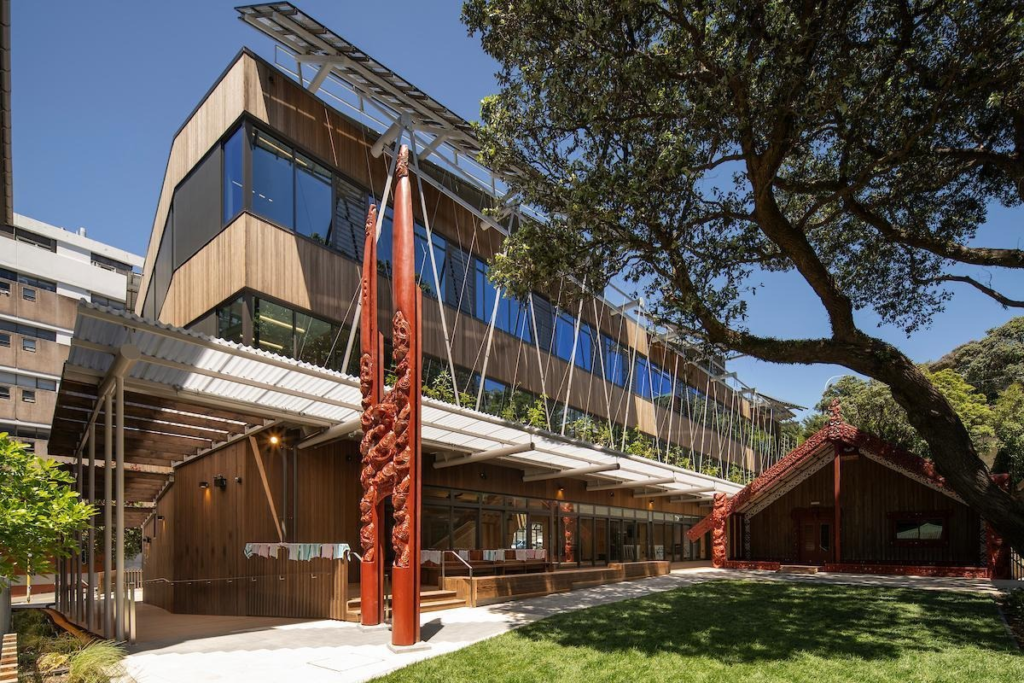
Professor Maibritt Pedersen Zari led the creation of this guide with assistance from Dr Maggie Mackinnon and input and review from the wider Aotearoa BiodiverCity team. Special thanks to Dr Erana Walker for leading the collaboration on the Matāuranga Māori content of the Guide. Thanks to Deon Dean, Abigail Tempe Spence, and Chris de Wattignar for research assistance, case study preparation, formatting, and photography. Thanks to Prof. Amanda Yates, Dr Rachel Nepia, Dr Kiri Wallace, Dr Craig Liddicoat, Prof. Gerry Closs, Dr Shawn Awatere, and an anonymous reviewer for their insights and advice on various sections of the guide. Thanks to Andy Spain for providing the image of Ngā Mokopuna, Wellington at the top of this page.
Aotearoa Design for Biodiversity Guid contact: Maibritt Pedersen Zari [email protected]
Cite as: Pedersen Zari, M., MacKinnon, M., Walker, E., Dean, D., Shanahan, D., van Heezik, Y., Theis, J., Woolley, C., and Freeman, C. (2026). Aotearoa Design for Biodiversity Guide. Aotearoa BiodiverCITY. www.aotearoabiodivercity.org