




Urban environments can and should support, and if possible, create thriving ecosystems [1]. This category centres on protecting remaining ecological systems, restoring what has been damaged, and creating new habitats within the built environment. This will ultimately enhance urban biodiversity, ecological function, and human wellbeing [2].
This section includes five interconnected sub-categories for embedding life-supporting systems into urban design:
- Protect existing habitats
- Restore degraded habitats
- Create new urban habitats
- Support habitat complexity & heterogeneity
- Design for habitat resilience
Design Implications
Alongside ecologists, designers are instrumental in enabling urban habitat outcomes [3]. This can be done by identifying and protecting ecological areas of significance, designing multifunctional spaces that meet both ecological and human needs, and incorporating layered, locally appropriate vegetation and habitat features into buildings and landscapes [4]. Effective design also considers habitat connectivity, seasonal variation, and opportunities for people to meaningfully engage with nature [1, 5].
Planning Implications
Planners shape the framework for habitat protection and creation by establishing strong protections for remnant ecosystems, enabling ecological regeneration through planning tools and incentives, and mandating habitat integration in new developments. The most effective planning frameworks will support both short and long-term ecological management, cross-boundary connectivity, and wil integrate biodiversity outcomes into wider urban strategies such as neighbourhood planning, transport and infrastructure development, and climate resilience. The strongest planning protections are those included in statutory plans and planning documents. Habitat protection and support policies should be a policy priority in these plans and documents as they provide stringent requirements to be followed in development planning from the individual site to the city level planning scale.
References
- Visintin, C., Garrard, G. E., Weisser, W. W., Baracco, M., Hobbs, R. J., & Bekessy, S. A. (2025). Designing cities for everyday nature. Conservation Biology, 39(1), e14328.
- Russo, A., & Holzer, K.A. (2021). Biodiverse cities: exploring multifunctional green infrastructure for ecosystem services and human well-being. In Urban services to ecosystems: green infrastructure benefits from the landscape to the urban scale (pp. 491-507). Cham: Springer International Publishing.
- Felson, A. J. (2012). The design process as a framework for collaboration between ecologists and designers. In Resilience in ecology and urban design: Linking theory and practice for sustainable cities (pp. 365-382). Dordrecht: Springer Netherlands.
- Lovell, S. T., & Johnston, D. M. (2009). Creating multifunctional landscapes: how can the field of ecology inform the design of the landscape?. Frontiers in Ecology and the Environment, 7(4), 212-220.
- Miller, J. R. (2005). Biodiversity conservation and the extinction of experience. Trends in ecology & evolution, 20(8), 430-434.
1. Protect existing habitats
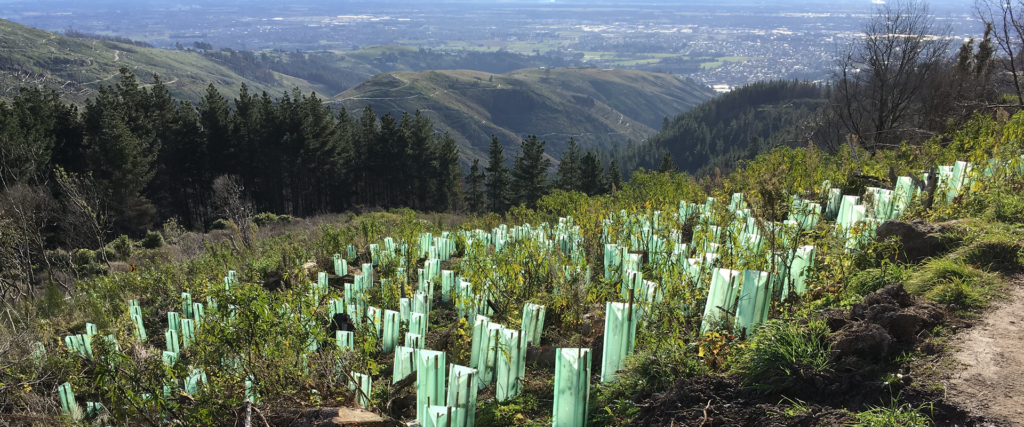
Retaining and protecting larger remnant habitats is the most effective way to support urban biodiversity [1], and a much simpler proposition than attempting to recreate lost habitats. Mature ecosystems often contain irreplaceable features such as large trees, complex soils, and long-established species relationships [2]. This sub-category focuses on safeguarding these areas through careful integration into urban development, buffering them from edge effects, and ensuring long-term ecological management.
References
- Beninde, J., Veith, M., & Hochkirch, A. (2015). Biodiversity in cities needs space: a meta‐analysis of factors determining intra‐urban biodiversity variation. Ecology letters, 18(6), 581-592.
- Ikin, K., Le Roux, D. S., Rayner, L., Villaseñor, N. R., Eyles, K., Gibbons, P., … & Lindenmayer, D. B. (2015). Key lessons for achieving biodiversity‐sensitive cities and towns. Ecological Management & Restoration, 16(3), 206-214.
2. Restore degraded habitats
Urbanisation leads to habitat degradation due to development practices such as vegetation clearing, soil compaction and removal, and pollution [1-3]. This sub-category includes strategies for restoring habitats. Although urban restoration efforts often result in ‘novel ecosystems’ (i.e. they aren’t replicas of what was there before) [4], designers can support ecological outcomes through staged and adaptive approaches that take species diversity and vegetation complexity, as well as disturbance, and landscape context into account.
References
- Perry, G., & Cox, R. D. (2024). Opportunities for biodiversity conservation via urban ecosystem regeneration. Diversity, 16(3), 131.
- Sabbion, P. (2023). The regeneration of watercourses within urbanized areas. Some considerations about relevance, strategies, and design tools. Ri-Vista. Research for landscape architecture, 21(1), 272-288.
- Ferreira, C., Kalantari, Z., Salvati, L., Canfora, L., Zambon, I., Walsh, R. (2019). Urban Areas. In P. Pereira (Ed.), Advances in chemical pollution, environmental management and protection, soil degradation, restoration and management in a global change context, Elsevier, pp. 207-249.
- Johnson, L. R., & Handel, S. N. (2016). Restoration treatments in urban park forests drive long‐term changes in vegetation trajectories. Ecological Applications, 26(3), 940-956.
3. Create new urban habitats
Urban environments offer numerous opportunities to introduce habitats into spaces not traditionally considered ‘ecological’ [1]. Designing new habitat features within, on, or around buildings, infrastructure, and urban green or blue space, such as green roofs, living walls, rain gardens, and biodiverse street plantings, can increase the amount and diversity of habitat in cities [2-4]. These interventions should be tailored to local species and conditions, and designed for both ecological performance and urban integration.
References
- Lundholm, J. T., & Richardson, P. J. (2010). MINI‐REVIEW: Habitat analogues for reconciliation ecology in urban and industrial environments. Journal of Applied Ecology, 47(5), 966-975.
- Filazzola, A., Shrestha, N., & MacIvor, J. S. (2019). The contribution of constructed green infrastructure to urban biodiversity: A synthesis and meta‐analysis. Journal of Applied Ecology, 56(9), 2131-2143.
- Ishimatsu, K., Ito, K., & Mitani, Y. (2012). Developing urban green spaces for biodiversity: a review. Landscape Eco. Manage, 17, 31-41.
- MacKinnon, M., Pedersen Zari, M., & Brown, D. K. (2021). Architecture as Habitat: Enhancing Urban Ecosystem Services Using Building Envelopes. Advances in Environmental and Engineering Research, 2(4), 1-20.
4. Support habitat complexity & heterogeneity
Ecologically valuable habitats are rarely uniform. This sub-category focuses on designing for vertical and horizontal layering, seasonal variety, and resource-rich environments that support a range of species. Complex habitats might include canopy trees, shrub layers, ground covers, water features, deadwood, and nesting spaces, all working together to offer shelter, food, and breeding opportunities. Supporting complexity may improve species richness, ecological resilience, and enable more nuanced and beneficial human–nature relationships [1, 2] .
References
- St. Pierre, J. I., & Kovalenko, K. E. (2014). Effect of habitat complexity attributes on species richness. Ecosphere, 5(2), 1-10.
- Visintin, C., Garrard, G. E., Weisser, W. W., Baracco, M., Hobbs, R. J., & Bekessy, S. A. (2025). Designing cities for everyday nature. Conservation Biology, 39(1), e14328.
5. Design for habitat resilience
Urban habitats must be able to persist and adapt over time, especially under conditions of climate change, disturbance, and urban pressure [1]. This sub-category includes strategies that ensure habitat is robust, climate-adapted, and maintainable in the long term. Key approaches include selecting resilient native species, designing for ecological succession, allowing for recovery from disturbance, and ensuring connectivity with broader ecological networks [2-5] . Long-term care, flexibility, and adaptive management are critical to this category.
References
- Russo, A., Esperon-Rodriguez, M., St-Denis, A., & Tjoelker, M. G. (2025). Native vs. Non-Native Plants: Public Preferences, Ecosystem Services, and Conservation Strategies for Climate-Resilient Urban Green Spaces. Land, 14(5), 954..
- Pedersen Zari, M., MacKinnon, M., Varshney, K., & Bakshi, N. (2022). Regenerative living cities and the urban climate–biodiversity–wellbeing nexus. Nature Climate Change, 12(7), 601-604.
- Hunter, M. (2011). Using ecological theory to guide urban planting design: An adaptation strategy for climate change. Landscape Journal, 30(2), 173-193.
- Kowarik, I. (2011). Novel urban ecosystems, biodiversity, and conservation. Environmental pollution, 159(8-9), 1974-1983.
- Wu, J., & Wu, T. (2012). Ecological resilience as a foundation for urban design and sustainability. In Resilience in ecology and urban design: Linking theory and practice for sustainable cities (pp. 211-229). Dordrecht: Springer Netherlands.
Acknowledgments
The design principles sections were written by Maibritt Pedersen Zari, with input and review from the rest of the Aotearoa BiodiverCITY team. These design principles were adapted and expanded from the Biodiversity Sensitive Urban Design (BSUD) framework (Garrard et al., 2018).
Cite as: Pedersen Zari, M. (2026). Design for biodiversity principles. In M. Pedersen Zari, M. MacKinnon, E. Walker, D. Dean, D. Shanahan, Y. van Heezik, J. Theis, C. Woolley, & C. Freeman, Aotearoa Design for Biodiversity Guide. Aotearoa BiodiverCITY. www.aotearoabiodivercity.org