
Definition
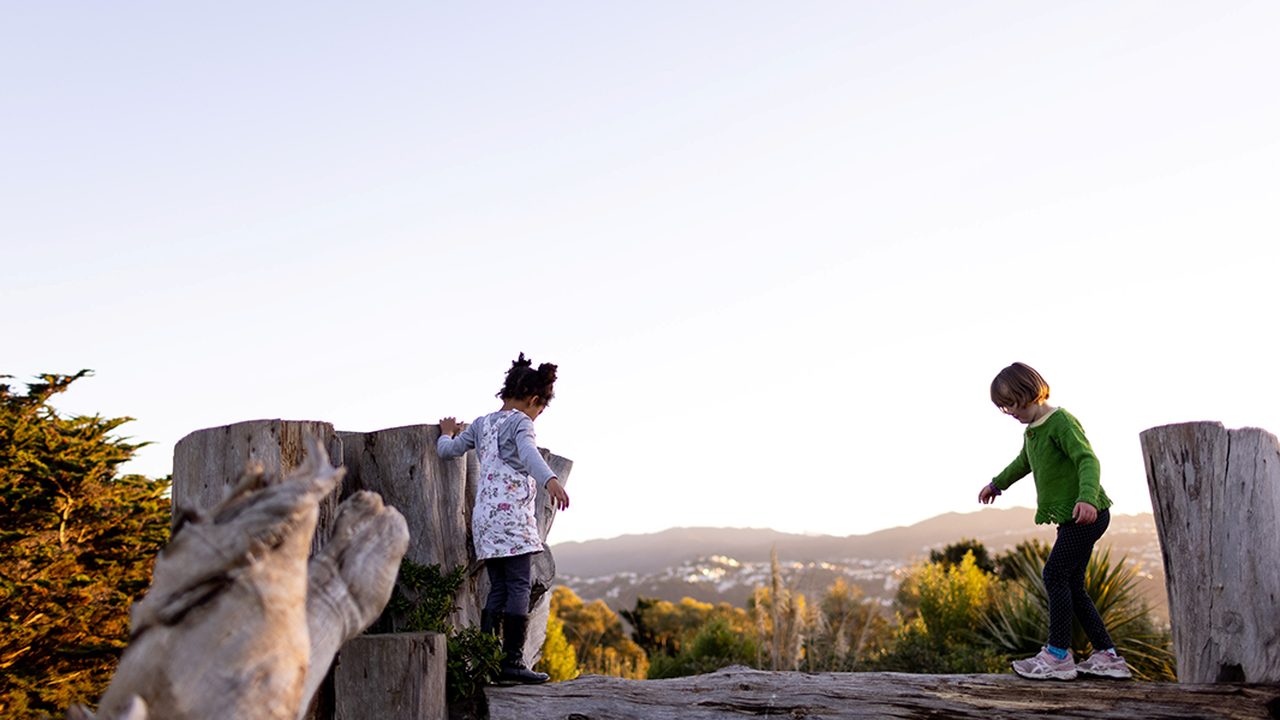
Natural playgrounds are outdoor play spaces that integrate native vegetation and natural materials to support unstructured play while creating small, functional habitats for urban biodiversity.
What this strategy does
Provides nature-based play opportunities for children while contributing to local habitat creation and ecological connectivity. Avoids highly standardised, synthetic play equipment with no ecological function.
Context
In Aotearoa New Zealand cities with limited Indigenous vegetation cover, embedding biodiversity within everyday social infrastructure such as playgrounds helps normalise human–nature interaction and incrementally improve urban ecological function.
Technical considerations
Design considerations
Vegetation structure
Use layered native planting (trees, shrubs, groundcover) to provide shelter, foraging, and nesting opportunities for urban wildlife.
Habitat features
Retain or introduce logs, rocks, dead wood, and informal water elements if appropriate, to create microhabitats for birds and invertebrates.
Species-specific elements
Incorporate features such as nesting boxes, perches, and basking surfaces where appropriate, aligned with local species requirements.
Implementation considerations
Landscape integration
Locate and design playgrounds to connect with nearby green spaces or ecological corridors where possible, reducing isolation effects for biodiversity.
User interface
Use subtle design cues and signage to encourage respectful interaction with vegetation and wildlife without over-formalising play.
Issues and barriers
Habitat fragmentation
Small, isolated playgrounds are unlikely to support viable populations of sensitive native species without wider landscape connectivity.
Predator pressure
Introduced mammalian predators significantly limit biodiversity outcomes in urban settings unless pest management is addressed at a broader scale.
Maintenance capacity
Naturalised play spaces require ongoing ecological maintenance and monitoring, which may exceed standard parks budgets.
Policy coordination
Responsibility for playground delivery, biodiversity outcomes, and pest control is often fragmented across agencies.
Synergies and opportunities
Human wellbeing
Psychological restoration
Play environments with higher perceived biodiversity and naturalness are associated with improved mood and reduced stress.
Physical activity
Natural playgrounds encourage diverse, self-directed physical play linked to improved childhood health outcomes.
Environmental education
Daily exposure to nature-rich play spaces supports children’s awareness and positive attitudes toward local biodiversity.
Financial case
Ecosystem services and performance value
Health cost avoidance
Access to biodiverse green spaces is associated with improved physical and mental health, reducing long-term public health costs.
Cost-effectiveness
Multi-functional investment
Integrating biodiversity into required recreational infrastructure delivers ecological and social benefits without additional land acquisition.
Monitoring and evaluation metrics
Core metric
Native species presence and activity (birds, invertebrates, plants) can be assessed through periodic ecological surveys.
Advanced metric
User engagement with natural features and changes in ecological literacy can be measured through observational studies or surveys.
Case studies
- Matairangi Nature Trail
- Te Māra Hūpara playground
Related design strategies
Additional resources or tools
Ministry of Education: Playgrounds on School Sites
https://www.education.govt.nz/education-professionals/schools-year-0-13/property/playgrounds-school-sites
Christchurch City Council – Play Inspiration in Natural Environments
https://ccc.govt.nz/rec-and-sport/activities/play/play-inspiration-in-natural-environments