
Definition
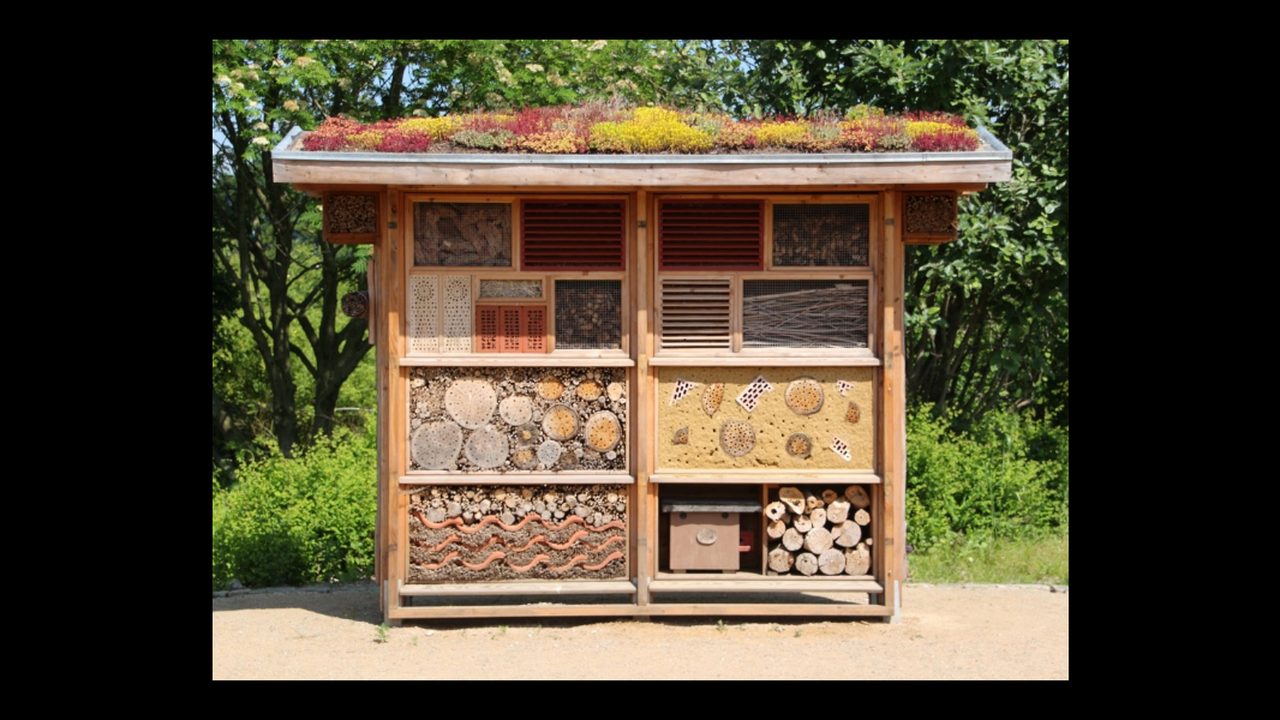
Artificial micro-habitats are purpose-designed structures integrated into buildings and infrastructure to provide small-scale shelter, refuge, or breeding opportunities for biodiversity where natural habitat is limited.
What this strategy does
This strategy introduces targeted habitat features, such as:
- Nesting boxes
- Invertebrate hotels
- Façade-integrated recessions, ledges, or niches
- Gabion walls (for lizards and insects)
- Biodiversity tiles (in seashore environments for aquatic life)
As well as any eco-engineered elements integrated into built environments to support specific species. These might include strategically using shaded and sunny sides of buildings to create habitat niches.
Designers should avoid generic or poorly located features that function as ecological traps or provide no long-term benefit.
Context (Aotearoa New Zealand)
In dense urban environments across Aotearoa New Zealand, vegetation cover and natural cavities are often scarce. Artificial micro-habitats are most relevant where biodiversity outcomes must be delivered through buildings and infrastructure rather than land-based restoration.
Technical considerations
Design considerations
Habitat diversity
Provide a variety of cavity sizes, surface textures, and habitat types, arranged with some variation in spacing and clustering (moderate patchiness).
Structural complexity
Incorporate surface roughness, recesses, and three-dimensional features to increase niche availability across taxa, particularly on façades and hard infrastructure.
Thermal and microclimatic performance
Design for variation in solar exposure, shading, and moisture to create thermal refuges and improve occupancy and breeding success for different species.
Connectivity and placement
Locate micro-habitats near vegetation or within dispersal distance of other habitat features to reduce fragmentation effects and improve functional use.
Construction considerations
Carefully design any building integrated habitat features so they do not compromise structural integrity of buildings over time.
Implementation considerations
Species fit
Match dimensions, materials, height, and orientation of habitat features to the requirements of locally occurring species.
Vegetation integration
Integrate native and structurally diverse planting around micro-habitats to improve habitat quality and support soil and invertebrate communities.
Maintenance requirements
Plan for regular inspection, cleaning, and replacement to prevent parasite build-up, overheating, and material degradation.
Issues and barriers
Ecological traps
Poorly designed or poorly maintained structures may attract species while reducing fitness or reproductive success.
Species bias
Artificial habitats may disproportionately benefit adaptable or invasive species if design and placement are not carefully targeted.
Ongoing management
Regular maintenance is required to sustain ecological function, which can be overlooked in long-term asset management.
Synergies and opportunities
Climate change – Provides thermal refuges that support species persistence under increasing temperature extremes.
Human wellbeing – Visible habitat features can enhance everyday connection to nature in urban settings.
Financial case
Ecosystem services and performance value
Urban resilience and amenity
Biodiversity-supportive design can contribute to microclimate regulation, amenity value, and long-term urban resilience.
Cost-effectiveness
Low-cost targeted intervention
Simple habitat structures are relatively low-cost interventions with high educational and engagement value when correctly designed.
Monitoring and evaluation metrics
Core metric
Occupancy and breeding success of target species can be assessed through routine inspections and monitoring.
Advanced metric
Species richness and composition can be assessed using multiple diversity metrics, supported by citizen science or remote sensing where appropriate.
Case studies
- Kākā Nest Box Programme
- Kete Tiles
Related design strategies
- Animal movement infrastructure
- Backyard gardens
- Building for biodiversity
- Building-integrated vegetation
- Community gardens
- Natural micro-habitats
- Natural playgrounds
- Maintenance for biodiversity
Additional resources or tools
Department of Conservation – Build a wētā motel
https://www.doc.govt.nz/get-involved/conservation-activities/build-a-weta-motel/
NUWAO – Nature-based Solutions Design Guide for Te Moananui Oceania
https://nuwao.org.nz/nbs-guide/
WSP – Urban Greening Tool
https://www.wsp.com/en-nz/services/urban-greening-tool