
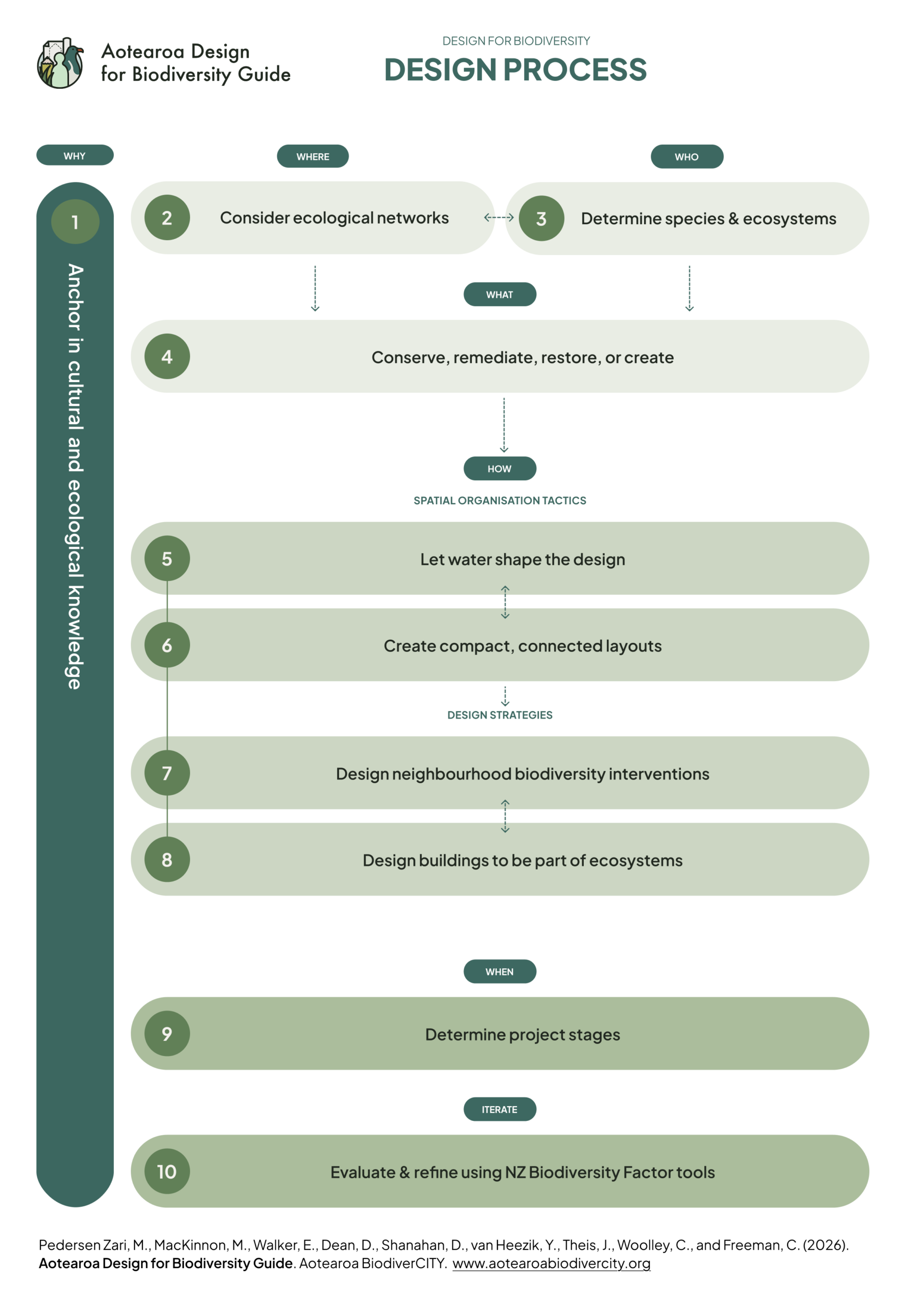
The Design for Biodiversity Process outlines an approach that integrates cultural and ecological knowledge into urban and architectural design. The process is not linear. Like any design process, it is iterative and relational. The steps inform each other through ongoing learning and refinement. Some steps sit alongside each other conceptually and may occur at the same time, depending on the project. All are informed by an understanding of human-nature relationships.
→ Download Design for Biodiversity – Design Process (PDF)
1. Anchor cultural & ecological knowledge
→ Mātauranga Māori and Design for Biodiversity
Determine project values, goals, and team
Step 1 defines why biodiversity matters in the context of a project. It asks people to prioritise interwoven cultural and ecological knowledges as the foundation for defining project kaupapa, values, and goals, which then guide how decisions are made. Step 1 establishes how biodiversity is to be understood in place and what this means for the direction of the project, including how it can contribute to positive, enduring outcomes for people, other species, and the ecosystems that support all life.
Determining biodiversity values
Step 1 asks a project team to consider the deeper purpose behind the work and the values that should guide it. This includes thinking about the kind of human-nature relationships the project aims to support and what responsibilities or opportunities arise from that position. Beginning with cultural and ecological foundations clarifies the underlying purpose of a project that can then act as a navigator for all design decisions. This step calls for mana whenua to guide or be involved as leaders in biodiversity-related projects from the beginning. Community co-design processes may be an important part of determining project values and goals [1].
Setting biodiversity goals
In the diagram, this step is shown as a vertical panel to indicate that it is not simply completed once at the beginning. Instead, it anchors the entire process, continues to influence each subsequent step, and provides a foundation that determines future decisions. It encourages people to embed place-based te ao Māori values, local ecological understandings, and reciprocal human–nature relationships throughout the design process, returning to these foundations as the work evolves. Drawing on concepts such as te taiao, whakapapa, maramataka, kaitiakitanga, tauutuutu, whakatipu rawa, and ecological mātauranga helps position biodiversity within a wider set of cultural, ecological, and relational commitments.
→ Learn more about Matauranga Māori in design for biodiversity This step also involves exploring basic design-related ecological concepts and processes so that designers can more effectively connect living systems thinking with built environment practice. [link to the MPZ Strategy types writing
Determining goals based on project values enables design teams to define clear aims. Deciding upon indicators and metrics at early stages is important because it allows the team to determine success later on [2]. Indicators may be quantitative (for example, how many species are present), qualitative (for example, whether residents report higher levels of wellbeing), or storytelling-based (for example, how biodiversity is reflected in community relationships through art, exhibitions, festivals, or educational resources etc.) [3, 4]. The New Zealand Biodiversity Factor tools (see Step 10) are a good source of potential quantitative indicators.
Forming a team
Project leaders will need to determine who can bring the right cultural, ecological, design, and technical expertise to the project team and advisory (kāhui) group, based on the project values and goals. Along with holders of place-based knowledge (typically mana whenua), ecologists with strong local knowledge of the site should be key members of any urban biodiversity-related project. Responsibility for biodiversity outcomes does not sit solely with designers or planners of course but is shared across project governance, ownership, implementation, and long-term stewardship arrangements.
2. Consider ecological networks
Analyse the site’s wider catchment to identify opportunities for ecological connectivity
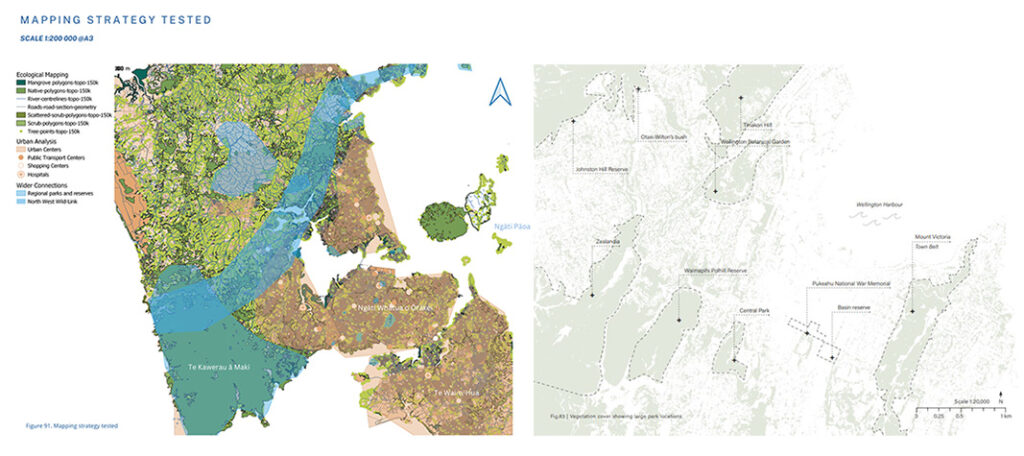
This step focuses on the spatial context; the ‘where’ of the project. A detailed catchment or wider urban-scale analysis enables a deeper understanding of how a particular site fits within the surrounding landscape. Understanding biodiversity requires knowledge of existing habitats such as vegetation, soils, and water systems, how these have changed over time, and how they may evolve in the future [5]. There are publicly available datasets that can help with this (such as local council GIS data, the New Zealand Land Cover Database, the LINZ Data Service and so on). An ecologist can contribute to this by analysing past and present ecological conditions on and around a site, assessing habitat quality and connectivity, and identifying how ecological networks could be strengthened over time [6]. This includes considering the effects of climate change, land use pressures, policy settings, and restoration initiatives on future urban biodiversity. Such analysis helps identify realistic opportunities for ecological reconnection, including continuous corridors such as riparian zones and vegetation belts, as well as stepping stone habitats that support species movement across fragmented urban landscapes [7].
It is also important to consider how planned developments, policy shifts, infrastructure projects (particularly roads), or community-led restoration efforts may change ecological connectivity over time. These factors can create new opportunities or introduce future constraints. By combining historic information, present-day observations, and future projections, a catchment-scale spatial and temporal understanding can sit alongside the species-focused work of Step 3, with both steps informing each other.
3. Determine ecosystems & species
Assess past, existing, and future site conditions to determine species, ecosystems, and ecological processes
This step identifies who the design should support, meaning specific native species, waterways, soils, or ecosystem types. Within Indigenous understandings of te taiao, people and the living world are intertwined as part of the same whole, and in many places, mana whenua are linked to various species, waters, and mountains through whakapapa [8].From this perspective, ecosystems and species are not just elements in a larger system, but entities that exist in relationship with people and place, meaning that focusing on the wellbeing of biodiversity also benefits people. Western science is catching up with this concept, and there is now compelling research showing the diversity of mental, physical and social health and wellbeing benefits people gain from nature [9].
In urban environments in a changing world, historical ecological conditions can typically not be reinstated. Instead, a forward-looking version of ecosystem restoration should be embraced with a focus on whole-system integrity [10]. Strategic design can create new opportunities for native biodiversity in cities. In this step, the focus is on determining the ecosystem types or species that might guide design priorities and decisions. This helps to inform how buildings and infrastructure could be designed to support habitat quality, quantity, and connectivity, as well as healthy vegetation, soils, and water systems.
To support urban biodiversity, built environment professionals should aim to preserve or create healthy urban ecosystems [11]. In cities, these systems are typically comprised of interacting green (vegetation), blue (waterways), and grey (buildings, streets and hard surfaces) infrastructure and hybrid systems where living and built elements are combined, such as green roofs, living walls, and constructed wetlands). Various ecosystem-level design approaches have been explored to help simplify ecological complexity for designers working towards this aim [12-14].
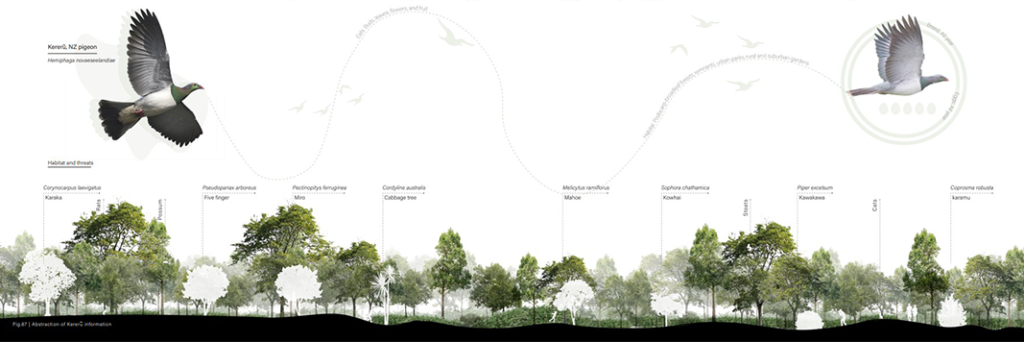
Ecosystems are highly complex and are made of many interrelated organisms. This means that ecologists rarely use single-species or single-ecosystem approaches when working towards ecological restoration goals. It is often impossible to ascertain with scientific certainty which species might be important, or to predict interactions between species. Identifying which sets of species or ecosystems a design should support can nevertheless help establish a clear ecological design brief and introduce place-based specificity to a project. In some settings, designers may adopt a focal species approach, selecting particular sets of species or ecosystem types as a starting point for design, so that built environment design decisions can be guided by ecological realities [15-17]. Approaches based on ‘keystone’, ‘indicator’, ‘umbrella’, or ‘taonga’ species [18-21] can help designers imagine how species and ecosystems might interact with urban green, blue, or grey infrastructure and buildings, and move through a continuous urban landscape, whether by flying, walking, or swimming.
Thinking about particular species or ecosystems may also support co-designing processes, community interaction, storytelling, and communication about a project [22, 23]. Designing with a particular taonga species in mind, for example, can help designers explore how culturally important species could be better supported within urban landscapes, built environments, and communities [21]. In some cases, species may also act as a ‘champion’ or ‘flagship’ species, helping people relate to ecological goals and making biodiversity objectives more visible and meaningful [24, 25].
4. Conserve, remediate, restore or create
Support all components of native ecosystems, including soils
This step focuses on what ecological foundations on the site need attention before design strategies can be effective. The ‘what’ refers to the underlying ecological conditions that support biodiversity, such as healthy soil and clean water, native vegetation, habitat structure, and basic ecological functions. These elements form the groundwork which spatial or architectural interventions are integrated into [26, 27]. Without understanding and strengthening these ecological foundations first, later design actions may be less successful or may even fail to support the connectivity potentials identified in step 2, and the target species and ecosystems identified in Step 3.
This step assesses the condition of these foundational systems and identifies priorities for protection, remediation, restoration, and habitat creation. Ecological district vegetation guidance may be useful here.
It recognises a hierarchy of ecological action that is particularly important in an Aotearoa context:
- Protect what exists
Remaining native vegetation, intact soils, remnant habitats, and patches of indigenous biodiversity are irreplaceable. Retaining these areas is nearly always the most effective ecological action for biodiversity. - Remediate ecological damage
Many sites, especially in urban settings, face issues such as contaminated soils, compaction, erosion, weed and pest species, or altered hydrology. Addressing these issues at the beginning of a design process helps stabilise ecological function and prepares the site for healthier ecosystems. - Restore native ecosystems where appropriate
This may involve re-establishing locally appropriate native vegetation communities, improving soil structure and nutrient cycling, and reintroducing habitat elements that support the species identified earlier in the process. Site-specific native species selection is essential. Council planting resources can provide a starting point for identifying locally adapted species, and where feasible, consulting a local ecologist can provide more detailed, project-specific recommendations. - Create new habitats where appropriate
This may involve establishing plants or ecosystems that may never have been at a site. An example would be creating a shrubby area or native grass patch in a place that historically supported a tall forest. These kinds of decisions require very careful consideration, ideally with the help of ecologists, but may present excellent opportunities to improve biodiversity, particularly in urban settings and in the design of hybrid built and grown habitats (e.g. green roofs and walls).
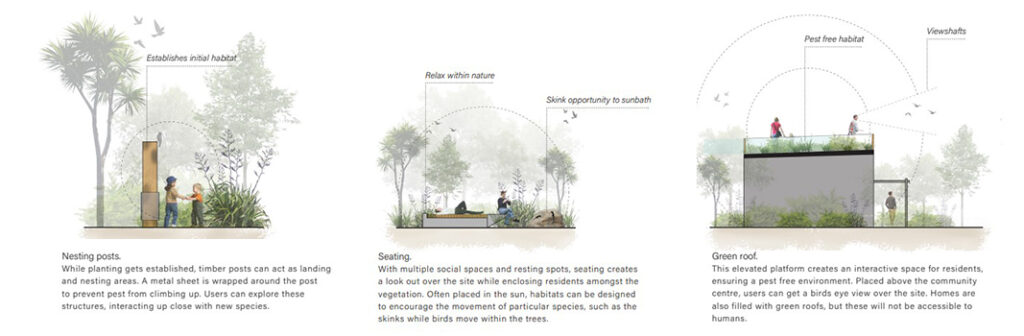
Steps 5 to 8 relate to how designers or planners can begin to integrate the built environment with biodiversity-focused projects. Steps 5 and 6 form a set of spatial organisation tactics that guide the overall spatial configuration of a project. These steps operate together and help determine the basic spatial structure within which more detailed design strategies and interventions can occur at smaller scales.
5. Let water shape the design
Design with site hydrology to situate green corridors and organise built infrastructure
Understanding site-scale water characteristics within a context of wider hydrological patterns and conditions, can be an important spatial design move when designing for biodiversity [28, 29]. This includes understanding past, present, and potential future water flows, opportunities for wetland, spring, or stream conservation or rehabilitation, and the role of above-ground stormwater flows. In a changing climate, where rainfall patterns and flood risk are expected to shift, early attention to hydrology can help shape landscapes that absorb and slow stormwater, manage localised flooding, and support both biodiversity and human resilience [28, 30].
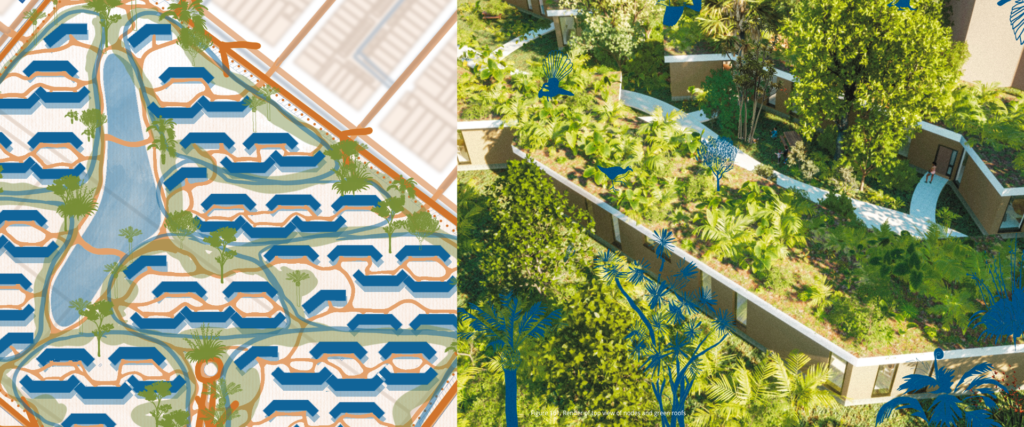
Hydrological systems can act as a connected spatial framework around which buildings, infrastructure, and movement networks can be organised. This may involve protecting existing waterways, remediating degraded systems, or creating new water habitats. Treating water systems as a primary organising structure helps ensure that spatial and architectural decisions work with ecological processes and provides a strong ecological backbone for projects to support the integration of biodiversity into the built environment.
Using water to shape the spatial layout of buildings and urban infrastructure supports biodiversity by preserving or creating opportunities for ecological linear corridors, wetlands, riparian planting, and varied habitat types where appropriate. Water-related environments often generate a wide range of biodiversity niches, especially in urban settings where water sources may be limited or channelled underground [31].
6. Create compact, connected layouts
Cluster development, reduce car-dominated and sealed surfaces, and reclaim land for habitat and public life
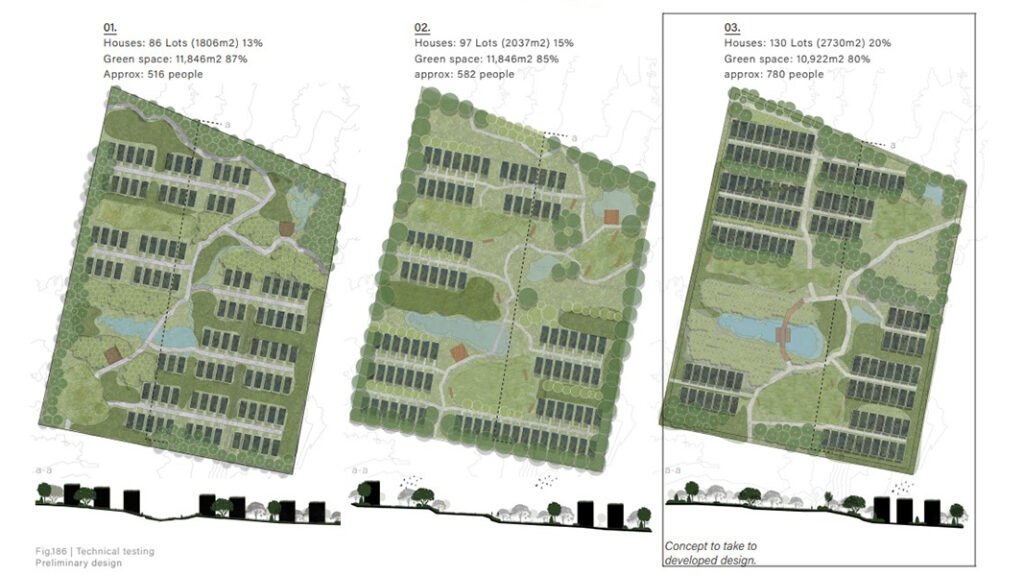
Step 6 asks designers to think about how to create more space for biodiversity and ecological functions while strengthening relationships between people and the living world. This step continues the spatial organisation tactics that establish the basic spatial structure of a project. It focuses on how buildings, movement networks, and other infrastructure might be arranged to support biodiversity and human connection to nature.
Clustering buildings into more compact arrangements may help to maximise green space and minimise habitat fragmentation [32]. Dispersed built development and extensive areas of roads and driveways, tend to break up habitat and reduce ecological continuity, increase impermeable surfaces, and increase noise and light pollution [33, 34]. Clustering buildings together, ideally informed by orientation for good solar, can free up larger and more connected areas for habitat networks, and community open space.
Vehicle-dominated environments can create barriers to species movement and are a source of injury and mortality for some species, particularly birds, lizards, and invertebrates [33]. Although there are ways to make street construction less ecologically damaging [35], minimising road footprints, reducing vehicle access where appropriate, and prioritising walking, cycling, and low-speed shared streets can reduce spatial fragmentation and ecological disruption.
When buildings, movement networks, and other infrastructure are arranged in this way, larger connected green and blue spaces can emerge across the site and wider urban landscape. Larger and connected green spaces are generally more resilient and better able to support species movement and long-term ecosystem function and can link into larger-scale ecological networks [36].
Reducing sealed surfaces through compact development and careful movement network design also improves urban environmental performance by increasing water infiltration and reducing runoff [37]. Reclaiming space from roads creates opportunities for wider planting zones, ecological corridors, pocket habitats, and public spaces that prioritise vegetation, shade, and comfortable pedestrian movement. Larger vegetation areas can also moderate temperatures, improve air quality, and if they are designed well and are maintained, can help create quieter and potentially safer neighbourhoods with access to nature [38-40].
7. Plan neighbourhood biodiversity
Integrate design for biodiversity strategies to achieve effective systems at the neighbourhood scale
→ Design strategies for biodiversity
→ Case studies
Steps 7 and 8 shift from spatial organisation to design strategies: specific design interventions that can support biodiversity in urban settings. In this guide, we provide almost forty such interventions, such as bioswales, planting corridors, and constructed wetlands along with brief case studies. These can be explored by scale, by the species they support, or by their synergies with other design priorities such as climate adaptation, food security, or water management.
Step 7 asks designers to draw on their wider site and catchment analysis (step 2) to determine which neighbourhood-scale interventions might be most appropriate before moving to site-specific actions. Thinking at this larger scale first helps ensure that individual projects contribute to coordinated ecological networks rather than isolated pockets of habitat. Opportunities will depend entirely on the project context, existing ecological networks, hydrological conditions, and the needs of the species identified earlier in the process.
Examples of neighbourhood-scale interventions include daylighting sections of culverted streams and coordinated planting corridors that span multiple properties or public spaces.
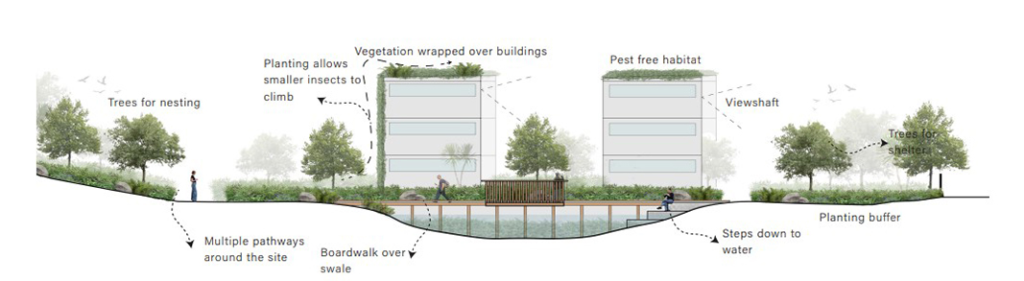
Once these neighbourhood-scale possibilities are understood, designers can then consider how the actual site can contribute to, support, or extend existing, planned, or suggested neighbourhood-scale interventions. This helps ensure that site-level decisions reinforce broader ecological patterns and strengthen biodiversity outcomes across the whole area [41].
8. Make buildings part of ecosystems
Use building-integrated vegetation and habitat features to support species and connect ecological networks
→ Design strategies for biodiversity
→ Case studies
Step 8 completes the how section of the process and relates to design strategies. These are specific ways to support biodiversity in urban settings. Step 8 focuses on designing buildings as active components of ecological networks. Building-integrated vegetation design, such as green roofs, green walls and façades, and vertical and interior planting structures, can, if designed and maintained well, allow buildings to function as living systems that support species and strengthen ecological connectivity. Roofs, façades, building edges, and transitional spaces can all provide habitat structure, food sources, refuge, and movement pathways for plants and wildlife [17, 42-45].
This dimension of biodiversity design is often overlooked, yet in densifying urban contexts, it is essential. Urban intensification typically reduces the amount of ground-level green space and increases sealed surfaces. Relying solely on the spaces around buildings is therefore not sufficient for supporting species. Buildings themselves need to contribute to ecological habitat and infrastructure where appropriate [45]. When well designed, they can offer vertical and three-dimensional habitat opportunities that potentially complement ground-level interventions and help link fragmented ecological networks [44].
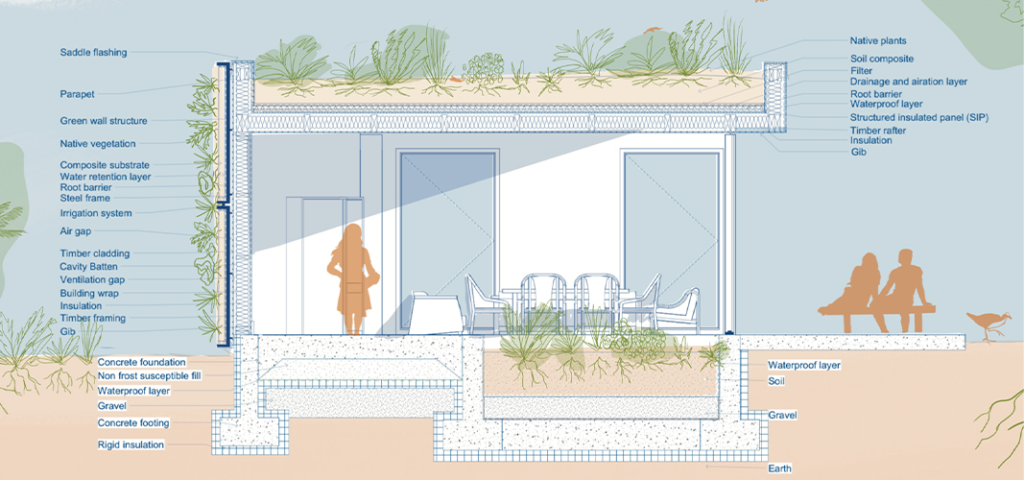
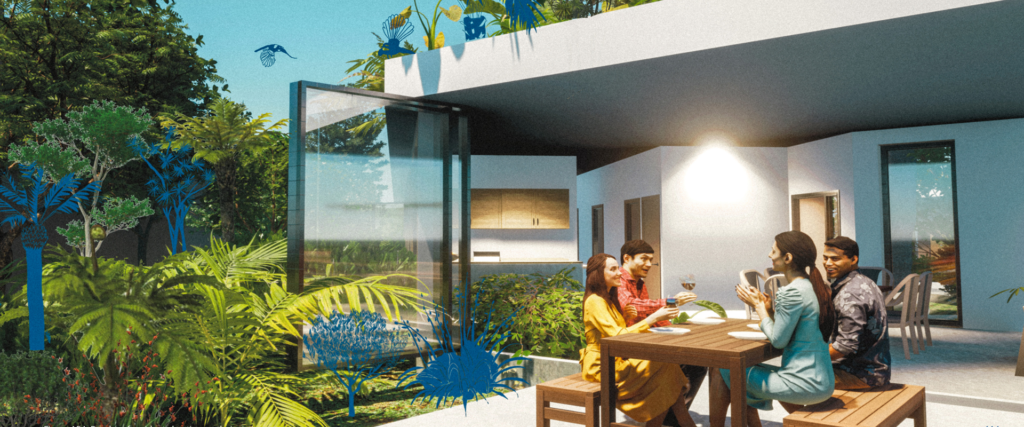
In many inner-city suburbs in Aotearoa, green space per person is diminishing as intensification increases [45]. Building-integrated vegetation can help maintain everyday contact with nature and provide restorative experiences for residents, aligning with the field of biophilic design research [47, 48]. These strategies can also improve microclimates, reduce heat absorption, improve air quality, support stormwater management, and contribute to more climate-resilient urban environments [49].
By treating buildings as part of ecosystems, Step 8 extends the reach of neighbourhood-scale biodiversity strategies and enables cities to support richer, more continuous, and more resilient ecological networks.
9. Determine project stages
Consider projects as long-term evolving ecological and social processes
This step focuses on the when of the process. It considers where a project sits in time and how the site will evolve through development, occupation, and ecological maturation.
Biodiversity projects do not end when buildings are finished or planting begins. Vegetation, soils, and hydrological systems require time to stabilise and recover function, and ecological processes such as succession and species colonisation unfold over long periods. These processes should be anticipated and planned from the outset [50]. Built form and public spaces also always evolve over time in response to ecological performance, community changes, and climate shifts.
Project staging can define short, medium, and long-term phases for both built and living systems. Timeframes may reflect vegetation establishment periods, anticipated climate shifts, or even a human generation. Early stages may prioritise earthworks, soil remediation, hydrological interventions, foundational planting, and construction. Later phases support canopy development, understorey diversification, and adaptive management as ecological conditions change. Staging supports resilience by allowing projects to adapt to uncertainty [51]. It creates space for monitoring and adjustment, recognising that ecosystems cannot be fully designed upfront. Long-term stewardship, maintenance, and governance should be integral parts of the project rather than afterthoughts. Uncertainty under changing climatic and urban conditions should be anticipated rather than treated as failure [52].
Helping communities understand that biodiversity outcomes take time may be an important way to assist in managing expectations, strengthening long-term stewardship, and building shared commitment to the site’s ecological future.
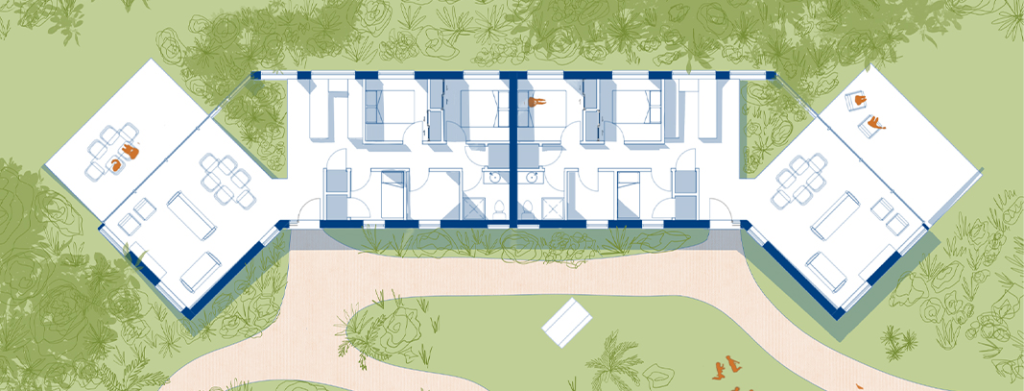
By planning for site evolution and clearly defining project stages over long time periods, this step helps ensure biodiversity, ecological function, and human use effectively evolve beyond initial construction, supporting landscapes that can adapt, mature, and improve over time.
10. Measure, evaluate, refine
Evaluate performance and use feedback to refine systems
Step 10 focuses on evaluating how well a project supports biodiversity, enabling refinement of the design if the project is still underway, or improvement of biodiversity outcomes in already built developments. Design teams may wish to use the New Zealand Biodiversity Factor (NZBF), a suite of tools created to assess the biodiversity value of urban developments.
The NZBF provides a consistent and transparent way to quantify biodiversity outcomes and enables end users to compare the projected biodiversity benefits of different design options [53]. The NZBF includes four interactive online tools tailored to different project types: NZBF-R (Residential), NZBF-CS (Commercial and Services), NZBF-B (Building) and NZBF-T (Transport). Each one of the tools assesses the permeable area extent, the quality of vegetated areas, and the presence of a comprehensive range of features that support biodiversity in projects that are built or are at developed design stages. The NZBF tools enable iterative design and support adaptive management as ecological and built environment conditions evolve. They can also help evaluate whether designs are likely to support biodiversity as intended, or whether they do so in completed developments. We recommend first using the NZBF on the pre-development site to obtain a baseline biodiversity score, against which the biodiversity scores of development plans can be compared.
Rather than acting as a final stage in the design for biodiversity process, the measure, evaluate, and refine step is a catalyst that encourages designers, planners, and communities to loop back into the earlier design for biodiversity steps to ensure that the developed design still fits with project values determined in Step 1. Evaluation supports continuous improvement and helps ensure that projects contribute positively to local ecosystems, aligning design ambitions with positive long-term biodiversity outcomes.
Keystone species are species that have a disproportionately strong influence on the structure and functioning of an ecosystem; they can also be species with particularly important cultural relevance. Supporting these species can stabilise ecological processes and benefit many other species connected through food webs or habitat relationships. Examples in Aotearoa vary widely depending on ecological district and may include species such as kākahi (freshwater mussels) in wetland systems, kererū in forest systems, or certain native invertebrates in coastal dunes.
Indicator species are species whose presence, absence, or condition provides insight into environmental health. They can reveal pollution, habitat fragmentation, changes in water quality, or shifts in ecosystem balance. Examples may include macroinvertebrates in streams, lizard populations in fragmented shrublands, or specific native plants sensitive to disturbance.
Umbrella species are species whose habitat needs overlap with those of many others. Designing for these species often protects a wide range of species that share the same environments or movement pathways. Examples may include pekapeka (native bats), which require connected vegetation and dark corridors, or larger forest birds that need extensive habitat.
Taonga species, culturally significant species, or cultural keystone species are species that hold importance within te ao Māori or within local communities. Supporting these species maintains relationships, practices, and responsibilities connected to place. Examples include species such as tuna, harakeke, or shellfish beds, depending on the mana whenua perspective.
- Henwood, W., & Henwood, R. (2011). Mana whenua kaitiakitanga in action: Restoring the mauri of Lake Ōmāpere. AlterNative: An International Journal of Indigenous Peoples, 7(3), 220-232.
- Prach, K., Durigan, G., Fennessy, S., Overbeck, G. E., Torezan, J. M., & Murphy, S. D. (2019). A primer on choosing goals and indicators to evaluate ecological restoration success. Restoration Ecology, 27(5), 917-923.
- Lyver, P. O. B., Timoti, P., Jones, C. J., Richardson, S. J., Tahi, B. L., & Greenhalgh, S. (2017). An indigenous community-based monitoring system for assessing forest health in New Zealand. Biodiversity and conservation, 26(13), 3183-3212.
- Corrigan, C., J. Robinson, C., Burgess, N. D., Kingston, N., & Hockings, M. (2018). Global review of social indicators used in protected area management evaluation. Conservation Letters, 11(2), e12397.
- Norton, B. A., Evans, K. L., & Warren, P. H. (2016). Urban biodiversity and landscape ecology: patterns, processes and planning. Current Landscape Ecology Reports, 1(4), 178-192.
- Hilty, J., Worboys, G. L., Keeley, A., Woodley, S., Lausche, B. J., Locke, H., … & Tabor, G. M. (2020). Guidelines for conserving connectivity through ecological networks and corridors.
- Lynch, A. J. (2019). Creating effective urban greenways and stepping-stones: four critical gaps in habitat connectivity planning research. Journal of Planning Literature, 34(2), 131-155.
- Harmsworth, G. R., & Awatere, S. (2013). Indigenous Māori knowledge and perspectives of ecosystems. Ecosystem services in New Zealand—conditions and trends. Manaaki Whenua Press, Lincoln, New Zealand, 274.
- Wurm, F., O’Connell, B., Berry, E., Vukicevic, T., & McLaughlin, K. (2025). Experiences in Nature and Benefits on Emerging Adult Wellbeing: A Qualitative Systematic Review. Emerging Adulthood, 13(5), 1308-1329.
- Gobster, P. H. (2010). Urban ecological restoration. Nature and culture, 5(3), 227-230.
- Müller, N., Ignatieva, M., Nilon, C. H., Werner, P., & Zipperer, W. C. (2013). Patterns and trends in urban biodiversity and landscape design. In Urbanization, biodiversity and ecosystem services: challenges and opportunities: a global assessment (pp. 123-174). Dordrecht: Springer Netherlands.
- Felson, A. J., & Pickett, S. T. (2005). Designed experiments: new approaches to studying urban ecosystems. Frontiers in Ecology and the Environment, 3(10), 549-556.
- Tomlinson, B., Nardi, B., Stokols, D., & Raturi, A. (2021, May). Ecosystems: representing ecosystem impacts in design. In Extended Abstracts of the 2021 CHI Conference on Human Factors in Computing Systems (pp. 1-10).
- Pedersen Zari, M. (2018). Regenerative urban design and ecosystem biomimicry. Routledge.
- Apfelbeck, B., Jakoby, C., Hanusch, M., Steffani, E. B., Hauck, T. E., & Weisser, W. W. (2019). A conceptual framework for choosing target species for wildlife-inclusive urban design. Sustainability, 11(24), 6972.
- Grobman, Y. J., Weisser, W., Shwartz, A., Ludwig, F., Kozlovsky, R., Ferdman, A., … & Windorfer, L. (2023). Architectural multispecies building design: concepts, challenges, and design process. Sustainability, 15(21), 15480.
- Filazzola, A., Shrestha, N., & MacIvor, J. S. (2019). The contribution of constructed green infrastructure to urban biodiversity: A synthesis and meta‐analysis. Journal of Applied Ecology, 56(9), 2131-2143.
- Payton, I. J., Fenner, M., & Lee, W. G. (2002). Keystone species: the concept and its relevance for conservation management in New Zealand. Science for Conservation. DOC Science Publishing. https://www.doc.govt.nz/Documents/science-and-technical/SFC203.pdf
- Monks, J. M., O’Donnell, C. F., & Wright, E. F. (2013). Selection of potential indicator species for measuring and reporting on trends in widespread native taxa in New Zealand. Publishing Team, Department of Conservation.
- Sattler, T., Pezzatti, G. B., Nobis, M. P., Obrist, M. K., Roth, T., & Moretti, M. (2014). Selection of multiple umbrella species for functional and taxonomic diversity to represent urban biodiversity. Conservation biology, 28(2), 414-426.
- Erueti, B., Tassell-Matamua, N., Pomare, P., Masters-Awatere, B., Dell, K., Te Rangi, M., & Lindsay, N. (2023). ‘Pūrākau o te Ngahere’: Indigenous Māori Interpretations, Expressions and Connection to Taonga Species and Biosecurity Issues. Knowledge Cultures, 11(1), 34-54.
- Davies, P. J., & Tippler, C. (2024). A framework for using community determined iconic species to advance socio-ecology connections and promote nature-based solutions. Nature-Based Solutions, 6, 100160.
- Haldrup, M., Samson, K., & Laurien, T. (2022, August). Designing for multispecies commons: Ecologies and collaborations in participatory design. In Proceedings of the Participatory Design Conference 2022-Volume 2 (pp. 14-19).
- Home, R., Keller, C., Nagel, P., Bauer, N., & Hunziker, M. (2009). Selection criteria for flagship species by conservation organizations. Environmental Conservation, 36(2), 139-148.
- Jarić, I., Normande, I. C., Arbieu, U., Courchamp, F., Crowley, S. L., Jeschke, J. M., … & Ladle, R. J. (2024). Flagship individuals in biodiversity conservation. Frontiers in Ecology and the Environment, 22(1), e2599.
- Farinha-Marques, P., Lameiras, J. M., Fernandes, C., Silva, S., & Guilherme, F. (2011). Urban biodiversity: a review of current concepts and contributions to multidisciplinary approaches. Innovation: The European Journal of Social Science Research, 24(3), 247-271.
- Perrelet, K., Moretti, M., Dietzel, A., Altermatt, F., & Cook, L. M. (2024). Engineering blue-green infrastructure for and with biodiversity in cities. Urban Sustainability, 4(1), 27.
- Pille, L., & Säume, I. (2021). The water-sensitive city meets biodiversity: habitat services of rain water management measures in highly urbanized landscapes. Ecology & Society, 26(2).
- Du Preez, R. (2024). Medium-Density Housing Designed to Conserve and Regenerate Native Biodiversity in Auckland, Aotearoa New Zealand. Master of Architecture (professional) Thesis. Auckland University of Technology. https://openrepository.aut.ac.nz/items/0df0e6e4-c755-48ef-a5ba-3969afac6bc6
- Meng, X. (2022). Understanding the effects of site-scale water-sensitive urban design (WSUD) in the urban water cycle: a review. Blue-Green Systems, 4(1), 45-57.
- Donati, G. F., Bolliger, J., Psomas, A., Maurer, M., & Bach, P. M. (2022). Reconciling cities with nature: Identifying local Blue-Green Infrastructure interventions for regional biodiversity enhancement. Journal of Environmental Management, 316, 115254.
- Sushinsky, J. R., Rhodes, J. R., Possingham, H. P., Gill, T. K., & Fuller, R. A. (2013). How should we grow cities to minimize their biodiversity impacts?. Global change biology, 19(2), 401-410.
- Underhill, J. E., & Angold, P. G. (1999). Effects of roads on wildlife in an intensively modified landscape. Environmental Reviews, 8(1), 21-39.
- Newport, J., Shorthouse, D. J., & Manning, A. D. (2014). The effects of light and noise from urban development on biodiversity: Implications for protected areas in Australia. Ecological Management & Restoration, 15(3), 204-214.
- Ferguson, B. K. (2012). Street construction for environmental processes. WIT Transactions on Ecology and the Environment, 155, 481-488.
- Beninde, J., Veith, M., & Hochkirch, A. (2015). Biodiversity in cities needs space: a meta‐analysis of factors determining intra‐urban biodiversity variation. Ecology letters, 18(6), 581-592.
- Pistocchi, A. (2017). Hydrological impact of soil sealing and urban land take. In Urban expansion, land cover and soil ecosystem services (pp. 157-168). Routledge.
- Xu, D. (2026). The Greenest Air Filters: Impact of Urban Green Spaces on Air Quality. Scholarly Review. Spring.
- Irvine, K. N., Devine-Wright, P., Payne, S. R., Fuller, R. A., Painter, B., & Gaston, K. J. (2009). Green space, soundscape and urban sustainability: an interdisciplinary, empirical study. Local environment, 14(2), 155-172.
- Kuo, F. E., & Sullivan, W. C. (2001). Environment and crime in the inner city: Does vegetation reduce crime?. Environment and behavior, 33(3), 343-367.
- Kirk, H., Garrard, G. E., Croeser, T., Backstrom, A., Berthon, K., Furlong, C., … & Bekessy, S. A. (2021). Building biodiversity into the urban fabric: A case study in applying Biodiversity Sensitive Urban Design (BSUD). Urban Forestry & Urban Greening, 62, 127176.
- Mayrand, F., & Clergeau, P. (2018). Green roofs and green walls for biodiversity conservation: a contribution to urban connectivity?. Sustainability, 10(4), 985.
- Van de Riet, K., & Graiz, E. (2024). Predictive Model for Optimal Growth and Benefits of Exterior Building-Integrated Vegetation. Technology| Architecture+ Design, 8(1), 106-114.
- MacKinnon, M., Pedersen Zari, M., & Brown, D. K. (2021). Architecture as Habitat: Enhancing Urban Ecosystem Services Using Building Envelopes. Advances in Environmental and Engineering Research, 2(4), 1-20.
- MacKinnon, M., Pedersen Zari, M., & Brown, D. K. (2023). Improving urban habitat connectivity for native birds: Using least-cost path analyses to design urban green infrastructure networks. Land, 12(7), 1456.
- Blaschke, P., Pedersen Zari, M., Chapman, R., Randal, E., Perry, M., Howden-Chapman, P., & Gyde, E. (2024). Multiple roles of green space in the resilience, sustainability and equity of Aotearoa New Zealand’s cities. Land, 13(7), 1022.
- Beatley, T., & Newman, P. (2013). Biophilic cities are sustainable, resilient cities. Sustainability, 5(8), 3328-3345.
- Pedersen Zari, M. (2023). Understanding and designing nature experiences in cities: a framework for biophilic urbanism. Cities & Health, 7(2), 201-212.
- Kraus, M., Senitkova, I. J., Zak, J., & Kankovsky, A. (2025). Integration of Green Roofs and Facades as a Climate Change Adaptation Strategy: Environmental, Energy, and Microclimatic Aspects. Inzynieria Mineralna-Journal of the Polish Mineral Engineering Society, 2.
- Lepczyk, C. A., Aronson, M. F., Evans, K. L., Goddard, M. A., Lerman, S. B., & MacIvor, J. S. (2017). Biodiversity in the city: fundamental questions for understanding the ecology of urban green spaces for biodiversity conservation. BioScience, 67(9), 799-807.
- Feliciotti, A., Romice, O., & Porta, S. (2016). Design for change: five proxies for resilience in the urban form. Open House International, 41(4), 23-30.
- Sexton, A. N., & Lawhorn, K. A. (2025). Best practices for designing resilient urban ecosystems through native species restoration. Urban Forestry & Urban Greening, 104, 128657.
- Theis, J., Woolley, C. K., Seddon, P. J., Shanahan, D. F., Freeman, C., Pedersen Zari, M., & van Heezik, Y. (2025). The New Zealand Biodiversity Factor—Residential (NZBF-R): A Tool to Rapidly Score the Relative Biodiversity Value of Urban Residential Developments. Land, 14(3), 526.
Acknowledgments
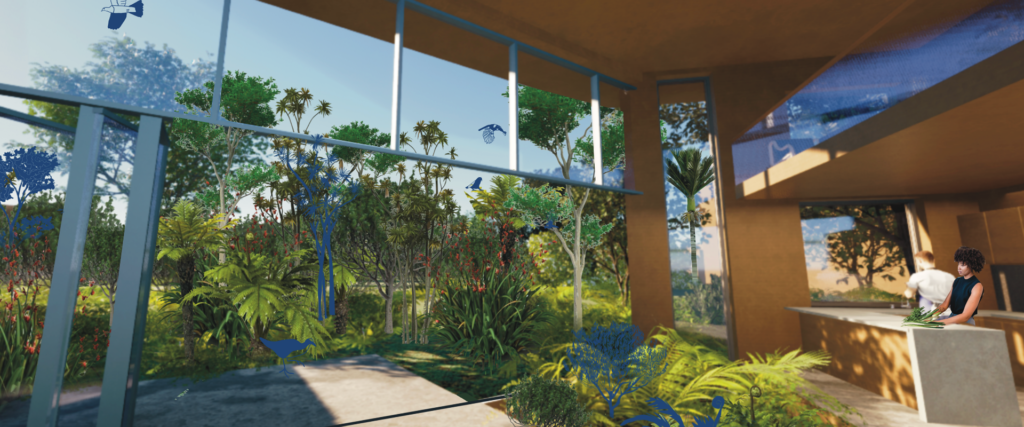
This section was written by Maibritt Pedersen Zari. We gratefully acknowledge the investigations into processes for designing for biodiversity in Aotearoa developed through the thesis work of Katie Jenkins and Robyn du Preez, which helped inform and illustrate this section
Cite as: Pedersen Zari, M. (2026). Design for biodiversity process. In M. Pedersen Zari, M. MacKinnon, E. Walker, D. Dean, D. Shanahan, Y. van Heezik, J. Theis, C. Woolley, & C. Freeman, Aotearoa Design for Biodiversity Guide. Aotearoa BiodiverCITY. www.aotearoabiodivercity.org