Māori have a holistic and interconnected relationship with te ao tūroa, also known as te taiao in some contemporary settings, which embeds people as part of a wider living system rather than separate from it [1, 2]. Within te ao Māori, humans share whakapapa with land, waterways, mountains, and other species, shaping responsibility, relationships within the living world, and Māori ways of knowing [3, 4]. Whakapapa ties both the physical and spiritual realms together, solidifying accountability to past, present and future kin [3, 5].
People are therefore embedded within extended networks of kinship that link social, cultural, and ecological systems. This relationship is entrenched in oral traditions as seen through the term tangata whenua, literally meaning ‘people of the land’ [6]. These perspectives shape how biodiversity is understood, valued, and cared for, and underpin outcomes that are enduring, place-based, and intergenerational.
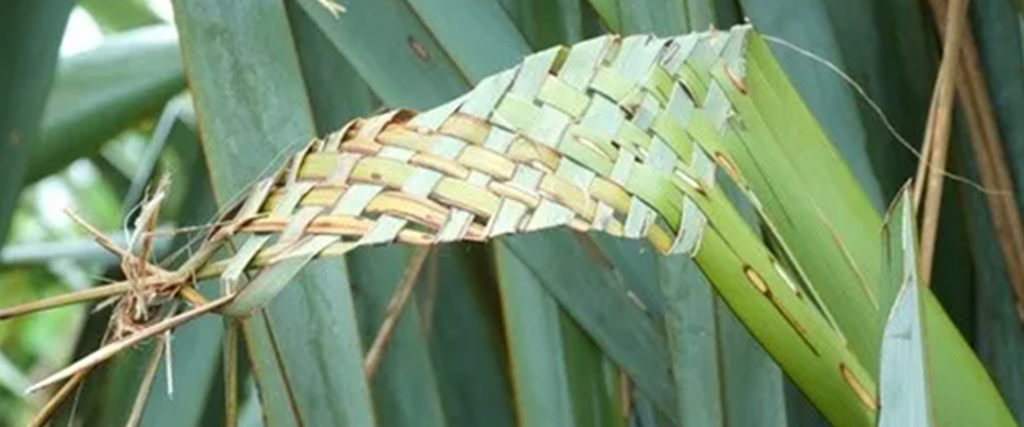
Harakeke. Photo by Jon Sullivan.
Mātauranga Māori has developed from this human-nature relationship through centuries of place-based occupation in Aotearoa, and continues to evolve [7, 8, 9]. This knowledge system weaves observation, practice, values, and lived experience, forming a rigorous and adaptive way of understanding biodiversity, ecological systems, and human relationships [10]. Given the place-based nature of mātauranga Māori, its expression will align to the local environment in which it is fostered, producing unique insights for the area [11]. Lessons learnt from the past contribute to the mātauranga continuum, intertwining past and present knowledge together. Today, some concepts have altered to suit the modern world in which we exist, as well some mātauranga may be revived, adapted or left to reside in the past [11].
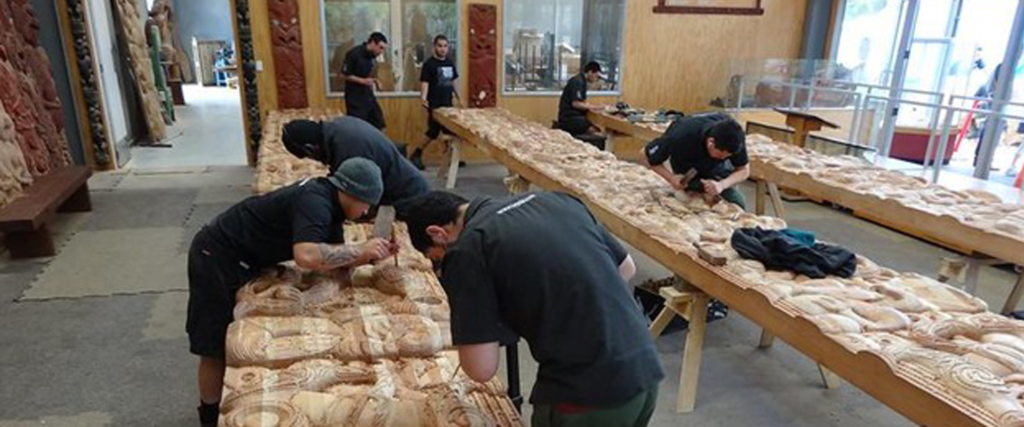
Te Wānanga Whakairo Rākau o Aotearoa, Rotorua. Photo by Denisbin, 2013.
Mātauranga Māori is critical to design cities for biodiversity in Aotearoa that situate biodiversity within interconnected cultural, ecological, and social systems [7]. Many contemporary built environment approaches often frame ecological systems primarily in terms of human benefit or technical performance. A te ao Māori perspective is relational and grounded in place, recognising an interrelated system encompassing land, water, climate, people, and other species [12].
Establishing a strong tūāpapa shaped through mātauranga Māori is essential for biodiversity focused projects. This foundation grounds project visions, project goals, and design processes in local mātauranga Māori and aligns project intentions with the values and aspirations of local māori communities. Concepts such as whakapapa encourage designers to consider how projects contribute to ecological connectivity, continuity, and responsibility across generations, supporting hua that extend beyond the life of individual projects.
Mātauranga driven case studies
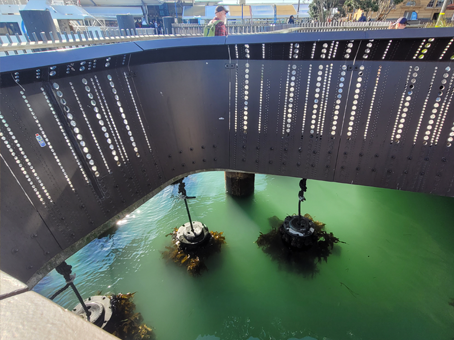
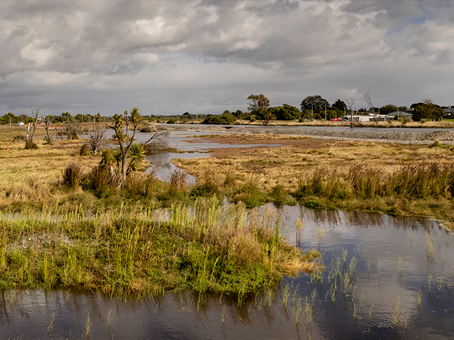
We have provided a series of architecture and landscape architecture case studies from across Aotearoa that demonstrate projects grounded in mātauranga Māori, driven by or shaped through genuine engagement with mana whenua for stronger biodiversity outcomes. These projects tend to support Indigenous species, reinforce ecological connections, and deliver wider cultural and social benefits. They show how clear cultural and ecological foundations can translate into practical design decisions that realise ngā hua in ways that are meaningful, place-based, and enduring.
Mātauranga as a design for biodiversity strategy
Mātauranga o te taiao, developed through long term observation and practice, provides detailed insights into local species behaviour, habitat relationships, hydrological systems, and landscape dynamics. Some of this mātauranga, and associated practices can be seen as specific design strategies for biodiversity wellbeing and regeneration. For this reason we include ‘Integrating mātauranga Māori’ as a separate design for biodiversity strategy in this Guide, that could form the basis of discussions with mana whenua and ecologists. The implementation of such a strategy to enhance urban biodiversity will look different across Aotearoa.
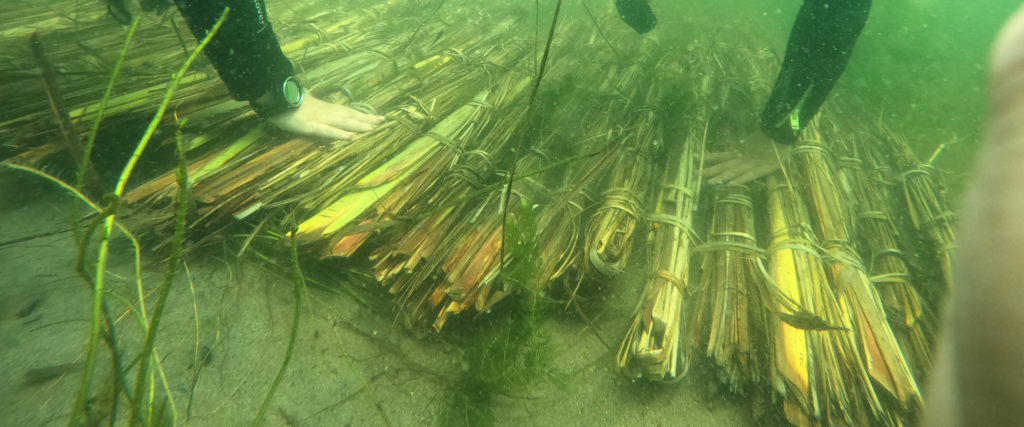
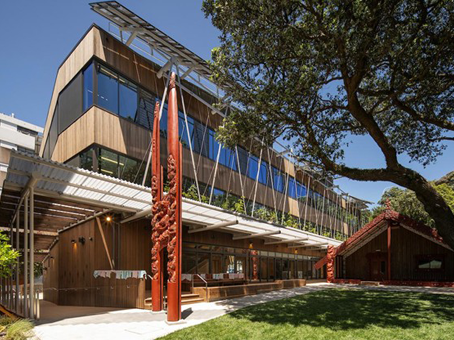
Uwhi, Te Arawa Lakes Trust, Te Roopu Raranga Ki Rotorua and LINZ
Supporting mana whenua engagement
Projects led by or partnered with mana whenua are fundamental to achieving positive social, cultural and ecological outcomes. Meaningful engagement goes beyond consultation and requires building enduring relationships based on trust, reciprocity, and shared responsibility. When mana whenua are involved consistently in a project, their knowledge and priorities can help define what success looks like, identify locally significant taonga and ecosystems while guiding place specific responses that are culturally grounded, ecologically appropriate, and supported over the long term through stewardship and care.
The Waihanga Assessment Tool has been developed to support built environment professionals to reflect on how biodiversity encompassing projects can encourage and support mātauranga Māori and Māori communities, particularly mana whenua and haukāinga. This tool has been developed by Erana Walker as part of the People Cities and Nature Research project, and is informed by the research of Awatere and Harcourt [13], Walker et al. [7, 14], and Wallace et al. [15] and the Kākāno Assessment Tool created for restoration practitioners. It is intended for use by architects, landscape architects, urban designers, planners, developers, and others engaged in design for biodiversity and ecological regeneration.
The Waihanga Assessment Tool focuses on four interconnected areas that support urban ecological health and aspirations of tangata whenua: maramataka, kaitiakitanga, tauutuutu, and whakatipu rawa.
- Maramataka supports understanding of place-based seasonal and cyclical environmental patterns, helping align design, planting, construction, and maintenance with local ecological rhythms and knowledge of iwi and hapū.
- Kaitiakitanga frames biodiversity outcomes with intergenerational responsibility further prioritising long-term ecological health while uplifting hapū and iwi decision-making.
- Tauutuutu emphasises reciprocity and relationships, reinforcing expectations that development activities give back to ecosystems through restoration, protection, or enhancement.
- Whakatipu rawa focuses on growing and sustaining resources, encouraging design strategies that increase ecological capacity and resilience over time. It provides adequate resources for iwi and hapū to carry out their obligations to people and place.
Within each area, indicators can be used to reflect on design processes, relationships, and outcomes.
The intended outcomes of using the tool include the revival, sharing, and integration of maramataka ā-hapū and ā-iwi of the takiwā into practice across all environments, including urban spaces. The active participation of mana whenua and haukāinga in shaping project briefs and conceptual foundations encourages the restoration of environmental wellbeing through kaitiakitanga in the built environment, while culturally important species and culturally significant urban sites are protected and revitalised. These processes strengthen and renew mātauranga ā-hapū in urban contexts, enabling positive human–nature interactions through built environment design. Collectively, this contributes to urban environments that support the living world, people as part of that, and local mātauranga, fostering strong relationships between Māori and the wider community.
Glossary
Please note that these are very basic translations that do not necessarily convey the full or original meanings of all of these terms. We encourage readers to explore the range of Māori dictionaries to understand the breadth of meaning associated with the terms in this glossary.
| Te Reo Māori terms | English basic translation |
| Hapū | Sub-tribe |
| Haukāinga | Home people; those with an ancestral and ongoing residential connection to a specific place. Related to but distinct from mana whenua. |
| Iwi | Tribe |
| Kaitiakitanga | The intergenerational obligation to act as guardian of the natural and cultural environment, arising from whakapapa connection to place. Kaitiakitanga is distinguished from stewardship in that authority is relational and genealogical, not institutional. Accountability runs to mauri, to place, and to future generations, not to regulatory compliance. |
| Mātauranga | Knowledge |
| Mana whenua | Those with customary authority and responsibility for a place, grounded in ancestral whakapapa connection to that whenua. Mana derives from genealogical relationship, not from legal recognition alone. |
| Maramataka | A hapū and iwi knowledge system governing the timing of activities in relation to environmental, ecological, and cosmological cycles. Maramataka integration in design requires engaging knowledge holders directly, not applying generic seasonal principles, because the expression of maramataka is place-specific and its authority rests with those who hold it. |
| Mātauranga ā-hapū | Knowledge of subtribe |
| Mātauranga ā-iwi | Knowledge of wider tribe |
| Ngā hua | Outcomes |
| Takiwā | Region |
| Taonga | Treasure |
| Tauutuutu | The principle of reciprocal obligation governing relationships of mutual accountability between people, between people and the natural world, and across generations. When relationships fall out of balance, tauutuutu calls for restoration of right relationship, not simply remediation of ecological impact. |
| Te ao Māori | Māori world |
| Te taiao | The natural environment, understood as an interconnected living system that includes people, land, water, climate, and other species |
| Tohu | Sign, symbolism |
| Tūāpapa | Foundation |
| Whakapapa | The relational framework that connects people, species, landscapes, and ecosystems across time, supporting a long-term view of ecological responsibility |
| Whakatipu rawa | The principle of intergenerational resource development and retention. This includes building ecological capacity and biodiversity, and also building the conditions for long-term hapū and iwi kaitiakitanga, including employment, funding continuity, and institutional arrangements that sustain Māori-led restoration across generations. |
- Mead, H. M. (2003). Tikanga Māori: Living by Māori values. Huia Publishers.
- Hikuroa, D. (2017). Mātauranga Māori: The ūkaipō of knowledge in New Zealand. Journal of the Royal Society of New Zealand, 47(1), 5–10. https://doi.org/10.1080/03036758.2016.1252407
- Roberts, M. (2013). Ways of seeing: Whakapapa. Sites, 10(1), 93–120. https://doi.org/10.11157/sites-vol10iss1id236
- Stewart, G. T., & Birdsall, S. (2025). Māori concepts in animal ethics: Implications for the Three Rs. Anthrozoös, 38(1), 1–16.
- Yates, A. (2023). Huritanga mō te mauri ora: Braided rivers and pluriversal planetary wellbeing. In Kamp et al. (Eds.), Wellbeing: Global policies and perspectives: Insights from Aotearoa New Zealand and beyond (pp. 243–264). Peter Lang.
- Kawiti, D., Refiti, A., Yates, A., Heta, E., Bloomfield, S., Chanse, V., & Pedersen Zari, M. (2025). Indigenous knowledge, architecture, and nature in the context of Oceania. Nature-Based Solutions, 7, 100213. https://doi.org/10.1016/j.nbsj.2024.100213
- Walker, E., Jowett, T., Whaanga, H., & Wehi, P. M. (2024). Cultural stewardship in urban spaces: Reviving Indigenous knowledge for the restoration of nature. People and Nature, 6(4), 1696–1712.
- Watene, K. (2016). Valuing nature: Māori philosophy and the capability approach. Oxford Development Studies, 44(3), 287–296. https://doi.org/10.1080/13600818.2015.1124077
- Yates, A. (2021). Transforming geographies: Performing Indigenous-Māori ontologies and ethics of more-than-human care in an ecological emergency. New Zealand Geographer, 77(2), 101–113. https://doi.org/10.1111/nzg.12302
- McAllister, T. G., Beggs, J. R., Ogilvie, S. C., Kirikiri, R., Black, A., & Wehi, P. M. (2019). Kua takoto te mānuka: Mātauranga Māori in New Zealand ecology. New Zealand Journal of Ecology, 43(3), 1–7. https://doi.org/10.20417/nzjecol.43.41
- Mead, H. M. (2022). Understanding mātauranga Māori. E-Tangata. https://e-tangata.co.nz/comment-and-analysis/understanding-matauranga-maori/
- Mihaere, S., Holman-Wharehoka, M., Mataroa, J., Kiddle, G. L., Pedersen Zari, M., Blaschke, P., & Bloomfield, S. (2024). Centring localised Indigenous concepts of wellbeing in urban nature-based solutions for climate change adaptation: Case studies from Aotearoa New Zealand and the Cook Islands. Frontiers in Environmental Science, 12, 1278235. https://doi.org/10.3389/fenvs.2024.1278235
- Awatere, S., & Harcourt, N. (2021). Whakarite, whakaaro, whanake whenua: Kaupapa Māori decision-making frameworks for alternative land use assessments. Kia whakanuia te whenua: People, place, landscape. Mary Egan.
- Walker, E. (2023). Māori values research report. Peoples, Cities and Nature Programme. https://static1.squarespace.com/static/62d879f3f9cbe543dab51e33/t/64ed6226bef71c3a41b6a480/1693278822022/Maori+Values.pdf
- Wallace, K. J., Clarkson, B. D., & Farnworth, B. (2022). Restoration trajectories and ecological thresholds during planted urban forest successional development. Forests, 13(2), 199.
Acknowledgements
This section was led by Dr Erana Walker (Te Parawhau, Ngāti Ruamahue, Ngāpuhi, Ngāti Porou, Ngāi Te Rangi) from the University of Waikato. We would like to sincerely thank Professor Amanda Yates (Ngāti Rangiwewehi, Ngāti Whakaue, Te Aitanga a Māhaki, Rongowhakaata) and an anonymous reviewer, both from Auckland University of Technology, Dr Rachel Nepia from the University of Waikato, and Dr Shawn Awatere (Ngāti Porou) from Bioeconomy Science Institute Manaaki Whenua-Landcare Research Group for their insightful feedback on drafts of this section. Deon Dean drafted the case studies in this section. We would like to thank Ewan Brown of Tennent Brown Architects and Professor Rawinia Higgins (Tūhoe) of Te Herenga Waka Victoria University of Wellington for their input into the case studies.
Cite as: Walker, E. (2026). Mātauranga Māori and Design for Biodiversity. In M. Pedersen Zari, M. MacKinnon, E. Walker, D. Dean, D. Shanahan, Y. van Heezik, J. Theis, C. Woolley, & C. Freeman, Aotearoa Design for Biodiversity Guide. Aotearoa BiodiverCITY. www.aotearoabiodivercity.org