Urban street trees
Definition
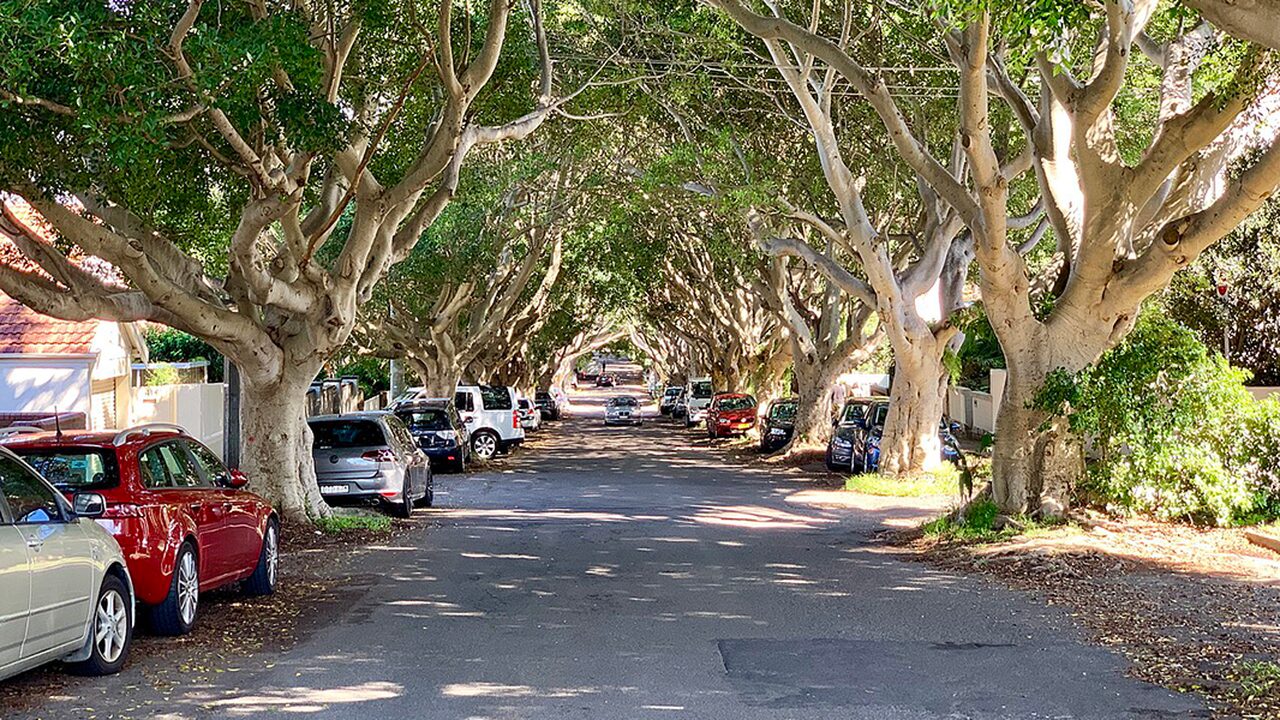
Urban street trees are woody perennial plants intentionally planted and managed within road reserves and footpaths to provide habitat, movement corridors, and ecosystem services within urban environments.
What this strategy does
Introduces and manages diverse, well-sited street trees to support urban biodiversity, climate resilience, and human wellbeing, while avoiding monocultures and infrastructure conflict.
Context
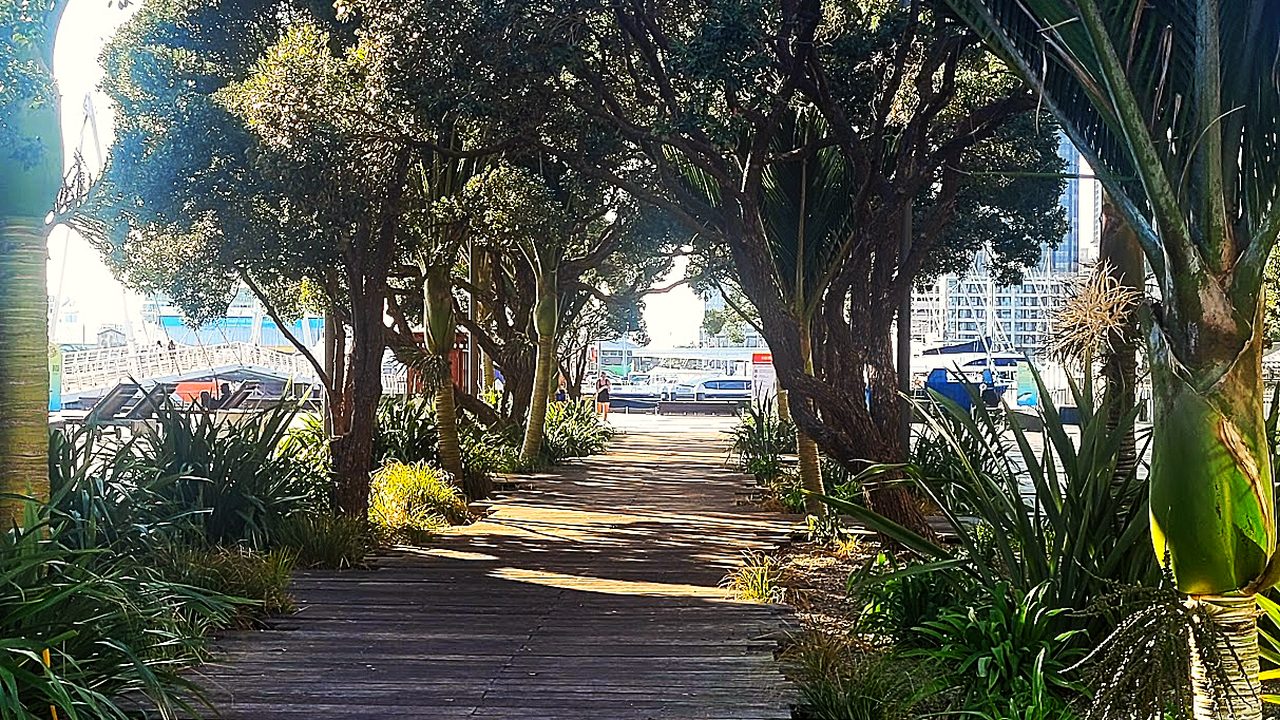
In Aotearoa New Zealand cities, street trees often form the most continuous public green network. Their design and management strongly influence biodiversity outcomes, urban heat exposure, infrastructure performance, and social equity.
Technical considerations
Design considerations
Native species preference
- Prioritise locally native tree species where feasible to maximise support for Indigenous birds and invertebrates, which consistently show higher abundance and richness on native trees than on exotic species in Aotearoa.1, 2, 3
Species and genetic diversity
- Avoid monocultures. Apply diversity thresholds (e.g. no more than 10% of one species, 20% of one genus, 30% of one family) to reduce pest and disease risk and broaden habitat value.4, 5, 6
Functional trait diversity
- Select trees with varied canopy forms, phenology (the timing of seasonal biological events such as leafing, flowering, and fruiting), growth rates, and lifespans to diversify habitat structure and ecosystem service delivery.6, 7
Right tree, right place
- Match species to street typology, soil traits and volume, overhead services, and microclimate to minimise conflicts and premature tree death.4, 8, 9
Spatial connectivity
- Locate street trees to reinforce links between parks, riparian corridors, and other green infrastructure, improving their function as stepping stones for urban wildlife.2, 7
Implementation considerations
Soil volume and quality
- Provide adequate soil volume, permeability, and rooting space to support long-term tree health and habitat stability.8, 9, 10 Amend poor urban soils where required.11
Enabling infrastructure
- Use structural soil cells or vault systems in constrained streets to support canopy development while protecting underground services.12
Urban tolerance
- Select species with demonstrated tolerance to pollution, heat, drought, and pruning regimes, balanced against maintenance costs and biodiversity value.
Issues & barriers
Low species diversity
- Street tree populations dominated by a few, often exotic species support fewer native taxa and are more vulnerable to pests and diseases.13, 14
Aesthetic-led selection
- Over-prioritising visual uniformity or low maintenance when selecting tree types can undermine ecological performance.6, 13, 14
Restricted growing conditions
- Compacted soils, limited rooting volumes, and impermeable surfaces reduce tree longevity and habitat value.4, 8, 10
Infrastructure conflicts
- Clearance requirements around power lines, signage, and footpaths can result in excessive pruning or tree removal.4, 8
Unequal distribution
- Lower-income neighbourhoods frequently experience reduced canopy cover and poorer tree condition, reinforcing biodiversity and health inequities.3, 15
Public perception and safety
- Concerns about shading, leaf litter, and sightlines can limit community support without early engagement and clear design rationale.16
Synergies & opportunities
- Climate change – Street trees moderate urban heat, improve stormwater performance, enhance resilience to climate extremes, and contribute to carbon storage.17, 18, 19, 20, 21, 22, 23
- Human wellbeing – Tree-lined streets are associated with reduced heat stress, improved mental and cardiovascular health, increased physical activity, and enhanced neighbourhood amenity.19, 24, 25
Financial case
Avoided health and infrastructure costs
- Diverse, well-maintained street trees reduce heat exposure, air pollution impacts, and stormwater loads, translating into long-term public health and infrastructure savings.19, 20, 26
Cost-effectiveness: Investment logic
- Higher species diversity lowers long-term replacement and management costs by reducing vulnerability to pests, disease, and climate stressors.26, 27
Monitoring & evaluation metrics
Tree species richness and diversity
Native versus non-native proportion
- Monitor the proportion of Indigenous, exotic, and invasive species within the street tree population.5, 30
Tree inventory quality
- Maintain spatially explicit inventories including species, DBH, canopy size, and condition.30, 31, 32
Canopy structure and volume
- Measure canopy cover and vegetation volume to understand habitat capacity and cooling potential.33, 34
Tree health and growth
- Monitor growth rates and condition indicators to ensure long-term ecosystem service provision.34, 35
Wildlife usage
Additional resources or tools
- Auckland Urban Ngahere Strategy. Citywide urban forest framework addressing biodiversity, climate adaptation, and equity.
- NUWAO – Urban Forests / Urban Ngāhere. Research and case studies on urban trees and biodiversity in Oceania, including Aotearoa.
- Council street tree selection and planting guidelines (Wellington City Council). Biodiversity-aware species selection and planting guidance tailored to local conditions.
References
- Ogushi R, Sun E, Campbell L, Chandrakumar F, Fort R, Graham N, et al. Lepidoptera species richness and community composition in urban street trees. Canadian Journal of Zoology. 2024. https://doi.org/10.1139/cjz-2023-0150
- Shackleton C. Do Indigenous street trees promote more biodiversity than alien ones? Forests. 2016;7:134. https://doi.org/10.3390/F7070134
- Wood E, Esaian S. The importance of street trees to urban avifauna. Ecological Applications. 2020;30. https://doi.org/10.1002/eap.2149
- Liu J, Slik F. Are street trees friendly to biodiversity? Landscape and Urban Planning. 2022. https://doi.org/10.1016/j.landurbplan.2021.104304
- Bartoli F, Savo V, Caneva G. Biodiversity of urban street trees in Italian cities. Plant Biosystems. 2021;156:649–662. https://doi.org/10.1080/11263504.2021.1906347
- Savo V, D’Amato L, Bartoli F, Zappitelli I, Caneva G. Ecosystem services of urban street trees: a review. Ecosystem Services. 2025. https://doi.org/10.1016/j.ecoser.2024.101690
- Peña J, Martello F, Ribeiro M, Armitage R, Young R, Rodrigues M. Street trees reduce the negative effects of urbanisation on birds. PLOS ONE. 2017;12. https://doi.org/10.1371/journal.pone.0174484
- Mullaney J, Lucke T, Trueman S. Growing street trees in paved urban environments. Landscape and Urban Planning. 2015;134:157–166. https://doi.org/10.1016/j.landurbplan.2014.10.013
- Pauleit S. Urban street tree plantings: key requirements. Municipal Engineer. 2003;156:43–50. https://doi.org/10.1680/muen.2003.156.1.43
- Egerer M, Schmack J, Vega K, Barona C, Raum S. Challenges of urban street trees. Frontiers in Sustainable Cities. 2024. https://doi.org/10.3389/frsc.2024.1394056
- Somerville PD, Farrell C, May PB, Livesley SJ. Biochar and compost effects on urban soils. Science of the Total Environment. 2020;706:135736. https://doi.org/10.1016/j.scitotenv.2019.135736
- Bell DL, Doick KJ, Sinnett DE. Engineered tree pit solutions. Proceedings of the Institution of Civil Engineers – Civil Engineering. 2025;178(5):9–20.
- Caneva G, Bartoli F, Zappitelli I, Savo V. Street trees in Italian cities. Rendiconti Lincei. 2020;31:411–417. https://doi.org/10.1007/s12210-020-00907-9
- Anderson E, Locke D, Pickett S, LaDeau S. Street trees and neighbourhood biodiversity. Ecosphere. 2023. https://doi.org/10.1002/ecs2.4389
- Walters J, Bell T, Pfautsch S. Residents’ perceptions of street trees. Land. 2025. https://doi.org/10.3390/land14030576
- Ettinger A, Bratman G, Carey M, et al. Street trees and urban heat exposure. Scientific Reports. 2024;14. https://doi.org/10.1038/s41598-024-51921-y
- Coutts A, White E, Tapper N, Beringer J, Livesley S. Temperature effects of street trees. Theoretical and Applied Climatology. 2016;124:55–68. https://doi.org/10.1007/s00704-015-1409-y
- Salmond J, Tadaki M, Vardoulakis S, et al. Health and climate ecosystem services of street trees. Environmental Health. 2016;15. https://doi.org/10.1186/s12940-016-0103-6
- Pataki D, Alberti M, Cadenasso M, et al. Benefits and limits of urban tree planting. Frontiers in Ecology and Evolution. 2021;9. https://doi.org/10.3389/fevo.2021.603757
- Brandt L, Johnson G, North E, et al. Climate vulnerability of street trees. Frontiers in Ecology and Evolution. 2021;9. https://doi.org/10.3389/fevo.2021.721831
- Meurk CD, Blaschke PM, Simcock R. Ecosystem services in New Zealand cities. In: Ecosystem Services in New Zealand. Manaaki Whenua Press; 2013.
- Dale MJ. Carbon storage of urban trees in New Zealand. Unpublished manuscript. 2013.
- Turner-Skoff J, Cavender N. Benefits of trees for sustainable communities. Plants, People, Planet. 2019. https://doi.org/10.1002/ppp3.39
- Giacinto J, Fricker G, Ritter M, et al. Urban forest biodiversity and cardiovascular disease. PLOS ONE. 2021;16. https://doi.org/10.1371/journal.pone.0254973
- Ren Z, Zhao H, Fu Y, et al. Street trees and thermal comfort. Journal of Forestry Research. 2021;33:911–922. https://doi.org/10.1007/s11676-021-01361-5
- Shah A, Liu G, Huo Z, et al. Environmental services of urban street trees. Resources, Conservation and Recycling. 2022. https://doi.org/10.1016/j.resconrec.2022.106563
- Rendón P, Love N, Pawlak C, et al. Street tree diversity and urban heat. Urban Forestry & Urban Greening. 2024. https://doi.org/10.1016/j.ufug.2023.128180
- Daly AJ, Baetens JM, De Baets B. Ecological diversity metrics. Mathematics. 2018;6(7):119.
- Roswell M, Dushoff J, Winfree R. Measuring species diversity. Oikos. 2021;130(3):321–338.
- Votsi N, Speyer O, Michailidou D, et al. Urban Biodiversity Index for Trees. Environments. 2024. https://doi.org/10.3390/environments11070144
- Liu D, Jiang Y, Wang R, Lu Y. Citywide street tree inventories using imagery. Computers, Environment and Urban Systems. 2023;100:101924. https://doi.org/10.1016/j.compenvurbsys.2022.101924
- Ma B, Hauer R, Wei H, et al. Street tree diversity assessment. Urban Forestry & Urban Greening. 2020. https://doi.org/10.1016/j.ufug.2020.126826
- Sun X, Qiu Y, Qi H, et al. Living vegetation volume framework. Ecological Indicators. 2024. https://doi.org/10.1016/j.ecolind.2023.111367
- North E, D’Amato A, Russell M. Performance metrics for urban trees. Journal of Forestry. 2018. https://doi.org/10.1093/jofore/fvy049
- Mailloux B, McGillis C, Maenza-Gmelch T, et al. Determinants of street tree growth rates. PLOS ONE. 2024;19. https://doi.org/10.1371/journal.pone.0304447
- Velasquez-Camacho L, Merontausta E, Etxegarai M, et al. Assessing urban forest biodiversity with remote sensing. International Journal of Applied Earth Observation and Geoinformation. 2024;128:103735. https://doi.org/10.1016/j.jag.2024.103735
- Ordóñez C, Threlfall C, Kendal D, et al. Importance of urban trees to people and nature. People and Nature. 2023. https://doi.org/10.1002/pan3.10509
RELATED DESIGN STRATEGIES //
Specific design interventions that support ecological health, habitat quality, and species diversity across urban and built environments.