
Definition
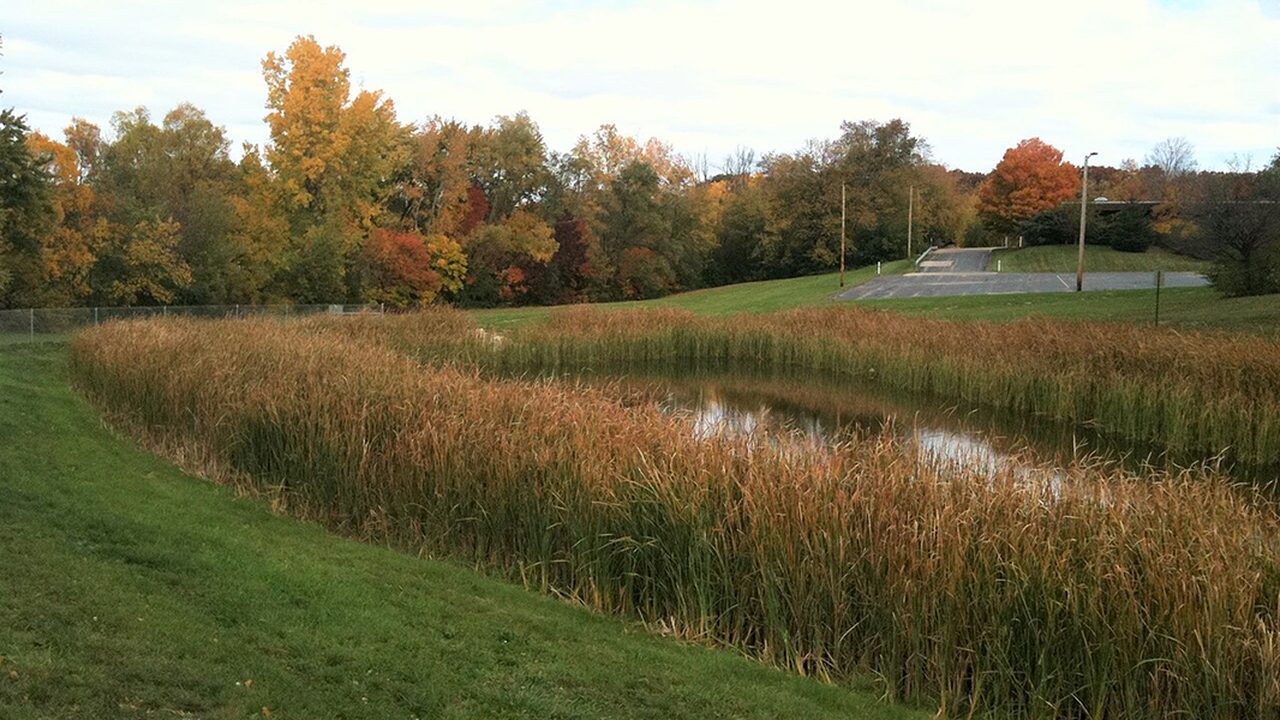
Detention ponds are engineered stormwater facilities that temporarily store and slowly release runoff to reduce peak flows and manage water quality.
What this strategy does
Provides flood attenuation and water treatment, and when designed with ecological principles, can support freshwater and riparian biodiversity. Avoids single-purpose, hard-edged basins with rapid drawdown and no vegetated margins.
Context
In Aotearoa New Zealand urban catchments, detention ponds are widely required for stormwater management and are often one of the few opportunities to integrate freshwater habitat into developed landscapes. When ecologically designed, they can contribute to urban freshwater biodiversity without compromising hydraulic performance.
Technical considerations
Design considerations
Pond size and depth
Design ponds with sufficient area and a range of depths to create multiple aquatic and edge habitats, rather than uniform basins.
Shoreline form
Use gently sloping, irregular margins instead of steep or lined edges to increase habitat heterogeneity.
Vegetation structure
Prioritise native aquatic and riparian planting, including emergent, marginal, and buffer vegetation, to support food webs and shelter.
Hydroperiod diversity
Where feasible, incorporate permanent and seasonally inundated zones to support different plant and invertebrate communities.
Landscape integration
Locate ponds to connect with other green or blue spaces to improve the movement of freshwater and terrestrial species.
Implementation considerations
Design priority
Balance hydraulic performance requirements with ecological design early, rather than retrofitting biodiversity outcomes later.
Key constraint
Stormwater quality and inflow variability can limit habitat suitability if not managed through upstream treatment and flow moderation.
Relevant tools or standards
Use council stormwater manuals and water sensitive design guidance to confirm sizing, safety, and maintenance requirements while integrating ecological features.
Issues and barriers
Water quality stressors
Urban runoff pollutants and elevated nutrients can favour tolerant or invasive species and reduce ecological value if untreated.
Altered hydrology
Rapid drawdown and frequent water level fluctuations disrupt wetland processes and aquatic communities.
Connectivity limitations
Many detention ponds are isolated within the urban fabric, restricting dispersal and reducing long-term biodiversity value.
Conflicting objectives
Operational priorities for flood control and maintenance can override biodiversity outcomes if not explicitly specified.
Disease risk
Standing water can support mosquito populations, with potential implications for avian disease in New Zealand contexts.
Synergies and opportunities
- Climate change – Attenuates increased rainfall intensity and supports urban climate adaptation through water storage and vegetated cooling.
- Disaster risk reduction – Reduces peak flood flows and downstream flood risk during extreme events.
- Freshwater security – Improves downstream water quality and supports urban freshwater ecosystems when well designed.
Financial case
Ecosystem services and/or performance value
Value type
Reduced flood damage, deferred infrastructure upgrades, and added environmental performance from multifunctional stormwater assets.
Cost-effectiveness
Investment logic
Designing ponds to deliver both hydraulic and ecological functions improves return on investment compared with single-purpose infrastructure.
Monitoring and evaluation metrics
Core metric
Aquatic and riparian species richness and community composition (plants and macroinvertebrates).
Advanced or long-term metric
Water quality trends (nutrients, suspended solids) and persistence of native vegetation structure over time.
Case study
Aidanfield vegetated swale and detention pond
Related design strategies
Additional resources or tools
Stormwater Management Devices in the Auckland Region (GD01)
https://knowledgeauckland.org.nz/publications/stormwater-management-devices-in-the-auckland-region-gd01/
Auckland Council – Water Sensitive Design for Stormwater (GD2015/004)
https://knowledgeauckland.org.nz/media/1701/gd2015-004-water-sensitive-design-for-stormwater.pdf
Wellington City Council – Water Sensitive Urban Design Guide
https://wellington.govt.nz/climate-change-sustainability-environment/water/stormwater/water-sensitive-urban-design-guide