
Definition
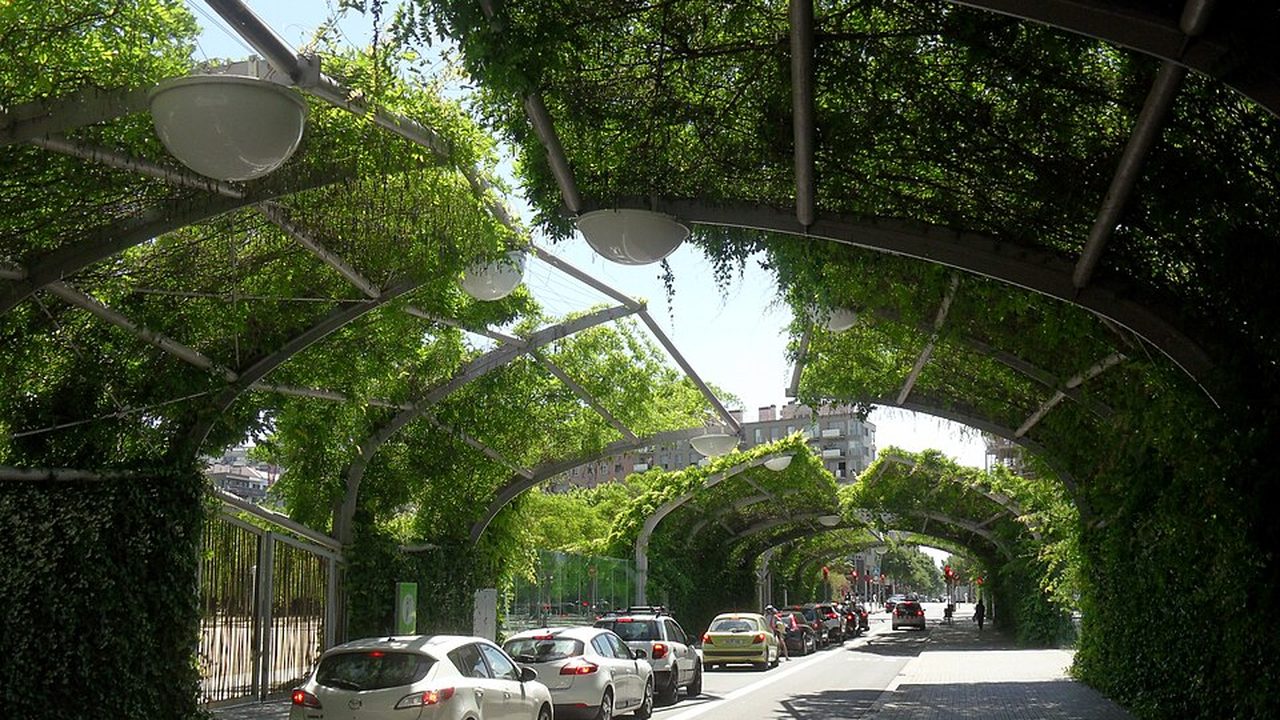
Bioshading is the intentional use of vegetation to provide shade while supporting ecological function in urban and peri-urban environments.
What this strategy does
Uses trees, climbers, and planted structures to reduce heat exposure and create habitat. Avoids purely ornamental planting that provides shade without ecological value.
Context
In Aotearoa New Zealand cities, increasing urban heat and loss of Indigenous habitat create a strong case for vegetation-based shading that delivers both thermal performance and biodiversity outcomes, particularly where hard surfaces dominate.
Technical considerations
Design considerations
Plant form and placement
Select tree and plant forms that deliver seasonal shade without permanently excluding sunlight where basking (for lizards for example), daylighting, or passive solar access is required.
Vertical and building-integrated shading
Use pergolas, trellises, and green façades where ground space is constrained, ensuring structural systems can support mature biomass and maintenance loads.
Implementation considerations
Water and establishment
Prioritise passive irrigation and soil volume design to ensure long-term canopy health and cooling performance under heat stress conditions.
Maintenance planning
Design for safe pruning access and clear maintenance responsibilities to avoid a decline in plant performance over time.
Issues and barriers
Space limitations
High-density development can restrict soil volume and canopy spread, reducing achievable shading outcomes.
Competing building performance goals
Shading vegetation may conflict with solar access, photovoltaic performance, or daylighting objectives if not coordinated early.
Synergies and opportunities
- Climate change – Reduces urban heat exposure and moderates microclimates.
- Human wellbeing – Improves thermal comfort and perceived amenity in public space.
Financial case
Ecosystem services and/or performance value
Operational energy reduction
Vegetative shading can reduce cooling demand for adjacent buildings during peak heat periods.
Cost-effectiveness
Investment logic
Moderate upfront costs with long service life and multiple co-benefits when vegetation is correctly established and maintained.
Monitoring and evaluation metrics
Core metric
Change in shaded area and surface or air temperature reduction pre- and post-establishment.
Advanced or long-term metric
Canopy health, survival, and structural development over time.
Case study
Urban Canopee
Related design strategies
- Building-integrated vegetation
- Pollinator pathways and flora plantings
- Green wildlife corridors bridges and belts
- Urban green spaces
- Urban street trees
Additional resources or tools
Te Ao Māori and water sensitive urban design (Activating WSUD)
Landcare Research guidance
Auckland – Predicted Urban Heat Island Effect Dataset
Auckland Council Open Data
DOC Local Native Planting Guides
https://www.doc.govt.nz/nature/native-plants/native-plant-restoration/local-planting-guides/