Location: Aidanfield, Ōtautahi Christchurch, Canterbury, Aotearoa New Zealand
Project type: Suburban greenfield residential development – stormwater infrastructure
Delivery/lead organisations: Private developer; Christchurch City Council (standards and approvals)
Date/period: 2010s (development period)
Scale: Site / Neighbourhood
Primary system or theme: Stormwater, freshwater, blue–green infrastructure
Context
Why this site matters
Christchurch is built on low-lying former wetland landscapes, where suburban development has historically relied on engineered stormwater networks. Council guidance now promotes vegetated, decentralised stormwater systems as part of low-impact urban design approaches. 1
Challenge or constraint
What wasn’t working/what needed to change
Conventional piped stormwater systems provided limited treatment, attenuation, or ecological value, and increased downstream pressure on waterways. New subdivisions were required to meet hydrological performance standards while responding to emerging expectations around environmental and amenity outcomes. 2
Intervention
What was done
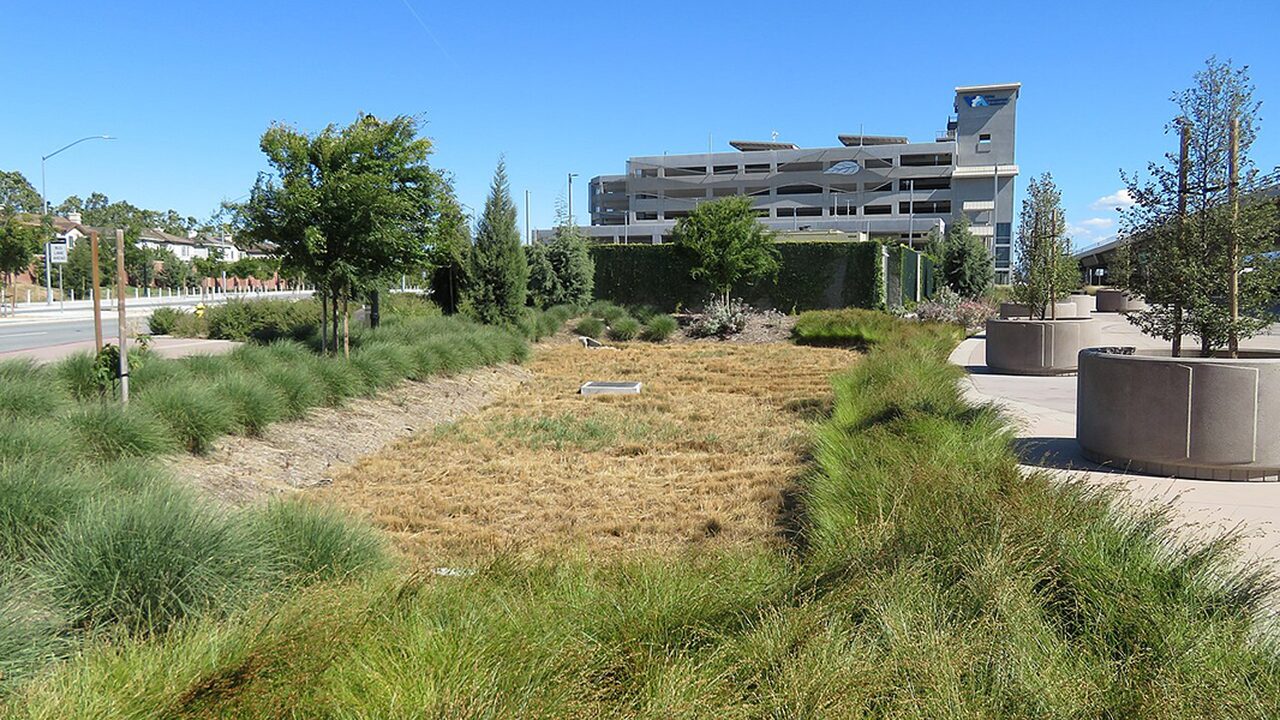
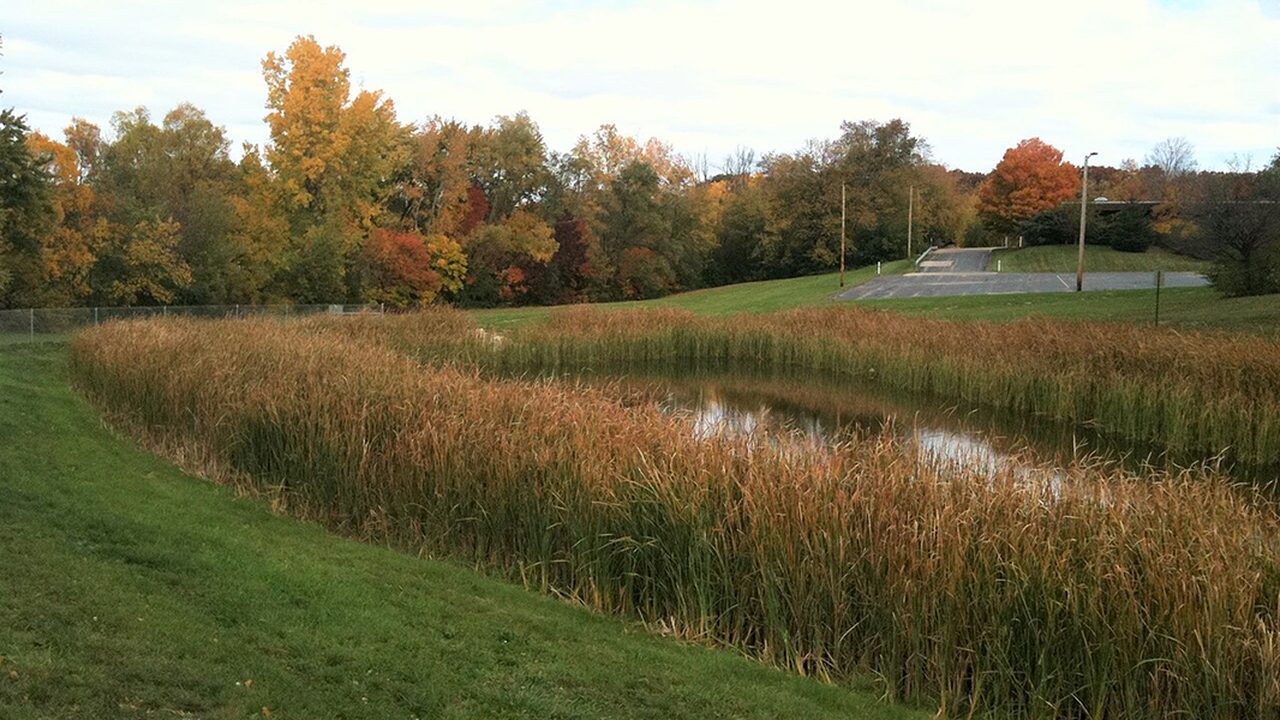
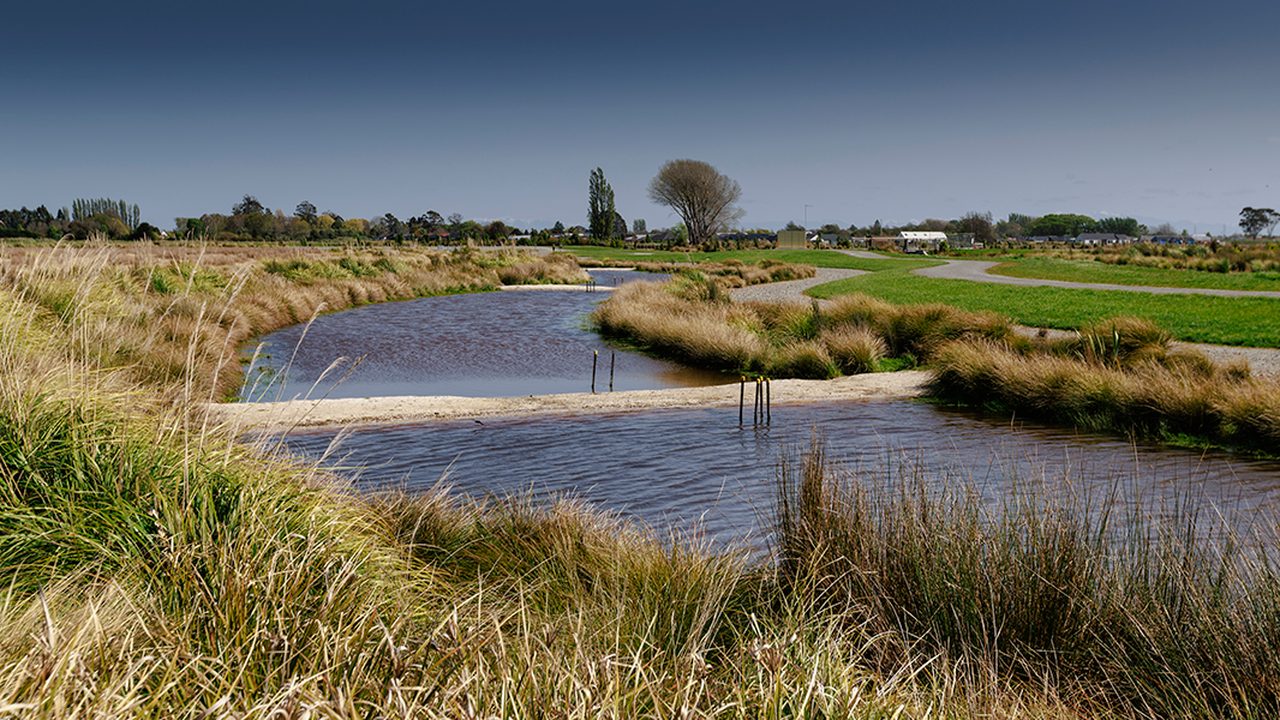
The Aidanfield vegetated swale and overflow detention/infiltration pond treatment train was integrated into the subdivision layout to manage stormwater runoff in accordance with Christchurch City Council requirements.
Key components
- Vegetated swales designed for conveyance, filtration, and sediment deposition
- Native and wetland-tolerant planting within swales and pond margins
- An overflow detention/infiltration pond providing temporary storage and peak flow attenuation
- Integration with road reserves and open space rather than isolated basins
Implementation notes
Design & delivery considerations
- Swales and pond geometry designed to meet CCC conveyance and flood design criteria 2
- Planting selection aligned with guidance on riparian and wetland vegetation for stormwater systems 1, 3
- Infiltration performance is dependent on local soil and groundwater conditions
- Ongoing maintenance is required to manage sediment accumulation and vegetation performance
Outcomes
Observed or reported outcomes
- Compliance with Christchurch City Council stormwater attenuation and treatment requirements 2
- Establishment of vegetated stormwater devices consistent with LIUDD principles 1
What is plausible but unmeasured
- Provision of habitat structure for invertebrates and birds
- Contribution to local ecological connectivity through linear vegetated corridors
- Improved amenity and landscape integration compared to fully piped systems
Evidence & limits
What the evidence supports
Guidance and city-wide monitoring indicate that vegetated swales and ponds can provide effective stormwater conveyance, attenuation, and treatment when designed and maintained to specification. 1 , 3
Key limitations or uncertainties
- No site-specific ecological monitoring available
- Biodiversity outcomes inferred from design intent rather than measured performance
- Effectiveness is dependent on maintenance, upstream land use, and cumulative catchment pressures
Relevance to design practice
- Use vegetated swales and ponds as functional stormwater infrastructure first, with ecological value framed as a co-benefit
- Rely on council standards and LIUDD guidance to support defensible design decisions
- Avoid over-claiming biodiversity outcomes without monitoring data
- Ensure planting design, soil conditions, and maintenance regimes are aligned with performance requirements
References
- Ignatieva, M., Meurk, C. D., van Roon, M., Simcock, R., & Stewart, G. H. (2008). How to put nature into our neighbourhoods: Application of Low Impact Urban Design and Development (LIUDD) principles, with a biodiversity focus, for New Zealand developers and homeowners. Landcare Research Science Series No. 35. Manaaki Whenua Press.
- Christchurch City Council. (2022). Infrastructure Design Standard – Part 5: Stormwater and Land Drainage. Christchurch City Council.
- Christchurch City Council. (n.d.). Waterways, Wetlands and Drainage Guide. Christchurch City Council.