Location: Mount Roskill, Auckland, Aotearoa New Zealand
Project type: Public playground within an urban stream restoration corridor
Delivery/lead organisations: Auckland Council; Boffa Miskell (landscape architecture); mana whenua; community partners
Date/period: Completed 2019
Scale: Site / Neighbourhood
Primary system or theme: Public open space; culturally informed play; urban freshwater corridor integration; mātauranga Māori
Context
Why this site matters
Te Māra Hūpara Playground is located within the Te Auaunga / Oakley Creek corridor, a highly modified urban stream system subject to recurrent flooding and long-term channelisation. 1 The playground forms part of a wider Auckland Council programme combining flood mitigation, stream naturalisation, and public open space enhancement along the corridor. 1
Challenge or constraint
What wasn’t working/what needed to change
Conventional playground models were poorly suited to a dynamic floodplain environment and risked visual and functional conflict with stream restoration objectives. The site required a play intervention that could coexist with flood management works, respect and celebrate cultural values incorporating mātauranga Māori, and avoid introducing rigid or maintenance-intensive structures. 1, 2
Intervention
What was done
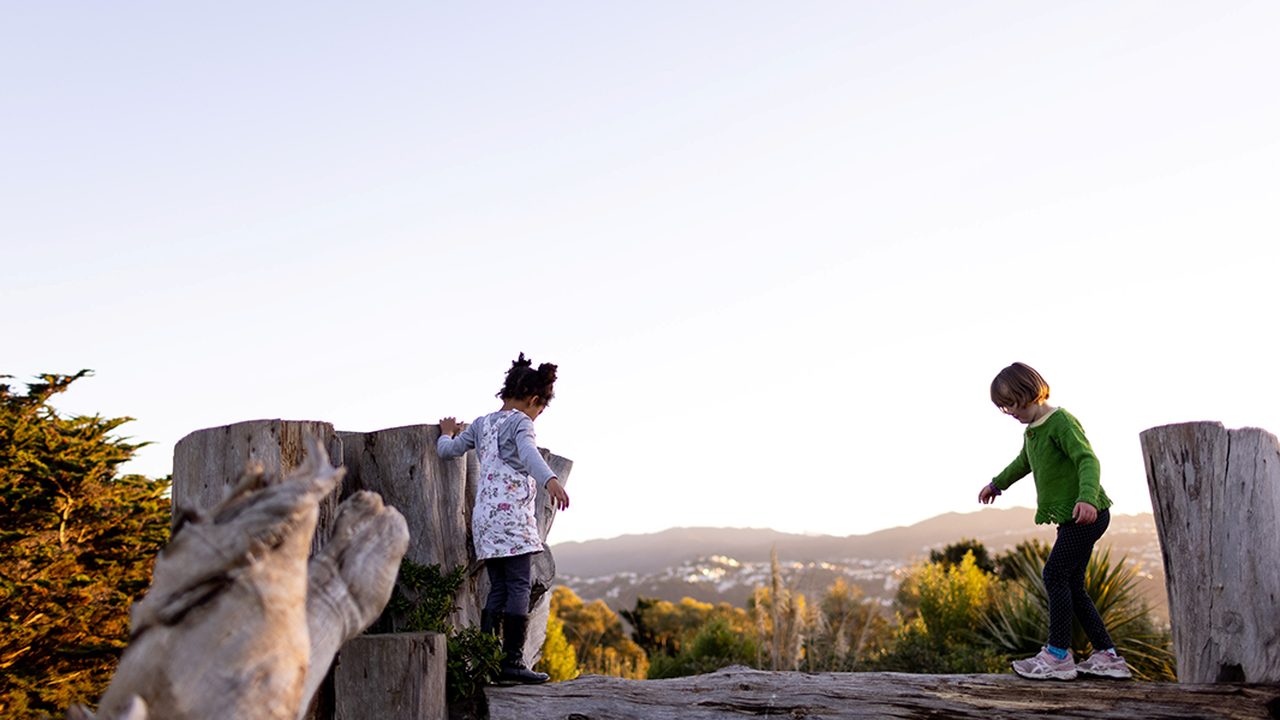
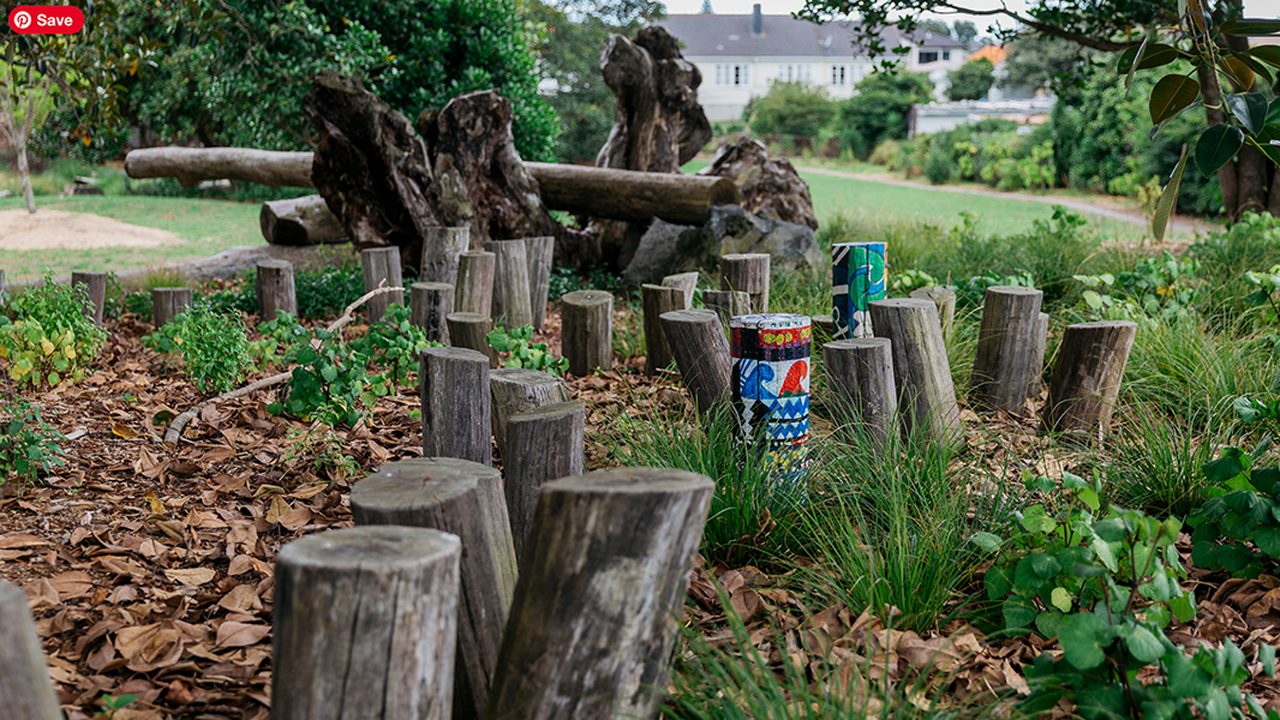
A traditionally informed, landscape-led playground was embedded within the restored floodplain, prioritising natural materials, landforms, and culturally informed play principles over prefabricated equipment.
Key components
- Reuse of large swamp kauri logs, excavated rock, and timber generated during restoration works to form climbing, balancing, and exploratory play elements 1
- Integration of Māori play concepts and movement patterns through collaboration with mana whenua and Māori play practitioners 2, 3
- On-site, iterative design and construction, with safety assessments undertaken to meet playground safety requirements 2
Implementation notes
Design & delivery considerations
- Design was developed in parallel with stream restoration earthworks, enabling material reuse and landform integration 1
- The playground occupies active floodplain space and is designed to tolerate periodic inundation without structural damage 1
- Mana whenua engagement occurred early and throughout the design process, shaping cultural framing and play intent 2
- Non-standard play elements required careful coordination with safety auditors and council risk processes 2
Outcomes
Observed or reported outcomes
- High levels of community use and positive public feedback following completion, as reported by Auckland Council and project partners 2, 3
- Successful delivery of a non-conventional playground within a flood mitigation and stream restoration project, without reported interference with flood performance 1
What is plausible but unmeasured
- Support for diverse physical, social, and imaginative play behaviours associated with natural-material play environments
- Contribution to place identity and cultural visibility within the Te Auaunga corridor
Evidence & limits
What the evidence supports
Available documentation supports the playground’s social acceptance, cultural relevance, and compatibility with a large-scale floodplain restoration programme. 1, 2
Key limitations or uncertainties
- No published site-specific ecological monitoring data for the playground area
- Environmental performance is assessed at the corridor scale, not attributable to the playground intervention itself 1
- Transferability depends on alignment with broader landscape, hydrological, and cultural frameworks
Relevance to design practice
- Culturally informed, landscape-led play can be successfully integrated into urban blue–green infrastructure when developed as part of a wider system rather than as a standalone asset
- Natural play environments should not be framed as ecological restoration unless supported by site-specific monitoring and performance data
- Early coordination between play designers, flood engineers, ecologists, and mana whenua is essential when locating play spaces within active floodplains or restoration corridors
References
- Auckland Council. (2019). Māra Hūpara – Ancient innovation in play, learning and exercise.
- Boffa Miskell. (n.d.). Te Māra Hūpara Playground.
- New Zealand Institute of Landscape Architects. (2019). Māra Hūpara playground – A return to traditional Māori games.