Location: Mount Victoria (Matairangi), Wellington, Aotearoa New Zealand
Project type: Nature-based play and environmental learning trail
Delivery/lead organisations: Wellington City Council
Date/period: 2021 – present
Scale: Neighbourhood / Landscape
Primary system or theme: Nature-based play, environmental education, urban reserve engagement
Context
Why this site matters
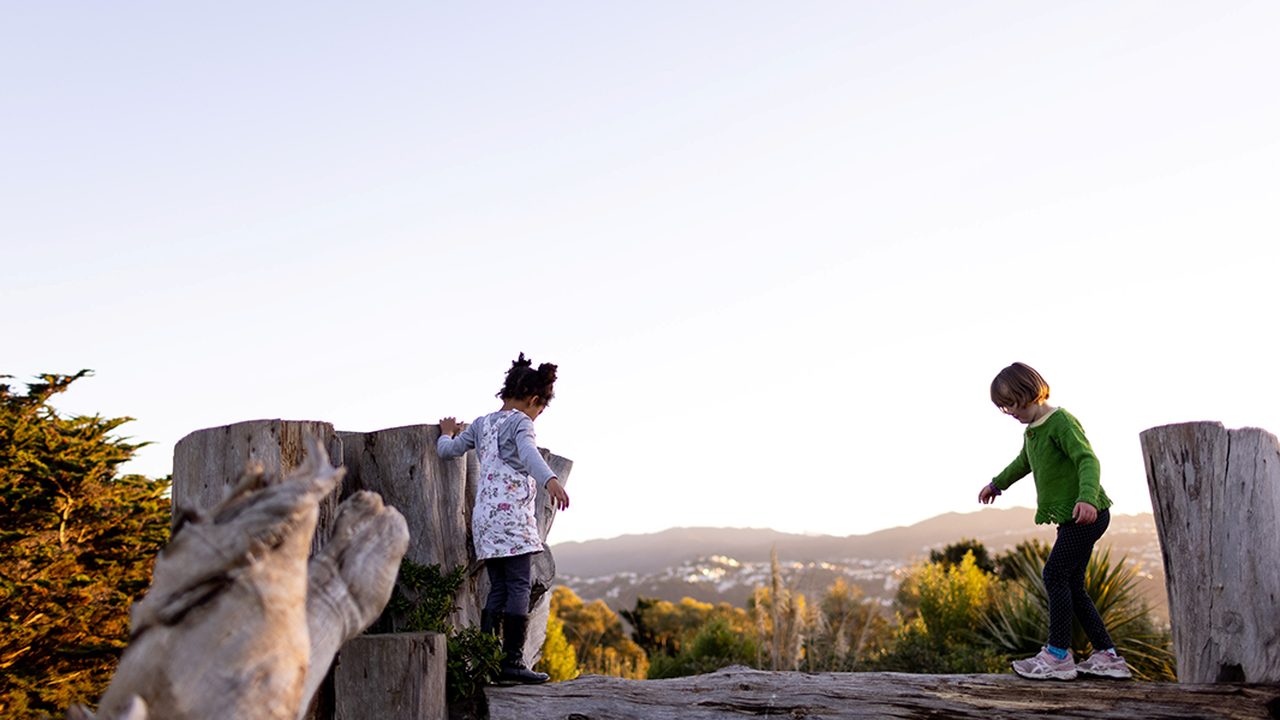
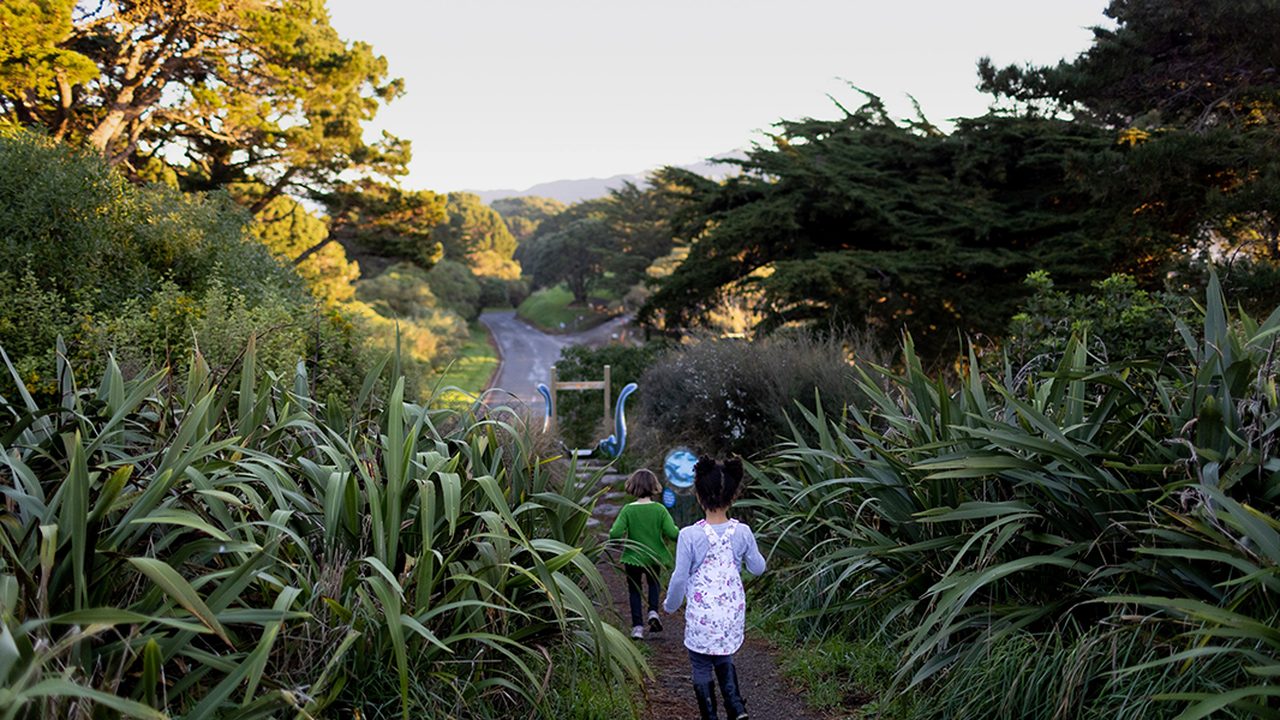
The Matairangi Nature Trail is a self-guided nature-play loop within the Wellington Town Belt, designed to support outdoor play and environmental learning in a forested urban reserve. 1 The trail sits within a highly used inner-city landscape where council policy supports low-impact recreation and education alongside landscape and ecological values. 2
Challenge or constraint
What wasn’t working/what needed to change
Traditional playground provision and track infrastructure did not fully support exploratory, nature-based play or place-based learning within the Matairangi reserve context. Any intervention needed to work within Town Belt management objectives, avoid ecological disturbance, and rely on minimal new infrastructure. 2
Intervention
What was done
A deliberately framed nature-play trail was implemented that uses movement, prompts, and interpretation to encourage play and learning within an existing reserve setting. 1
Key components
- Self-guided walking loop with defined access points and wayfinding 1
- Nature-play prompts encouraging climbing, balancing, jumping, and exploration using natural features 1
- Integrated signage introducing local biodiversity, habitats, and care behaviours 1
- Reliance on existing landscape features and low-impact additions rather than fixed play equipment
Implementation notes
Design & delivery considerations
- Play activities are based on terrain, vegetation, and found natural materials, consistent with national guidance on nature play 3
- Engagement is spread along a trail rather than concentrated at a single playground node 1
- The approach aligns with Town Belt objectives for recreation and education without re-framing the area as a biodiversity restoration project 2
- Requires sufficient vegetation cover, informal risk tolerance, and reserve-scale management support
Outcomes
Observed or reported outcomes
- Establishment of a functioning nature-play and environmental learning trail used by families and local residents 1
- Provision of structured prompts that encourage outdoor play and introduce local species and habitats 1
What is plausible but unmeasured
- Increased connection to nature and species awareness among children and caregivers
- Increased duration and diversity of outdoor play compared with fixed-equipment playgrounds
Evidence & limits
What the evidence supports
The available documentation supports the Matairangi Nature Trail as an intentional nature-play and learning intervention embedded within an urban reserve context. 1, 2
Key limitations or uncertainties
- No published ecological monitoring or biodiversity performance data
- Outcomes relate to play behaviour and learning intent, not habitat enhancement or species recovery
- Transferability depends on reserve quality, vegetation structure, and local risk-management settings
Relevance to design practice
- Use trail-based nature-play systems to deliver play and learning outcomes with minimal built infrastructure, particularly in established reserves 1, 3
- Avoid framing nature-play trails as ecological restoration unless ecological objectives and monitoring are explicitly included
- Best suited to reserves or green corridors where low-impact recreation, interpretation, and informal play are supported by policy and management 2
References
- Wellington City Council. (2021). Matairangi Nature Trail.
- Wellington City Council. (2013). Wellington Town Belt Management Plan.
- Department of Conservation. (2019). Nature play in Aotearoa: Supporting children’s connection with nature.