Pollinator pathways
SCALES / Neighbourhood
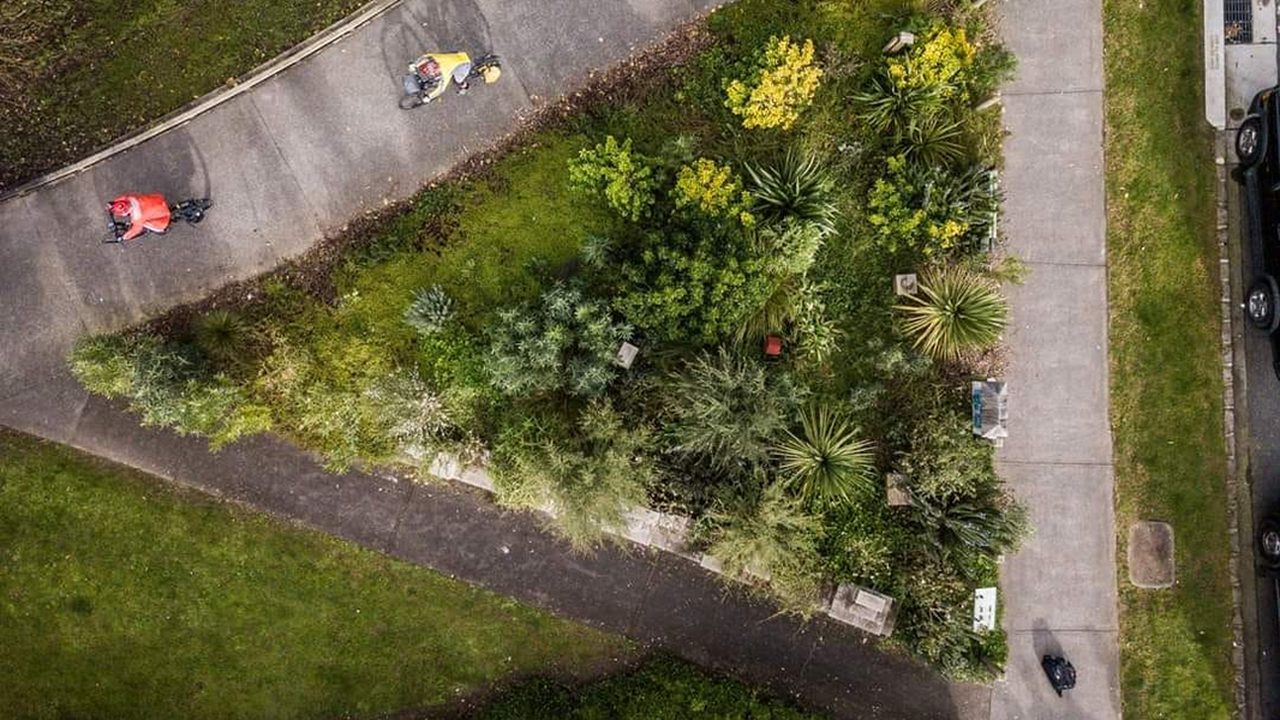
Definition
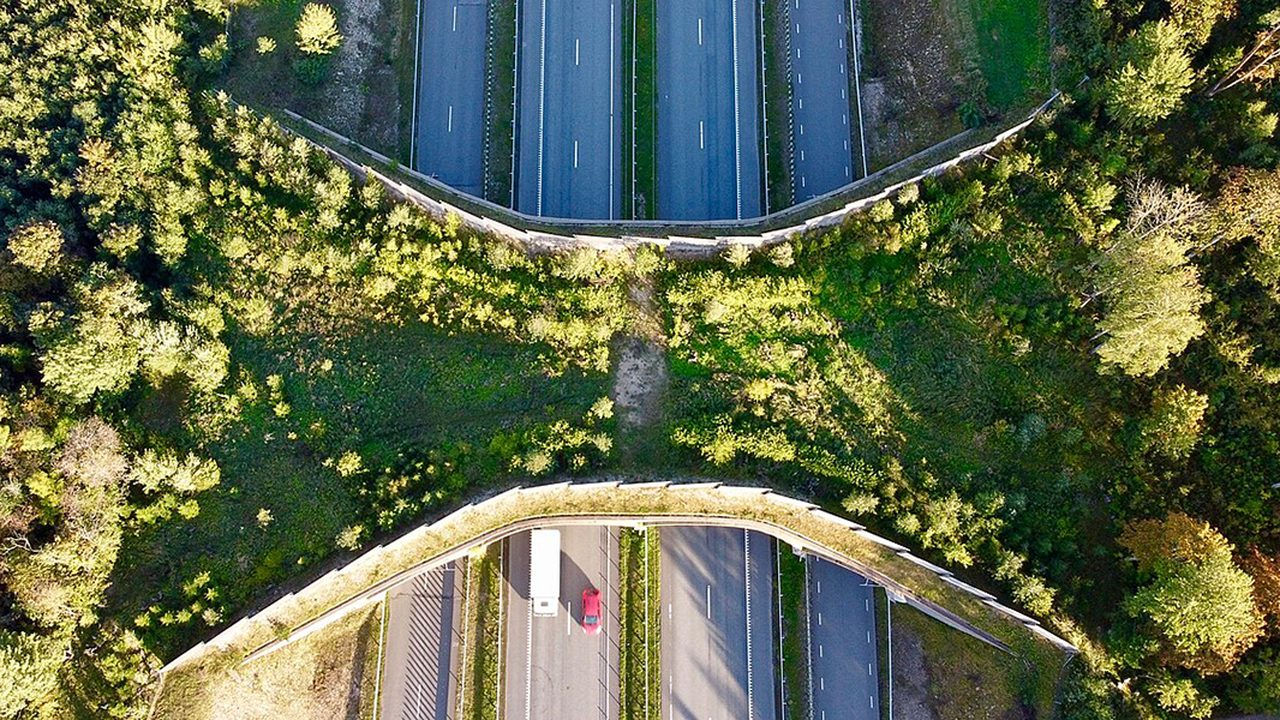
Pollinator pathways and flora plantings are connected networks of flowering vegetation that provide continuous foraging and habitat resources for pollinators across urban environments.
What this strategy does
Creates linked planting corridors that support pollinator movement and persistence.
Avoids isolated, single-species, or short-duration plantings.
Context
Urbanisation fragments habitat and limits pollinator movement; coordinated planting improves ecological connectivity and resilience in towns and cities.
Technical considerations
Design considerations
Plant selection and diversity
- Prioritise locally appropriate native flowering plants to support native pollinators and established plant–pollinator relationships.1
- Use mixed plantings with non-invasive ornamentals only where needed to extend flowering periods; non-natives must supplement, not replace, natives.2, 3, 4
- Maximise plant species richness to support diverse pollinator communities and functional redundancy.2, 5, 6, 7
Spatial and habitat structure
- Incorporate layered vegetation (groundcovers, herbaceous plants, shrubs, trees) to increase foraging and nesting opportunities.2, 6, 8
- Specify species with overlapping flowering times to maintain year-round resource availability.2, 3
- Provide nesting and shelter features such as dead wood, and low-disturbance zones.1, 7
Implementation considerations
Management and performance
- Reduce mowing frequency and avoid intensive maintenance regimes that remove flowers or nesting habitat.2, 12
- Urban soils may have altered nutrients or compaction affecting plant establishment and long-term diversity.12
Issues & barriers
Habitat fragmentation
- High impervious surface cover reduces pollinator movement and disproportionately affects small-bodied and specialist species.9, 10, 11
Planting trade-offs
- Poorly selected non-native species can disrupt plant–pollinator networks or become invasive.2, 3, 11
Competing land-use demands
- Recreation, aesthetics, and maintenance expectations can limit floral density and habitat persistence.2, 12
Synergies & opportunities
- Climate change – Pollinator plantings contribute to urban cooling, stormwater management, and ecosystem resilience.13, 14, 15, 16, 17
- Human wellbeing – Biodiverse, flowering landscapes improve mental health, social connection, and perceived environmental quality.2, 4, 18
- Food security – Diverse pollinator communities support urban food production and stabilise pollination services.2, 19, 20
Financial case
Ecosystem services and performance value
- Improved pollination services support higher yields in urban agriculture and community gardens.6, 9, 20
Cost-effectiveness
- Perennial, biodiverse plantings reduce long-term maintenance, chemical inputs, and replacement costs.6
Resilience benefits
- Increased ecological resilience lowers costs associated with pest outbreaks and infrastructure stress.6, 20
Monitoring & evaluation metrics
Core metric
Advanced or long-term metric
- Plant–pollinator interaction network complexity and pollination success (e.g. fruit or seed set).9, 21, 22, 23
Additional resources or tools
- Pollinator Pathmaker: Algorithmic tool for designing pollinator-supportive gardens.
References
- Iwasaki, J., & Hogendoorn, K. (2023). The conservation of urban flower visitors Down Under. Frontiers in Sustainable Cities, 5. https://doi.org/10.3389/frsc.2023.1103257
- Salisbury, A., Armitage, J., Bostock, H., Perry, J., Tatchell, M., & Thompson, K. (2015). Enhancing gardens as habitats for flower-visiting aerial insects: Should we plant native or exotic species? Journal of Applied Ecology, 52, 1156–1164. https://doi.org/10.1111/1365-2664.12499
- Poole, O., Costa, A., Kaiser-Bunbury, C., & Shaw, R. (2024). Pollinators respond positively to urban green space enhancements using wild and ornamental flowers. Insect Conservation and Diversity, 18, 16–28. https://doi.org/10.1111/icad.12779
- Toscano, S., Romano, D., Lazzeri, V., Leotta, L., & Bretzel, F. (2025). How can plants used for ornamental purposes contribute to urban biodiversity? Sustainability. https://doi.org/10.3390/su17094061
- Kral-O’Brien, K., O’Brien, P., Hovick, T., & Harmon, J. (2021). Higher plant richness supports higher pollinator richness across many land use types. Annals of the Entomological Society of America, 114, 267–275. https://doi.org/10.1093/aesa/saaa061
- Erickson, E., Patch, H., & Grozinger, C. (2021). Herbaceous perennial ornamental plants can support complex pollinator communities. Scientific Reports, 11. https://doi.org/10.1038/s41598-021-95892-w
- Majewska, A., & Altizer, S. (2019). Planting gardens to support insect pollinators. Conservation Biology, 34. https://doi.org/10.1111/cobi.13271
- Sharmin, M., et al. (2024). Urban greening with shrubs can supercharge invertebrate abundance and diversity. Scientific Reports, 14. https://doi.org/10.1038/s41598-024-58909-8
- Bennett, A., & Lovell, S. (2019). Landscape and local site variables influence pollinators and pollination services in urban agriculture. PLoS ONE, 14. https://doi.org/10.1371/journal.pone.0212034
- Wenzel, A., et al. (2020). How urbanization is driving pollinator diversity and pollination. Biological Conservation, 241, 108321. https://doi.org/10.1016/j.biocon.2019.108321
- Baldock, K. (2020). Opportunities and threats for pollinator conservation in cities. Current Opinion in Insect Science, 38, 63–71. https://doi.org/10.1016/j.cois.2020.01.006
- Rust, W., et al. (2024). Soil–plant–pollinator relationships in urban grass and meadow habitats. Diversity. https://doi.org/10.3390/d16060354
- Pataki, D., et al. (2021). The benefits and limits of urban tree planting. Frontiers in Ecology and Evolution, 9. https://doi.org/10.3389/fevo.2021.603757
- Kisvarga, S., et al. (2023). Plant responses to global climate change and urbanisation. Horticulturae. https://doi.org/10.3390/horticulturae9091051
- Sharifi, A. (2020). Co-benefits and synergies between urban climate change mitigation and adaptation measures. Science of the Total Environment, 750, 141642. https://doi.org/10.1016/j.scitotenv.2020.141642
- Fan, K., et al. (2023). Soil biodiversity supports multiple ecosystem functions in urban greenspaces. Nature Ecology & Evolution, 7, 113–126. https://doi.org/10.1038/s41559-022-01935-4
- Shin, Y., et al. (2022). Actions to halt biodiversity loss generally benefit the climate. Global Change Biology, 28, 2846–2874. https://doi.org/10.1111/gcb.16109
- Marselle, M., et al. (2021). Biodiversity and health in the urban environment. Current Environmental Health Reports, 8, 146–156. https://doi.org/10.1007/s40572-021-00313-9
- Katumo, D., et al. (2022). Pollinator diversity benefits ecosystems and human welfare. Plant Diversity, 44, 429–435. https://doi.org/10.1016/j.pld.2022.01.005
- Lowenstein, D., Matteson, K., & Minor, E. (2015). Diversity of wild bees supports pollination services in an urbanised landscape. Oecologia, 179, 811–821. https://doi.org/10.1007/s00442-015-3389-0
- Daniels, B., et al. (2020). A “plan bee” for cities. PLoS ONE, 15. https://doi.org/10.1371/journal.pone.0235492
- Theodorou, P., et al. (2017). Flower-visitor network structure across urban gradients. Functional Ecology, 31, 838–847. https://doi.org/10.1111/1365-2435.12803
- Kaiser-Bunbury, C., & Blüthgen, N. (2015). Integrating network ecology with applied conservation. AoB Plants, 7. https://doi.org/10.1093/aobpla/plv076
RELATED DESIGN STRATEGIES //
Specific design interventions that support ecological health, habitat quality, and species diversity across urban and built environments.