
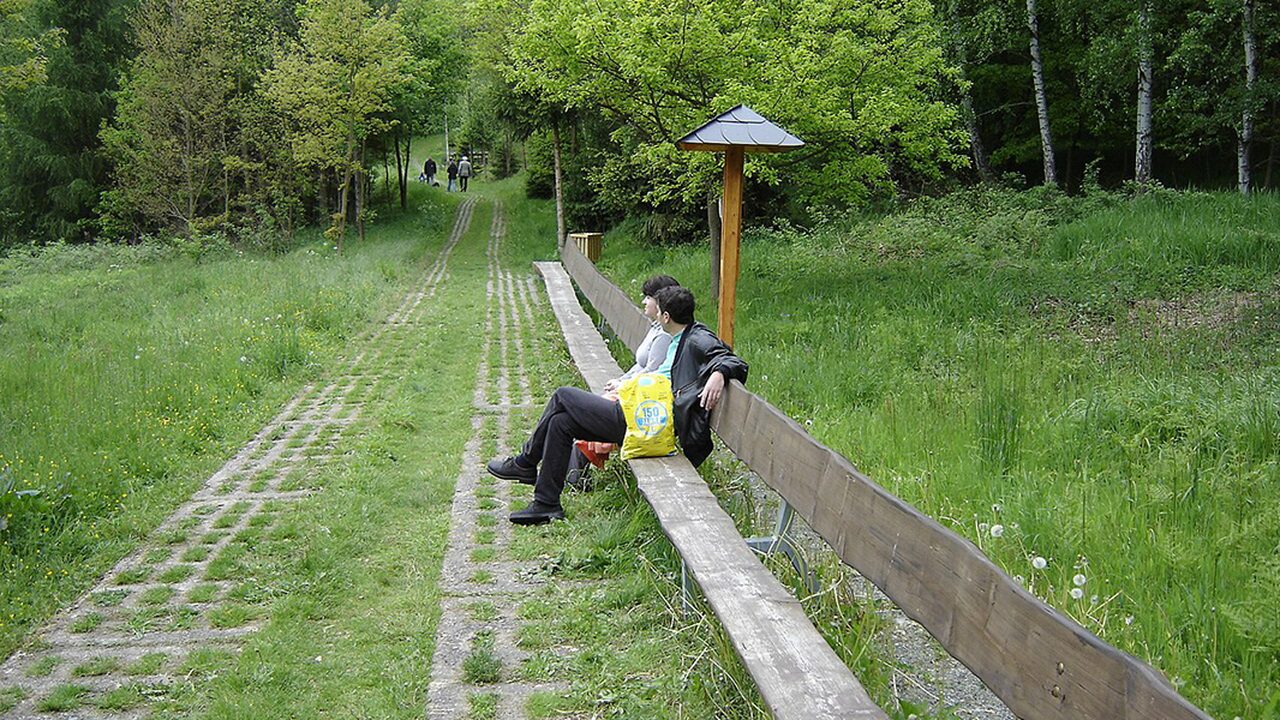
Definition
Permeable paving and surfacing are hardscape systems designed to allow rainfall to infiltrate through the surface into underlying layers, reducing runoff and supporting soil, water, and vegetation functions within urban environments.
What this strategy does
Replaces impermeable sealed surfaces with porous or permeable materials that manage stormwater at source and reduce soil sealing. Avoids fully impervious pavements that disconnect rainfall from soils and drainage systems.
Context
In New Zealand urban areas, high levels of surface sealing contribute to flash flooding, degraded freshwater quality, and loss of soil function. Permeable paving supports water-sensitive urban design objectives by improving infiltration, attenuating runoff, and reducing pollutant loads entering receiving environments.
Technical considerations
Design considerations
Permeability and hydrology
Design pavements to achieve infiltration rates appropriate to rainfall intensity, soil conditions, and loading, while maintaining structural stability and minimising long-term clogging.1, 2, 3, 4, 5
Material and structure
Select permeable concrete, modular pavers, porous asphalt, or gravel systems based on pore structure, durability, and compatibility with soil biota and root growth. Porosity and material chemistry influence both hydrological and ecological performance.2, 4, 6, 7
Pollutant removal
Specify systems with demonstrated capacity to retain sediments, nutrients, heavy metals, and microplastics to avoid contaminant transfer to soils and waterways.3, 7, 8
Vegetation support
Where vegetation is integrated, provide adequate rooting volume and select species tolerant of compaction, variable moisture, and local maintenance regimes.9, 10
Implementation considerations
Design priority
Integrate permeable paving early with stormwater, landscape, and structural design to avoid retrofitting constraints.
Key constraint
Performance is reduced in areas with high groundwater tables, low-permeability subsoils, or insufficient maintenance access.11
Relevant tools or standards
Coordinate design with council-approved water-sensitive urban design guidance and pavement construction standards.
Issues and barriers
Clogging and maintenance
Sediment accumulation and surface wear can significantly reduce infiltration capacity without regular maintenance.2, 3, 5
Pollutant accumulation
Captured pollutants may pose ecological risks if systems are not designed or maintained to manage long-term contaminant loads.3, 7
Hydrological limitations
In unsuitable soil or groundwater conditions, permeable pavements may deliver limited stormwater or ecological benefit.11
Design and material constraints
Standardised pavement systems are often optimised for drainage performance rather than habitat value, limiting biodiversity outcomes.6, 12
Synergies and opportunities
Climate change – Reduces runoff volumes and peak flows during extreme rainfall and contributes to urban cooling through enhanced evaporation.11, 13, 14, 15, 16, 17, 18, 19, 20, 21
Human wellbeing – Improves local environmental quality by filtering pollutants and supporting greener, more permeable streetscapes.3, 4, 7, 10, 22
Disaster risk reduction – Delays and attenuates stormwater flows, reducing flood risk and pressure on downstream infrastructure.13, 14, 15, 16, 17, 18
Financial case
Long-term cost savings
Reduced demand for conventional stormwater infrastructure and lower flood damage costs can offset higher upfront construction costs.22, 23, 24
Cost-effectiveness
Investment logic
Where integrated with rainwater harvesting or distributed stormwater systems, permeable paving can deliver high water-use efficiency and favourable lifecycle economics.25
Monitoring and evaluation metrics
Core metric
Surface and sub-surface infiltration rates to detect clogging and performance decline over time.2, 3, 5, 26
Advanced or long-term metrics
Runoff volume and peak flow reduction compared with impermeable surfaces.5, 11, 17, 18
Pollutant removal efficiency for sediments, nutrients, metals, hydrocarbons, and microplastics.3, 7, 8, 26, 27
Soil moisture, temperature, and related soil condition indicators beneath permeable systems.10
Vegetation cover and species richness where planting is incorporated.12, 28
Additional resources or tools
New Zealand technical guidance
Auckland Council Permeable Pavement Construction Guide
Technical guidance on design, construction, and maintenance of permeable pavements.
Wellington Water Sensitive Urban Design Guide
Guidance on integrating permeable paving within WSUD frameworks.
NZILA Permeable Pavements Overview
Overview of permeable pavement types, benefits, and maintenance considerations.
Build Magazine – Permeable Surfaces
Technical overview of permeable surface options in NZ urban contexts.
References
- Bean, E., Clark, M., & Larson, B. (2019). Permeable pavement systems: Technical considerations. EDIS. https://doi.org/10.32473/edis-ae530-2019
- Sambito, M., Severino, A., Freni, G., & Neduzha, L. (2021). A systematic review of the hydrological, environmental and durability performance of permeable pavement systems. Sustainability, 13, 4509. https://doi.org/10.3390/su13084509
- Hernández-Crespo, C., Fernández-Gonzalvo, M., Martín, M., & Andrés-Doménech, I. (2019). Influence of rainfall intensity and pollution build-up on permeable pavements. Science of the Total Environment, 684, 303–313. https://doi.org/10.1016/j.scitotenv.2019.05.271
- Xie, N., Akin, M., & Shi, X. (2019). Permeable concrete pavements: Environmental benefits and durability. Journal of Cleaner Production. https://doi.org/10.1016/j.jclepro.2018.11.134
- Kumar, K., Kozak, J., Hundal, L., Cox, A., Zhang, H., & Granato, T. (2016). In-situ infiltration performance of permeable pavements. Journal of Environmental Management, 167, 8–14. https://doi.org/10.1016/j.jenvman.2015.11.019
- Guan, X., Wang, J., & Xiao, F. (2021). Sponge city strategy and pavement materials. Journal of Cleaner Production, 303, 127022. https://doi.org/10.1016/j.jclepro.2021.127022
- Kong, J., Jeong, S., Lee, J., & Jeong, S. (2025). Permeable pavement blocks and microplastic pollution. Science of the Total Environment, 966, 178649. https://doi.org/10.1016/j.scitotenv.2025.178649
- Liu, J., Yan, H., Liao, Z., Zhang, K., Schmidt, A., & Tao, T. (2019). Runoff pollution reduction by permeable pavements. Science of the Total Environment, 691, 1–8. https://doi.org/10.1016/j.scitotenv.2019.07.028
- Fini, A., Frangi, P., Mori, J., Donzelli, D., & Ferrini, F. (2017). Nature-based solutions to mitigate soil sealing. Environmental Research, 156, 443–454. https://doi.org/10.1016/j.envres.2017.03.032
- Fini, A., Frangi, P., Comin, S., et al. (2022). Effects of pavements on established urban trees: Growth, physiology, ecosystem services and disservices. Landscape and Urban Planning. https://doi.org/10.1016/j.landurbplan.2022.104501
- Liu, Y., Li, T., & Long, Y. (2020). Urban heat island mitigation and hydrology of permeable pavement: A pilot-scale study. Journal of Cleaner Production, 244, 118938. https://doi.org/10.1016/j.jclepro.2019.118938
- Pille, L., & Säumel, I. (2021). The water-sensitive city meets biodiversity: Habitat services of rainwater management measures in highly urbanised landscapes. Ecology and Society, 26. https://doi.org/10.5751/ES-12386-260223
- Kourtis, I., Bellos, V., Kopsiaftis, G., Psiloglou, B., & Tsihrintzis, V. (2021). Methodology for holistic assessment of grey-green flood mitigation measures for climate change adaptation in urban basins. Journal of Hydrology. https://doi.org/10.1016/j.jhydrol.2021.126885
- Zhu, H., Yu, M., Zhu, J., Lu, H., & Cao, R. (2019). Simulation study on effect of permeable pavement on reducing flood risk of urban runoff. International Journal of Transportation Science and Technology, 8, 373–382. https://doi.org/10.1016/j.ijtst.2018.12.001
- Kim, K., Riley, S., Yamashita, E., Marasco, D., & Webster, L. (2023). Promoting porosity: Adaptation of urban roadways for flooding and climate change. Transportation Research Record, 2678, 549–562. https://doi.org/10.1177/03611981231208188
- Zhao, L., Zhang, T., Li, J., Zhang, L., & Feng, P. (2023). Numerical simulation study of urban hydrological effects under low impact development with a physical experimental basis. Journal of Hydrology. https://doi.org/10.1016/j.jhydrol.2023.129191
- Tirpak, R., Winston, R., Feliciano, M., Dorsey, J., & Epps, T. (2021). Impacts of permeable interlocking concrete pavement on the runoff hydrograph: Volume reduction, peak flow mitigation, and extension of lag times. Hydrological Processes, 35. https://doi.org/10.1002/hyp.14167
- Braswell, A., Winston, R., & Hunt, W. (2018). Hydrologic and water quality performance of permeable pavement with internal water storage over a clay soil in Durham, North Carolina. Journal of Environmental Management, 224, 277–287. https://doi.org/10.1016/j.jenvman.2018.07.040
- Wang, J., Meng, Q., Zou, Y., et al. (2022). Performance synergism of pervious pavement on stormwater management and urban heat island mitigation: A review. Water Research, 221, 118755. https://doi.org/10.1016/j.watres.2022.118755
- Huang, Y., Sun, H., Liu, Y., et al. (2024). Application of pervious concrete pavement in the “breathe in-breathe out” design for sponge cities in China. Environmental Science and Pollution Research. https://doi.org/10.1007/s11356-024-33760-6
- Li, X., Deng, J., Xie, W., et al. (2022). Comprehensive benefit evaluation of pervious pavement based on China’s sponge city concept. Water, 14, 1500. https://doi.org/10.3390/w14091500
- Zhou, L., Shen, G., Woodfin, T., Chen, T., & Song, K. (2018). Ecological and economic impacts of green roofs and permeable pavements at the city level: The case of Corvallis, Oregon. Journal of Environmental Planning and Management, 61, 430–450. https://doi.org/10.1080/09640568.2017.1314859
- Kamali, M., Delkash, M., & Tajrishy, M. (2017). Evaluation of permeable pavement responses to urban surface runoff. Journal of Environmental Management, 187, 43–53. https://doi.org/10.1016/j.jenvman.2016.11.027
- Cacciuttolo, C., Garrido, F., Painenao, D., & Sotil, A. (2023). Evaluation of the use of permeable interlocking concrete pavement in Chile: Urban infrastructure solution for adaptation and mitigation against climate change. Water. https://doi.org/10.3390/w15244219
- Klein, C., Maykot, J., Ghisi, E., & Thives, L. (2023). Financial feasibility of harvesting rainwater from permeable pavements: A case study in a city square. Sci. https://doi.org/10.3390/sci5010001
- Selbig, W., Buer, N., & Danz, M. (2019). Stormwater-quality performance of lined permeable pavement systems. Journal of Environmental Management, 251, 109510. https://doi.org/10.1016/j.jenvman.2019.109510
- Winston, R., Arend, K., Dorsey, J., & Hunt, W. (2020). Water quality performance of a permeable pavement and stormwater harvesting treatment train stormwater control measure. Blue-Green Systems. https://doi.org/10.2166/bgs.2020.914
- Da Silva, W., De Matos, A., & Zenni, R. (2024). Habitat permeability drives community metrics, functional traits, and herbivory in neotropical spontaneous urban flora. Flora. https://doi.org/10.1016/j.flora.2024.152581