
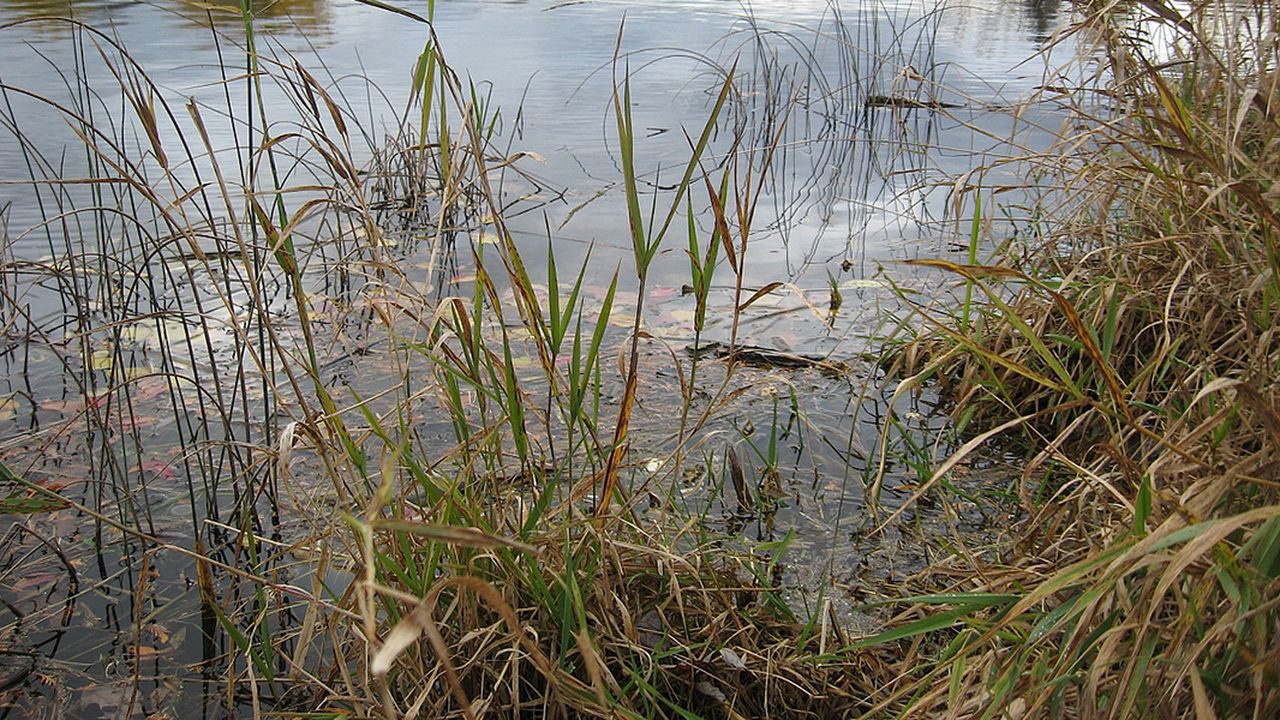

Urban water features
SCALES / Neighbourhood
Definition
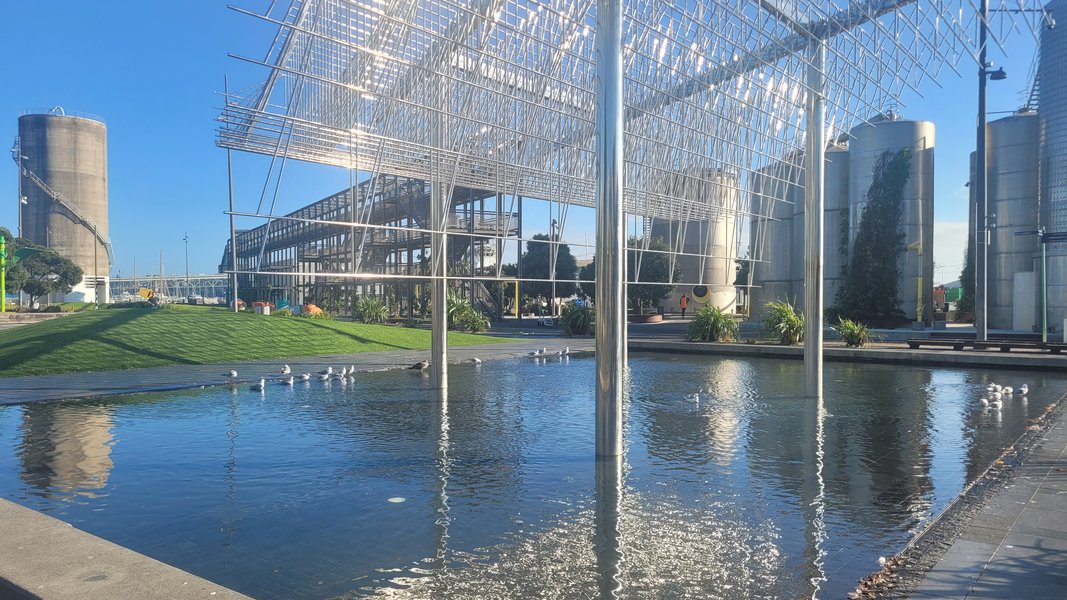
Urban water features are designed aquatic elements (e.g. ponds, fountains, water walls, streams) that provide habitat, drinking, and bathing resources for urban wildlife.
What this strategy does
Creates small but ecologically functional water habitats within built environments; avoids purely ornamental, sterile, or hard-edged water design.
Context
In urban environments with limited natural freshwater, well-designed water features can act as biodiversity nodes and stepping stones between green spaces, provided water quality and habitat structure are actively managed.1
Technical considerations
Design considerations
Habitat complexity
- Incorporate varied depths, shallow margins, and vegetated edges to support multiple life stages and taxa.1, 2, 3
Vegetation integration
- Use native aquatic and riparian planting to provide shelter, breeding substrate, and food while improving water quality.2, 3, 4
Scale and diversity
- Distribute multiple water features or pond types across sites or neighbourhoods to increase overall species richness and resilience.1, 5, 6
Water quality control
- Design to limit nutrient loading, contaminants, and untreated runoff to avoid eutrophication and oxygen stress.1, 4
Implementation considerations
Design priority
- Prioritise ecological function alongside aesthetic and recreational objectives.
Key constraint
- Urban runoff and maintenance regimes can rapidly degrade habitat quality if not addressed at the design stage.1, 2, 4
Issues & barriers
Water quality and pollution
- Runoff-borne nutrients, metals, and contaminants can reduce oxygen levels and biodiversity if unmanaged.1, 2, 4, 7
Habitat simplification
- Steep banks, hard edges, and vegetation removal reduce habitat suitability and species diversity.1, 2, 3, 7
Invasive species
- Disturbed or poorly managed water features are vulnerable to invasive plants and animals that displace native species.1, 2, 3
Governance gaps
- Policy and maintenance responsibilities may not adequately support biodiversity-focused water feature design.3, 8
Synergies & opportunities
- Climate change – Evaporative cooling and shading reduce urban heat; water features contribute to stormwater retention.9, 10, 11, 12, 13
- Human wellbeing – Biodiverse blue–green spaces support mental restoration, recreation, and social interaction.11, 12, 14, 15
Financial case
Flood risk reduction
Climate regulation
Property and amenity value
- Proximity to high-quality water features is associated with increased property values and local economic activity.18, 19
Monitoring & evaluation metrics
Core metric
Advanced or long-term metric
- Water quality parameters (nutrients, dissolved oxygen, temperature, turbidity, contaminants).4, 22, 23, 24, 25, 26
Additional resources or tools
- Wellington Water Sensitive Urban Design Guide. Urban water and stormwater design guidance.
- GD04 Water Sensitive Design Guide. Practical guidance for stormwater and biodiversity outcomes.
- LIUDD Stormwater Guidelines (Kāpiti Coast). Low-impact urban design and development.
References
- Oertli, B., & Parris, K. (2019). Toward management of urban ponds for freshwater biodiversity. Ecosphere. https://doi.org/10.1002/ecs2.2810
- Hill, M., Biggs, J., Thornhill, I., et al. (2017). Urban ponds as an aquatic biodiversity resource in modified landscapes. Global Change Biology, 23. https://doi.org/10.1111/gcb.13401
- Hassall, C. (2014). The ecology and biodiversity of urban ponds. Wiley Interdisciplinary Reviews: Water, 1. https://doi.org/10.1002/wat2.1014
- Pinel-Alloul, B., Giani, A., Taranu, Z., et al. (2021). Foodweb biodiversity and community structure in urban waterbodies. Hydrobiologia, 849, 3761–3787. https://doi.org/10.1007/s10750-021-04678-8
- Hill, M., Mathers, K., & Wood, P. (2015). Aquatic macroinvertebrate biodiversity of urban ponds. Hydrobiologia, 760, 225–238. https://doi.org/10.1007/s10750-015-2328-8
- Suhling, F., & Johansson, F. (2022). Biodiversity in urban blue space. Basic and Applied Ecology. https://doi.org/10.1016/j.baae.2022.07.004
- Vermonden, K., Leuven, R., van der Velde, G., et al. (2009). Urban drainage systems as habitat. Biological Conservation, 142, 1105–1115. https://doi.org/10.1016/j.biocon.2009.01.026
- Pille, L., & Säumel, I. (2021). Water-sensitive cities and biodiversity. Ecology and Society, 26. https://doi.org/10.5751/ES-12386-260223
- Quaranta, E., Dorati, C., & Pistocchi, A. (2021). Water, energy and climate benefits of urban greening. Scientific Reports, 11. https://doi.org/10.1038/s41598-021-88141-7
- Oral, H., Carvalho, P., Gajewska, M., et al. (2020). Nature-based solutions for urban water management. Blue-Green Systems. https://doi.org/10.2166/bgs.2020.932
- Higgins, S., Thomas, F., Goldsmith, B., et al. (2019). Urban freshwaters, biodiversity and human health. Wiley Interdisciplinary Reviews: Water, 6. https://doi.org/10.1002/wat2.1339
- Hoyle, H., & Sant’Anna, C. (2020). Climate-adapted urban green infrastructure. Landscape Research, 48, 460–476. https://doi.org/10.1080/01426397.2020.1829573
- Krivtsov, V., Forbes, H., Birkinshaw, S., et al. (2022). Ecosystem services of urban ponds. Blue-Green Systems. https://doi.org/10.2166/bgs.2022.021
- Fisher, J., Irvine, K., Bicknell, J., et al. (2020). Perceived biodiversity and wellbeing benefits. Science of the Total Environment, 143095. https://doi.org/10.1016/j.scitotenv.2020.143095
- Belaire, J., Higgins, C., Zoll, D., et al. (2022). Fine-scale monitoring of biodiversity and ecosystem services. Science of the Total Environment, 157801. https://doi.org/10.1016/j.scitotenv.2022.157801
- Alikhani, S., Nummi, P., & Ojala, A. (2021). Urban wetlands: ecological and cultural values. Water. https://doi.org/10.3390/w13223301
- Jandaghian, Z., & Colombo, A. (2024). Water bodies and urban heat mitigation. Buildings. https://doi.org/10.3390/buildings14092945
- Collins, R., Schaafsma, M., & Hudson, M. (2017). The value of green walls to urban biodiversity. Land Use Policy, 64, 114–123. https://doi.org/10.1016/j.landusepol.2017.02.025
- Knapp, S., Schmauck, S., & Zehnsdorf, A. (2019). Biodiversity impacts of constructed wetlands. Sustainability. https://doi.org/10.3390/su11205846
- Prodanović, V., Bach, P., & Stojković, M. (2024). Planning urban nature-based solutions for biodiversity. Urban Ecosystems. https://doi.org/10.1007/s11252-024-01558-6
- Peeters, E., Wilhelm, M., Gerritsen, A., & Seelen, L. (2023). Ecological characterisation of urban ponds. Frontiers of Biogeography. https://doi.org/10.21425/f5fbg57816
- Wang, Y., Ho, I., Chen, Y., et al. (2021). Real-time water quality monitoring for biodiversity. IEEE Internet of Things Journal, 9, 14366–14374. https://doi.org/10.1109/JIOT.2021.3078166
- Odilov, B., Madraimov, A., Yusupov, O., et al. (2024). Deep learning for aquatic ecosystem monitoring. Natural and Engineering Sciences. https://doi.org/10.28978/nesciences.1491795
- Wang, S., Zhang, P., Zhang, D., & Chang, J. (2023). Biotic integrity indices for urban lakes. Journal of Environmental Management, 341, 118026. https://doi.org/10.1016/j.jenvman.2023.118026
- Calderon, M., Almeida, C., González, P., & Jofré, M. (2019). Amphibian communities and urban water quality. Urban Ecosystems. https://doi.org/10.1007/s11252-019-00862-w
- Chen, B., Mu, X., Chen, P., et al. (2021). UAV-based water quality estimation. Ecological Indicators. https://doi.org/10.1016/j.ecolind.2021.108434
RELATED DESIGN STRATEGIES //
Specific design interventions that support ecological health, habitat quality, and species diversity across urban and built environments.