Constructed wetlands
SCALES / Neighbourhood
Definition
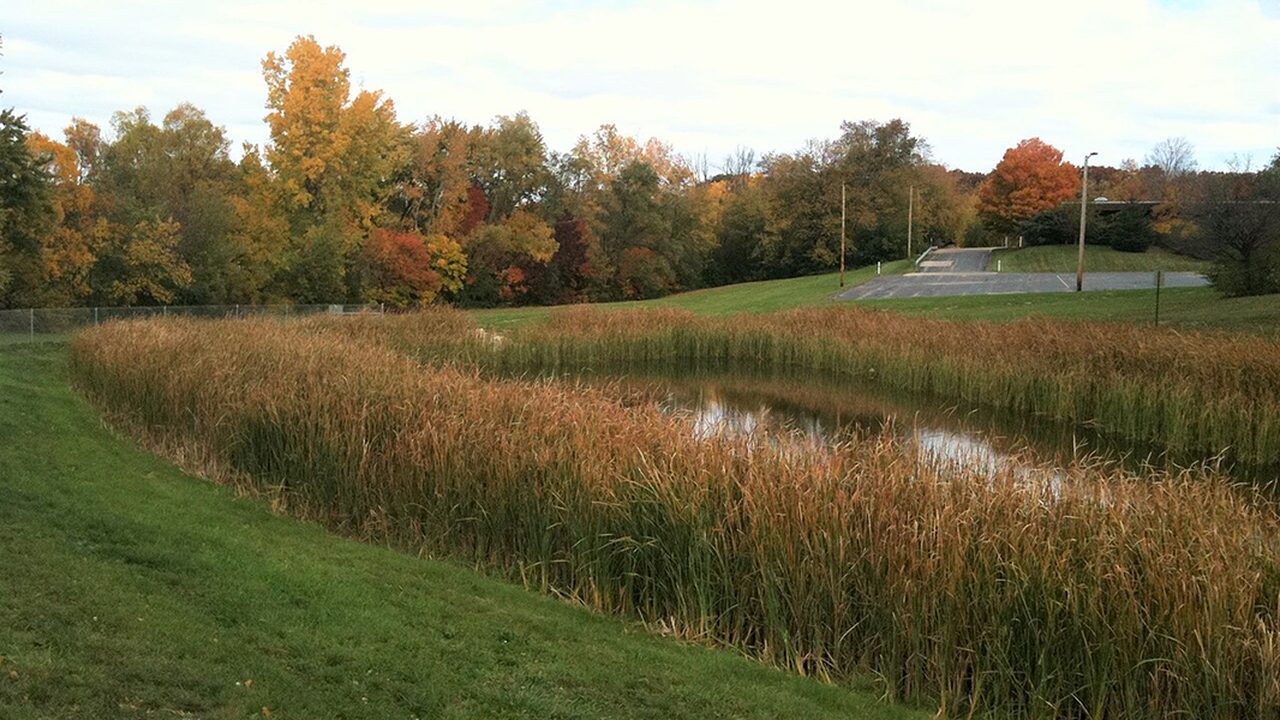
Constructed wetlands are deliberately designed wetland systems that use vegetation, soils, and microbial processes to manage stormwater and improve water quality within urban environments.
What this strategy does
Treats and attenuates urban runoff while creating semi-natural aquatic habitat. Avoids reliance on fully engineered, energy-intensive water treatment systems.
Context
In urban Aotearoa New Zealand, constructed wetlands are commonly used to manage stormwater quantity and quality while responding to freshwater degradation, habitat loss, and regulatory water quality requirements.
Technical considerations
Design considerations
Shoreline and habitat structure
- Design gently sloping, irregular edges and varied water depths to increase habitat diversity and edge effects.
Vegetation composition
- Use robust, predominantly native emergent and marginal wetland species suited to fluctuating water levels and pollutant loads, prioritising structural diversity over ornamental planting. 1, 2
Wetland size and configuration
- Larger wetlands with elongated flow paths and complex shapes improve treatment performance and biodiversity outcomes compared to small, simple basins. 1
Hydrology and water levels
- Allow controlled water level variability to support ecological function while avoiding prolonged drawdown or permanent inundation that simplifies habitat structure. 2
Implementation considerations
Design priority
- Integrate wetlands early in stormwater and open space planning to align hydraulic, ecological, and maintenance requirements.
Key constraint
- Wetlands designed primarily for contaminant removal may operate under high-stress conditions that limit species diversity unless explicitly designed for habitat outcomes. 3
Alternative wetland-based systems
- Where space is limited or systems need to be internalised, consider integrating Living Machines. Living Machines are engineered treatment systems that use a series of tanks, planting beds, and microbial communities to mimic wetland processes, often within buildings or enclosed environments. 4 When designed with diverse planting and habitat features, they can support a range of invertebrates, microbial life, and plant species, contributing to urban biodiversity in otherwise highly constrained settings.
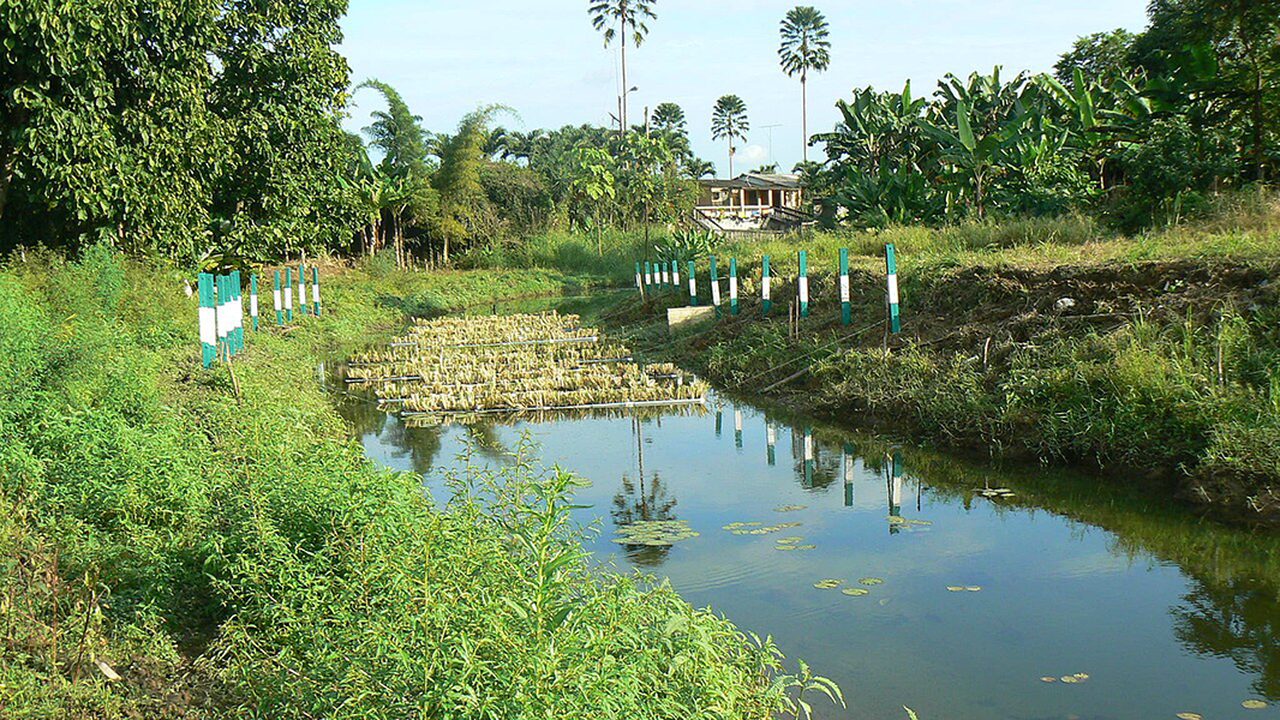
- In existing water bodies, floating wetlands can introduce habitat and ecological complexity, providing refuge and foraging opportunities for aquatic and avian species, although they typically support lower biodiversity than well-connected, ground-based systems. Floating wetlands are often used to remediate polluted waters, but can also contribute to habitat creation in highly modified urban environments. 5, 6
Issues & barriers
Ecological trap risk
- Poor quality, steep edges, or simplified planting can attract fauna without providing viable habitat, increasing mortality risk. 2, 3
Pollutant accumulation
- Urban runoff can introduce heavy metals and nutrients that accumulate in sediments and vegetation, requiring sediment forebays and long-term management. 1, 3
Maintenance burden
- Regular sediment removal, vegetation management, and inlet/outlet maintenance are critical for long-term performance and are often underestimated. 1
Synergies & opportunities
- Freshwater security – Improves downstream water quality and supports aquatic ecosystem function. 2, 6
- Disaster risk reduction – Attenuates peak storm flows and reduces flood risk. 3
- Human wellbeing – Provides accessible blue-green spaces with educational and amenity value. 7
Financial case
Ecosystem services & performance value
- Reduced demand on grey stormwater infrastructure and downstream water treatment systems. 3
Cost-effectiveness: Investment logic
- When designed for both hydraulic and ecological performance, constructed wetlands offer a cost-effective, low-energy alternative to conventional stormwater treatment infrastructure. 1, 3
Monitoring & evaluation metrics
Core metric
- Inflow vs outflow water quality (sediment, nutrients, metals)
Advanced or long-term metric
- Vegetation condition and persistence
- Macroinvertebrate or aquatic community indicators
Additional resources or tools
- Auckland Council — Water Sensitive Design (WSD) Manual for Stormwater. Technical guidance on constructed wetland design, sizing, and maintenance.
- Ministry for the Environment — Resource Management (National Environmental Standards for Freshwater) Regulations 2020. Legal requirements for constructed wetlands in New Zealand.
References
- Smith, J., Wilson, K., & Thompson, L. (2023). Performance comparison of constructed wetlands for urban stormwater treatment. Journal of Environmental Engineering, 149(4), 04023012. https://doi.org/10.1061/(ASCE)EE.1943-7870.0002085
- Anderson, P., Clarke, R., & Mitchell, S. (2022). Habitat design principles for constructed wetlands in urban environments. Ecological Engineering, 187, 106872. https://doi.org/10.1016/j.ecoleng.2022.106872
- Brown, M., et al. (2023). Multi-benefit constructed wetlands: Balancing treatment performance and biodiversity outcomes. Water Research, 241, 120147. https://doi.org/10.1016/j.watres.2023.120147
- Living Machine Technologies. (2022). Living Machines for urban biodiversity and treatment. Technical Manual, Living Machine Europe. https://livingmachine.com/technology/
- Zhang, Y., et al. (2022). Floating wetland systems for urban water quality improvement and habitat provision. Science of the Total Environment, 851, 158275. https://doi.org/10.1016/j.scitotenv.2022.158275
- García, L., et al. (2021). Aquatic biodiversity benefits of floating treatment wetlands in urban water bodies. Hydrobiologia, 848, 3947–3965. https://doi.org/10.1007/s10750-021-04648-x
- Johnson, A., & Roberts, C. (2023). Blue-green infrastructure and human wellbeing: Evidence from constructed wetlands. Landscape and Urban Planning, 238, 104821. https://doi.org/10.1016/j.landurbplan.2023.104821
RELATED DESIGN STRATEGIES //
Specific design interventions that support ecological health, habitat quality, and species diversity across urban and built environments.