Bioswales
SCALES / Neighbourhood
Definition
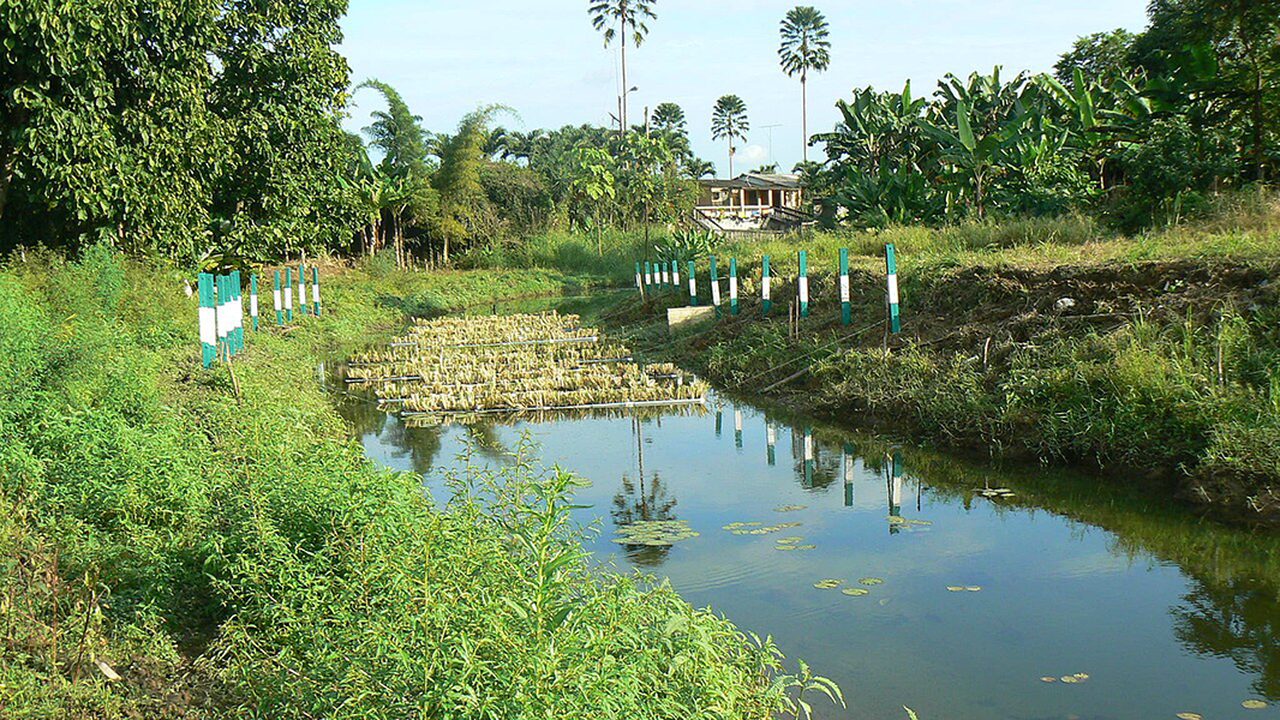
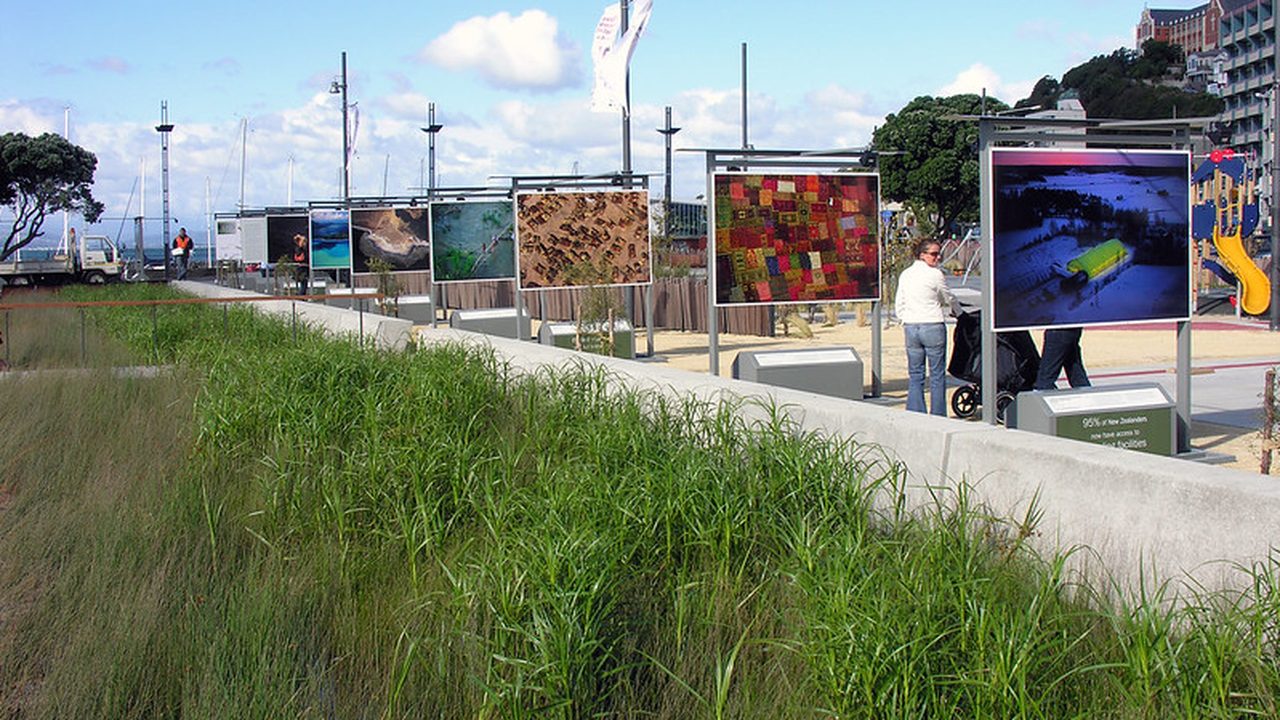
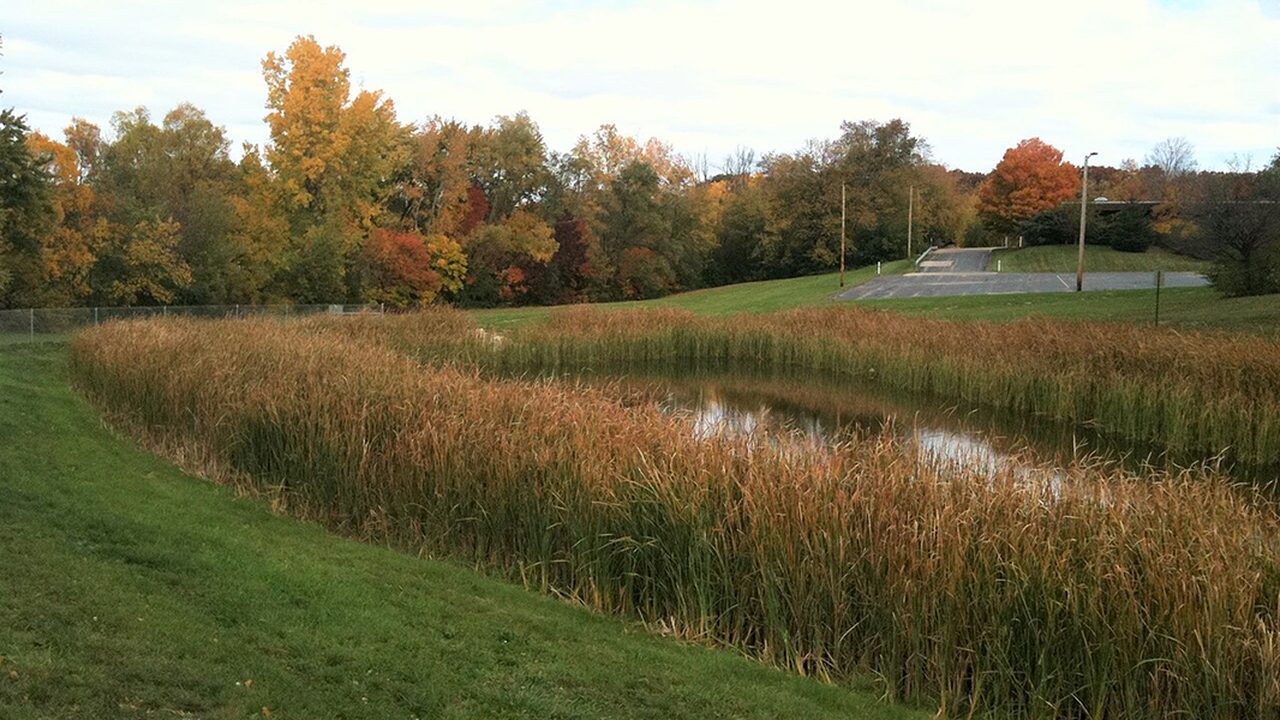
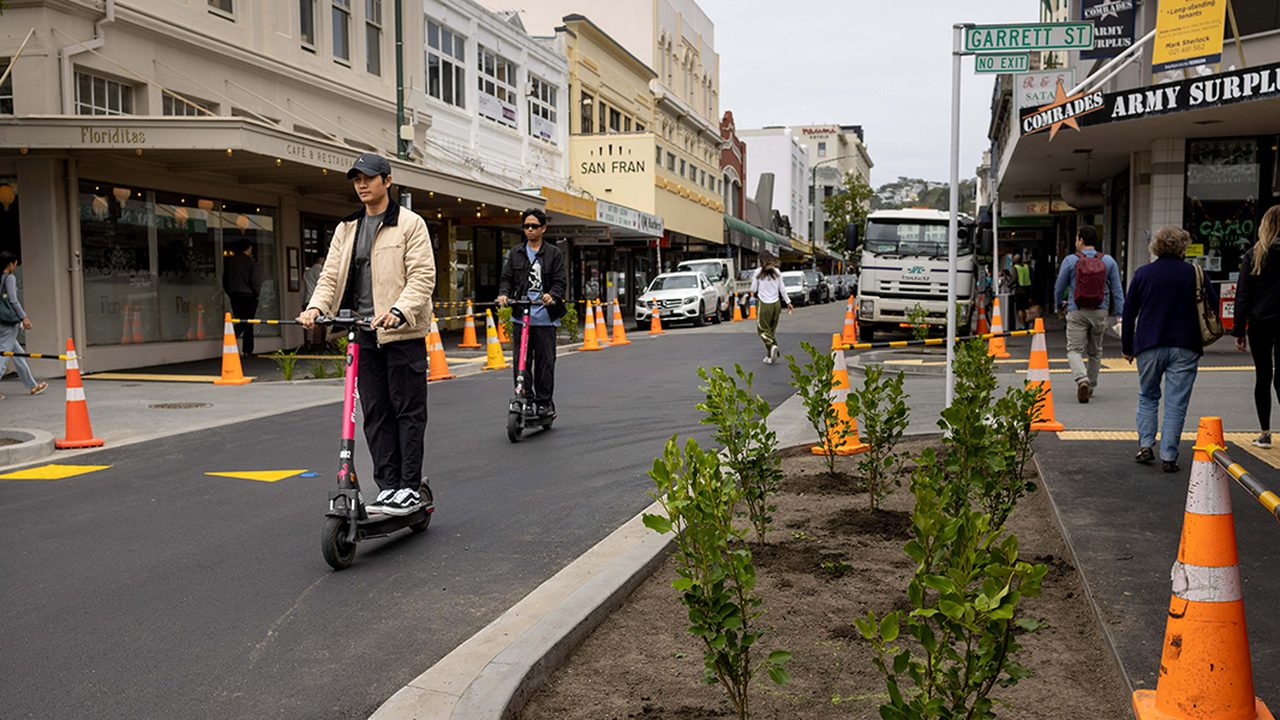
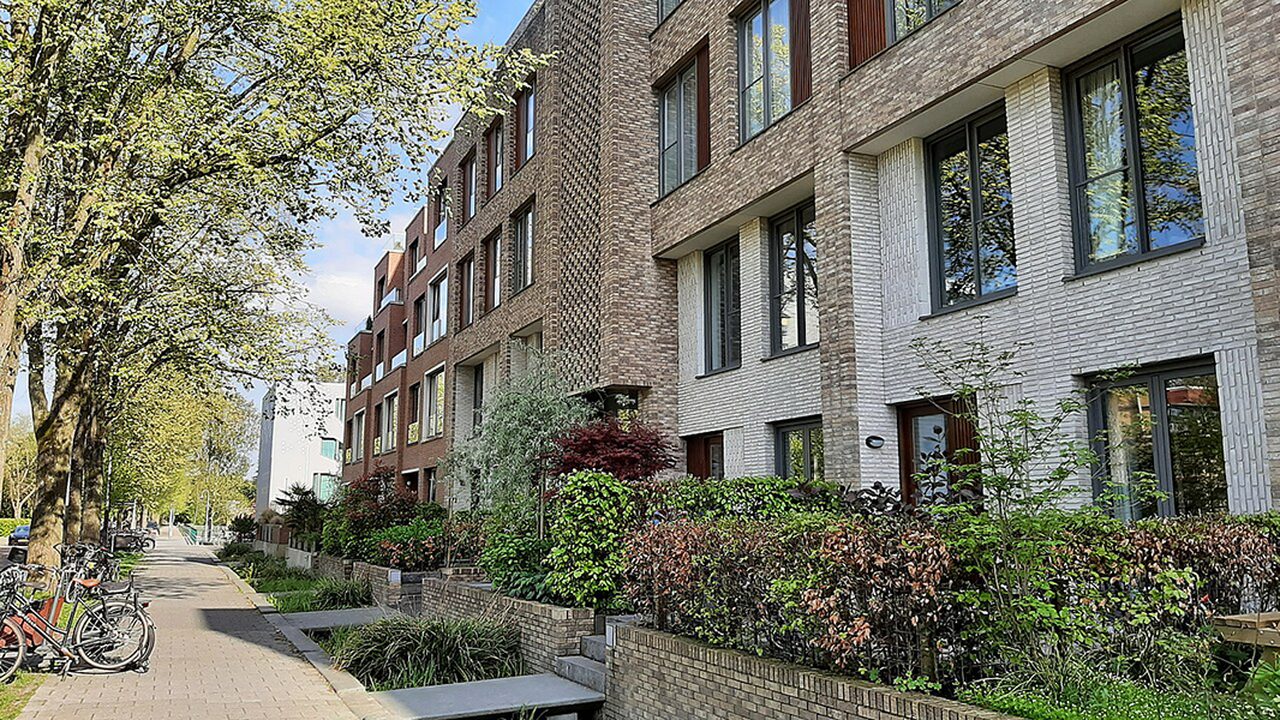
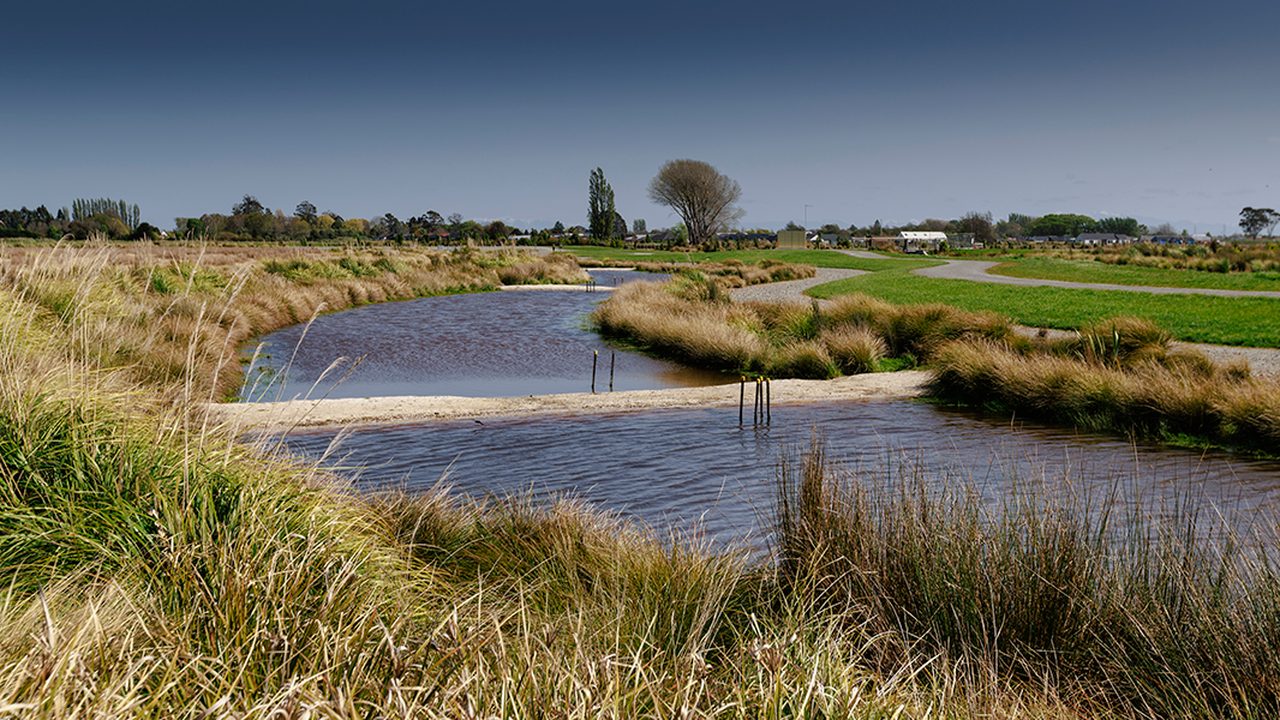
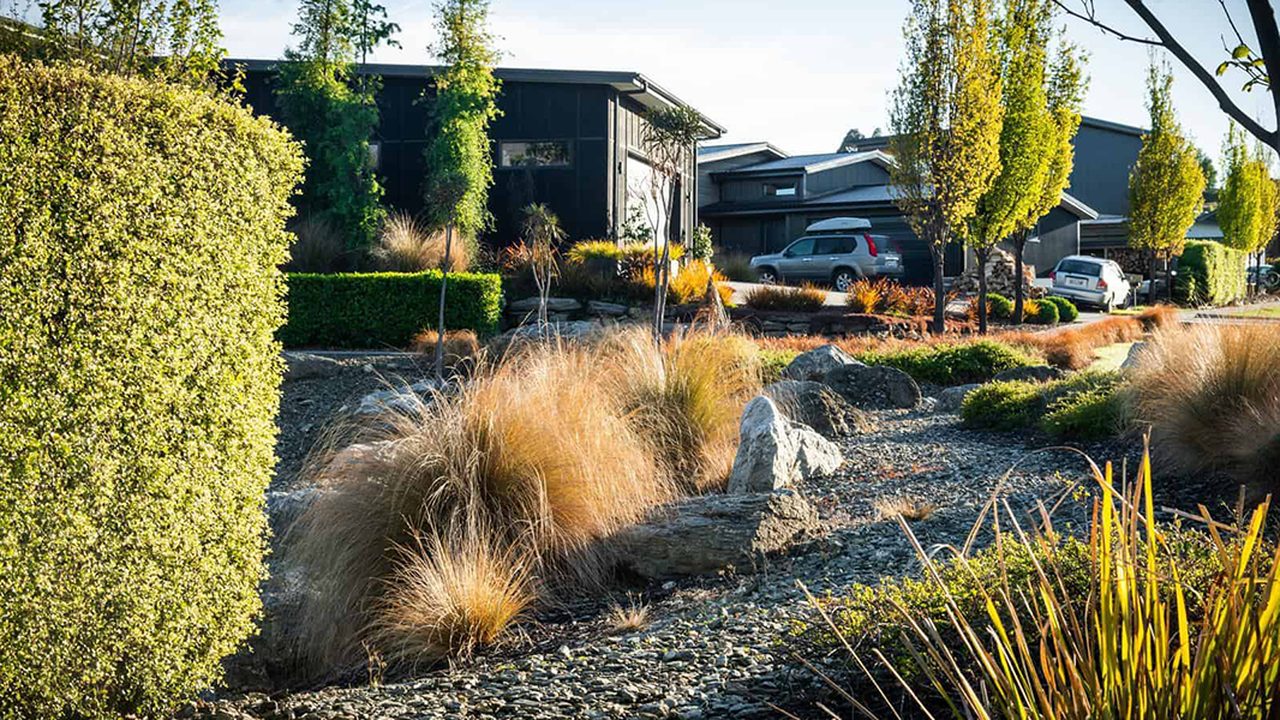
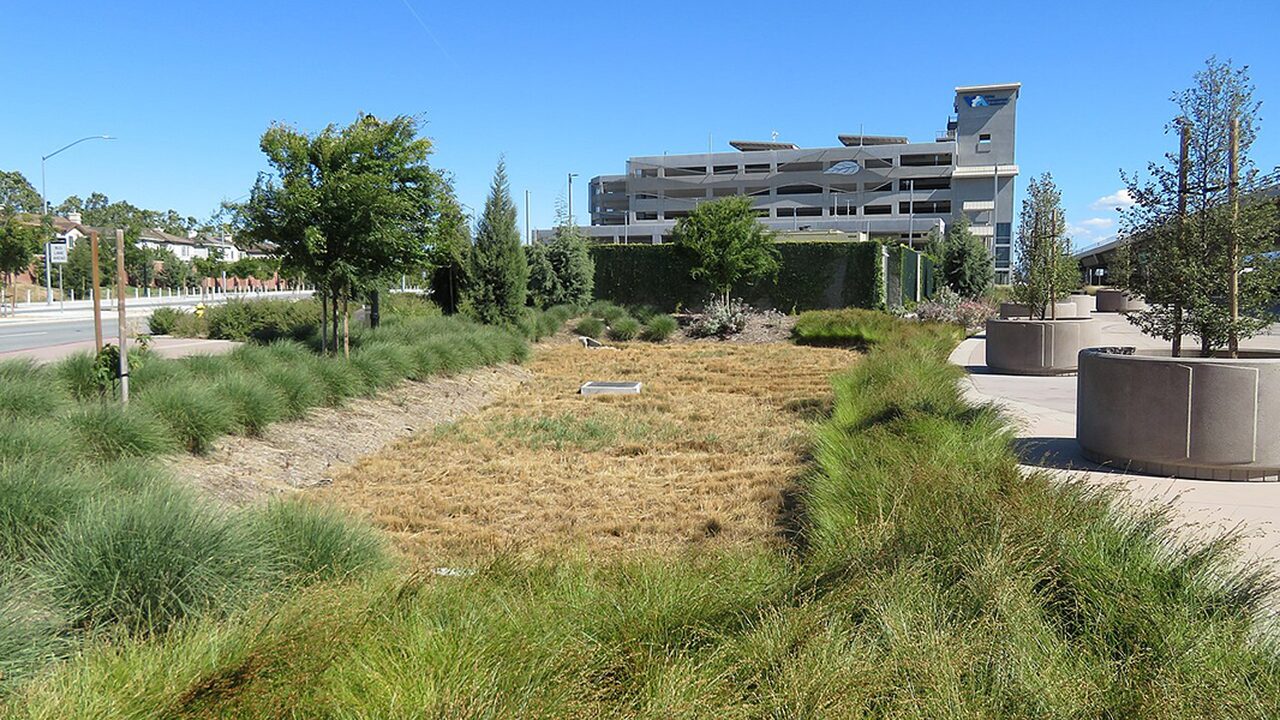
Bioswales are linear, vegetated stormwater channels that slow, filter, and infiltrate runoff using engineered soils and planting.
What this strategy does
Manages surface runoff while providing modest habitat and water-quality benefits; not intended to replace natural streams or wetlands.
Context
In Aotearoa New Zealand urban environments, bioswales are a core component of water-sensitive design, addressing increased impervious cover, contaminant loads, and flood risk while supporting incremental ecological function where space is constrained. 1
Technical considerations
Design considerations
Hydraulic form
- Design longitudinal slopes typically between 1–5 % to slow flows and prevent erosion; include overflow paths for exceedance events. 2
Planting structure
- Use zoned planting (inlet, base, side slopes) with locally appropriate, eco-sourced species matched to inundation frequency. 3
Substrate profile
- Specify layered filter media (sand, aggregate, organic content) sized for both hydraulic performance and pollutant removal. 2
Infrastructure integration
- Locate bioswales to intercept runoff from roads and paved or sealed areas via curb cuts or sheet flow, coordinated with underground drainage. 2
Implementation considerations
Design priority
- Coordinate bioswale sizing and placement early with stormwater engineers and consenting authorities.
Key constraint
- Performance is reduced where space limits treatment length or where inflow contaminant loads are high without pre-treatment. 4
Relevant tools or standards
- Use council or regional water-sensitive design manuals and NIWA/DairyNZ biofiltration and wetland guidance. 2, 5
Issues & barriers
Space constraints
- Dense urban sites may not provide sufficient width or length for effective treatment. 4
Maintenance uncertainty
- Sediment accumulation and vegetation management require long-term maintenance commitments, which are often underestimated. 6
Contamination risk
- Highly polluted runoff can overwhelm bioswales if gross-pollutant or sediment pre-treatment is not provided. 7
Regulatory gaps
- Current WSD guidance and compliance pathways in Aotearoa New Zealand are uneven across land-use types, particularly in industrial areas. 4
Synergies & opportunities
- Climate change – Reduced peak flows and localised cooling through evapotranspiration. 8
- Human wellbeing – Green streetscapes and visual amenity. 1
- Disaster risk reduction – Flood attenuation at neighbourhood scale. 8
- Freshwater security – Incremental improvement of receiving-water quality. 7
Financial case
Ecosystem services/performance value
- Reduced downstream drainage capacity requirements and contaminant treatment demand.
Cost-effectiveness: Investment logic
- New Zealand evidence shows that, when maintained, bioswales can be cost-competitive with conventional piped systems over asset life due to reduced renewal and treatment costs. 6
Monitoring & evaluation metrics
Core metric
- Runoff volume reduction and bypass frequency (flow monitoring).
Advanced or long-term metric
- Periodic water-quality sampling for suspended solids and metals at inflow and outflow. 7
Additional resources or tools
- Water Sensitive Design for Stormwater (GD2015/004). Auckland Council guidance on planning and designing WSD devices.
- Constructed Wetland Practitioner’s Guide. Design and performance guidance applicable to biofiltration systems.
- WSD Treatment Device Design Guideline. Detailed design and maintenance guidance for stormwater devices.
- Urban Nature-based Solutions. Focus on Auckland as part of the Pacific region.
References
- Meurk, C. D., et al. (2013). Ecosystem services in New Zealand cities. In Ecosystem Services in New Zealand: Conditions and Trends (pp. 254–273). Manaaki Whenua Press.
- Payne, E. G. I., et al. (2015). Adoption Guidelines for Stormwater Biofiltration Systems. Cooperative Research Centre for Water Sensitive Cities.
- Scharenbroch, B. C., Morgenroth, J., & Maule, B. (2016). Tree species suitability to bioswales and impact on the urban water budget. Journal of Environmental Quality, 45(1), 199–206.
- Wang, Y., van Roon, M., & Knight-Lenihan, S. (2021). Opportunities and challenges in water-sensitive industrial development: an Auckland case study. International Journal of Sustainable Development & World Ecology, 28(2), 143–156.
- Tanner, C. C., et al. (2022). Constructed Wetland Practitioners Guide: Design and Performance Estimates. DairyNZ/NIWA.
- Ira, S., & Simcock, R. (2019). Understanding costs and maintenance of WSUD in New Zealand. Building Better Homes, Towns and Cities National Science Challenge.
- Anderson, B. S., et al. (2016). Bioswales reduce contaminants associated with toxicity in urban stormwater. Environmental Toxicology and Chemistry, 35(12), 3124–3134.
- Lu, L., et al. (2024). Harnessing the runoff reduction potential of urban bioswales as an adaptation response to climate change. Scientific Reports, 14, 12207.
RELATED DESIGN STRATEGIES //
Specific design interventions that support ecological health, habitat quality, and species diversity across urban and built environments.