Location: Adelaide, South Australia, Australia
Project type: Temporary/modular urban greening and bioshading installation
Delivery/lead organisations: Urban Canopee; City of Adelaide
Date/period: 2021–2022
Scale: Site / Street
Primary system or theme: Urban heat mitigation; green infrastructure
Context
Why this site matters
Inner-city Adelaide experiences high summer heat exposure and limited street-tree canopy, particularly in highly serviced, space-constrained streets. 1 Municipal policy identifies shade provision and alternative greening approaches as priorities where conventional tree planting is not feasible. 2
Challenge or constraint
What wasn’t working/what needed to change
Hutt and Halifax Streets are constrained by underground services, limited soil volume, and narrow verges, restricting opportunities for large-canopy street trees. This limited the capacity to provide shade and pedestrian thermal comfort using conventional urban forestry approaches. 1, 3
Intervention
What was done
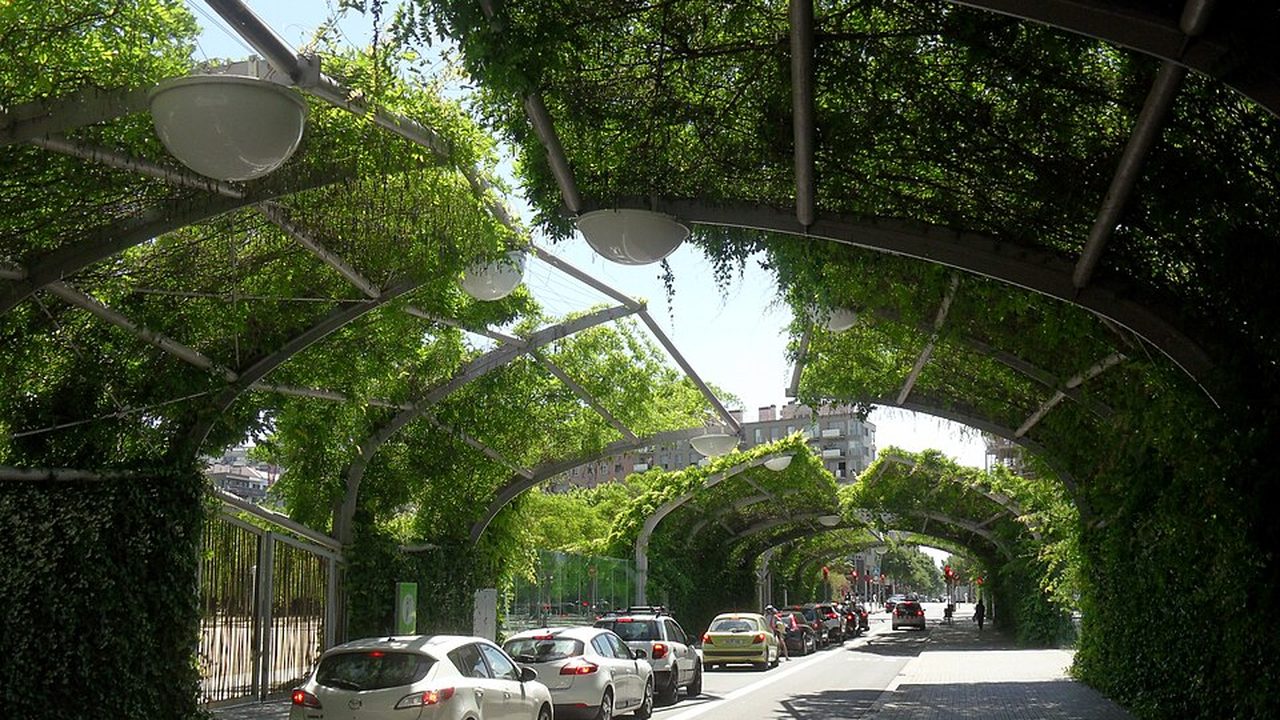
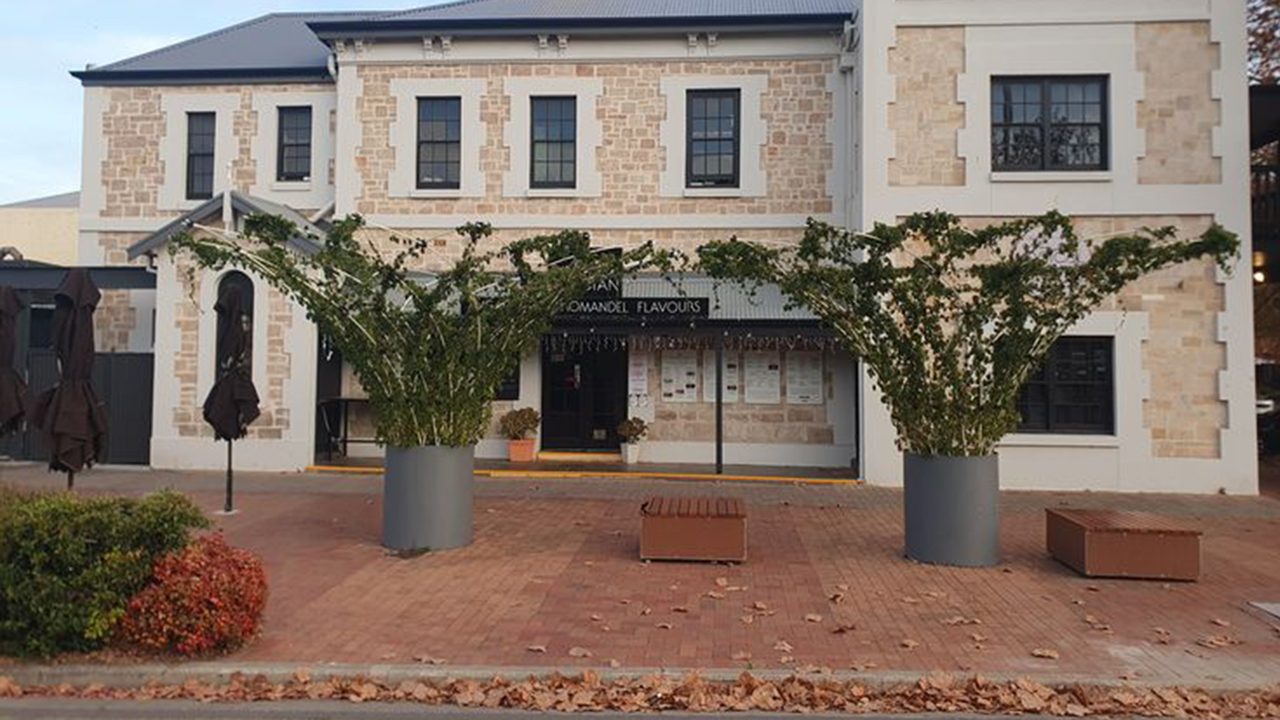
Two lightweight bioshading structures were installed to introduce vegetated shade within the existing streetscape.
Key components
- Steel frame structures designed for modular installation and removal
- Fast-growing climbing plant species trained to form a vegetated canopy
- Integrated irrigation and maintenance regime to support plant establishment 1
Implementation notes
Design & delivery considerations
- Installed as a complementary intervention where tree planting was constrained
- Required coordination with underground services and streetscape clearances
- Ongoing irrigation and maintenance are essential to achieve canopy performance 1, 2
- Designed as a modular system rather than permanent civil infrastructure
Outcomes
Observed or reported outcomes
- Structures were delivered and maintained in accordance with council greening and durability requirements 1
- The installation contributed to council objectives for increased shade and streetscape amenity 1
What is plausible but unmeasured
- Localised reductions in pedestrian heat stress beneath the vegetated canopy
- Incremental contribution to broader urban greening targets where tree planting is unfeasible
Evidence & limits
What the evidence supports
Policy and spatial analysis support the use of alternative greening and shading interventions in dense inner-city areas with low canopy cover and high heat exposure. 2 – 4
Key limitations or uncertainties
- No published monitoring data quantifying temperature reduction, microclimate change, or pedestrian comfort outcomes
- Ecological or biodiversity benefits are unmeasured and cannot be substantiated
- Performance is dependent on maintenance, irrigation reliability, and plant establishment
- Not a substitute for long-term urban tree canopy, where trees can be established
Relevance to design practice
- Modular vegetated shading can provide interim or complementary shade where trees are constrained
- Benefits should be framed as amenity and shade provision, not proven ecological enhancement
- Use bioshading systems selectively, alongside long-term canopy strategies and realistic maintenance planning
References
- Urban Canopee. (n.d.). Growing shade, growing impact – Urban Canopee case study.
- Green Adelaide. (2025). Urban Greening Strategy for Metropolitan Adelaide. Government of South Australia.
- Green Adelaide. (2022). Urban Heat and Tree Canopy Mapping Project. Government of South Australia.
- DSM GeoData & Government of South Australia. (2023). Urban Tree Canopy Data Analysis and Reporting.