Location: Wynyard Quarter, Auckland, Aotearoa New Zealand
Project type: Waterfront brownfield redevelopment – green stormwater infrastructure
Delivery/lead organisations: Auckland Council; Auckland Transport; Eke Panuku Development Auckland
Date/period: 2010s – ongoing
Scale: Site / Neighbourhood
Primary system or theme: Urban stormwater; water-sensitive design
Context
Why this site matters
Wynyard Quarter is a large-scale waterfront regeneration area with high imperviousness and direct hydrological connection to the Waitematā Harbour. Stormwater quality and runoff management were identified as critical issues within Auckland’s water-sensitive design framework for redeveloping brownfield sites. 1
Challenge or constraint
What wasn’t working/what needed to change
Conventional piped stormwater systems provided limited treatment of road runoff before discharge to the harbour. The precinct required visible, at-source treatment systems that could operate within a constrained public-realm streetscape and meet Auckland Council and Auckland Transport performance requirements. 1
Intervention
What was done
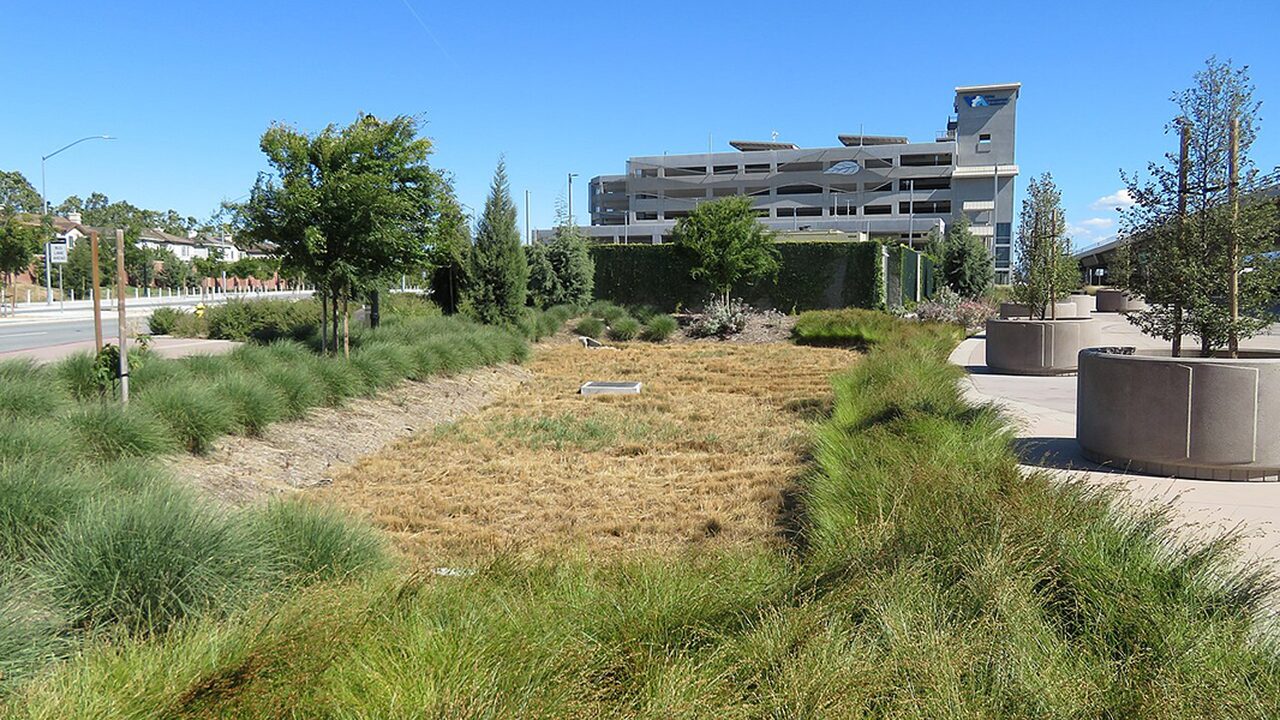
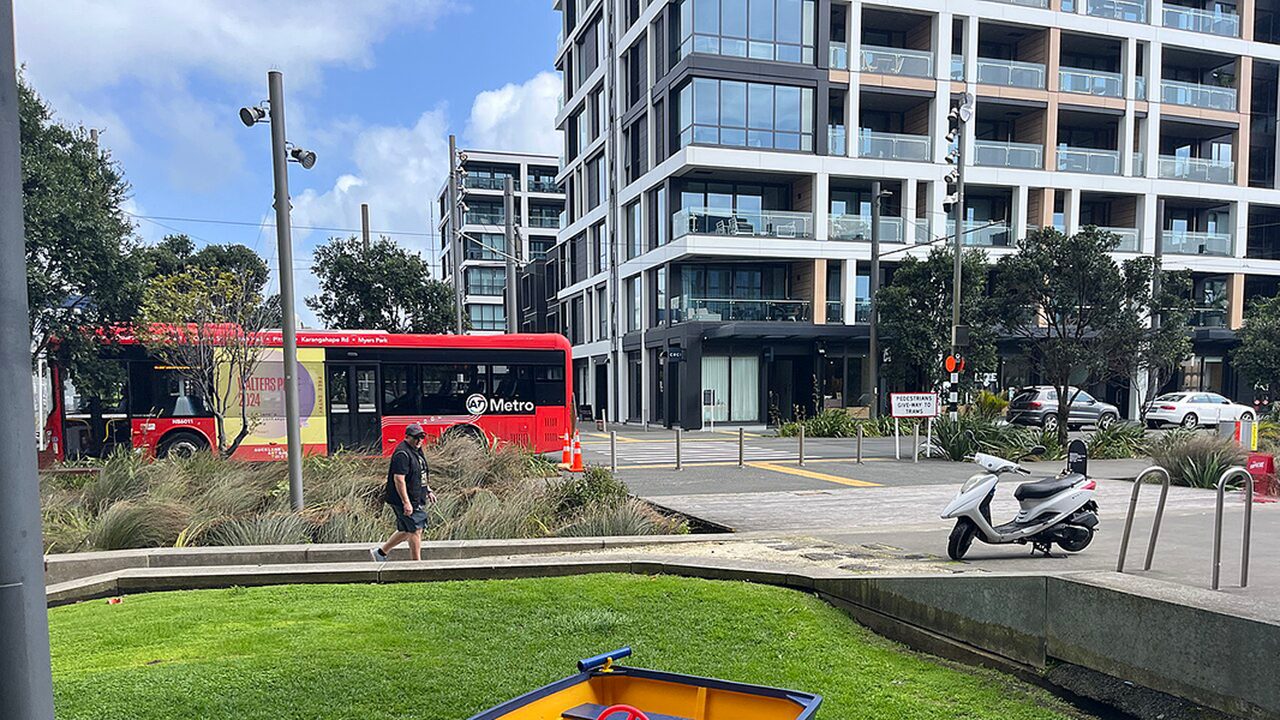
Linear bioswales were installed along Jellicoe Street and others as part of an integrated water-sensitive design approach for the precinct.
Key components
- Kerbside bioretention swales capturing runoff from roads and pavements
- Engineered soil media, mulch layers, and underdrain systems
- Planting designed for coastal urban conditions and high infiltration rates 2
- Integration with streetscape, pedestrian movement, and utilities
Implementation notes
Design & delivery considerations
- Systems designed primarily for water-quality treatment and flow attenuation rather than ecological habitat
- Early Auckland bioretention projects highlighted plant stress under free-draining media and low moisture retention
- Subsequent guidance emphasised soil media specification, mulch depth, and plant selection to improve survivability 2
- Ongoing maintenance required to manage sediment accumulation and vegetation health 1
Outcomes
Observed or reported outcomes
- Effective incorporation of bioretention systems into a dense waterfront streetscape 1
- Alignment with Auckland Council water-sensitive design objectives for stormwater treatment and runoff management 1
What is plausible but unmeasured
- Reduction in contaminant loads entering the Waitematā Harbour
- Improved microclimate and pedestrian amenity along Jellicoe Street
Evidence & limits
What the evidence supports
Available documentation supports the role of the Wynyard Quarter bioswales as functional stormwater treatment devices implemented in accordance with Auckland Council and Auckland Transport technical guidance. 1, 2
Key limitations or uncertainties
- No publicly available site-specific monitoring data on pollutant removal performance
- Limited reporting on long-term vegetation performance at this site
- Outcomes largely inferred from design intent and alignment with standards rather than post-implementation monitoring 1 – 3
Relevance to design practice
- Bioswales can be successfully integrated into high-profile public-realm streets where stormwater treatment and urban design objectives align
- Avoid over-claiming ecological outcomes where monitoring data are absent
- Transferability depends on clear maintenance responsibilities, appropriate soil and mulch specifications, and alignment with local technical standards
References
- Auckland Council. (2015). Water Sensitive Design for Stormwater (GD04). Auckland Council Technical Guidance.
- Auckland Transport. (2021). Bioretention Planting Guide. Auckland Transport.
- Fletcher, T. D., Shuster, W., Hunt, W. F., et al. (2015). Water sensitive design in Auckland. In Handbook of Water Sensitive Urban Design. Wiley.