Location: Te Kauwhata, Waikato, Aotearoa New Zealand
Project type: Community-based organic waste infrastructure and education initiative
Delivery/lead organisations: Para Kore Marae Incorporated; Te Kauwhata Primary School; CarbonCycle Company; Waikato District Council
Date/period: 2023 – ongoing
Scale: Site / Neighbourhood
Primary system or theme: Organic waste management; community stewardship; soil systems
Context
Why this site matters
Te Kauwhata is a small Waikato township where organic waste has historically been managed through landfill disposal, consistent with district waste management practices. 1 The compost hub was established at a primary school site to support local waste minimisation objectives while embedding community and educational functions within a visible, accessible location. 1
Challenge or constraint
What wasn’t working/what needed to change
Food scraps from households and the school were being disposed of via landfill, contributing to avoidable organic waste volumes and associated emissions. 1 Prior to the project, there was limited local infrastructure or a coordinated programme to support community-scale composting and applied waste education. 2
Intervention
What was done
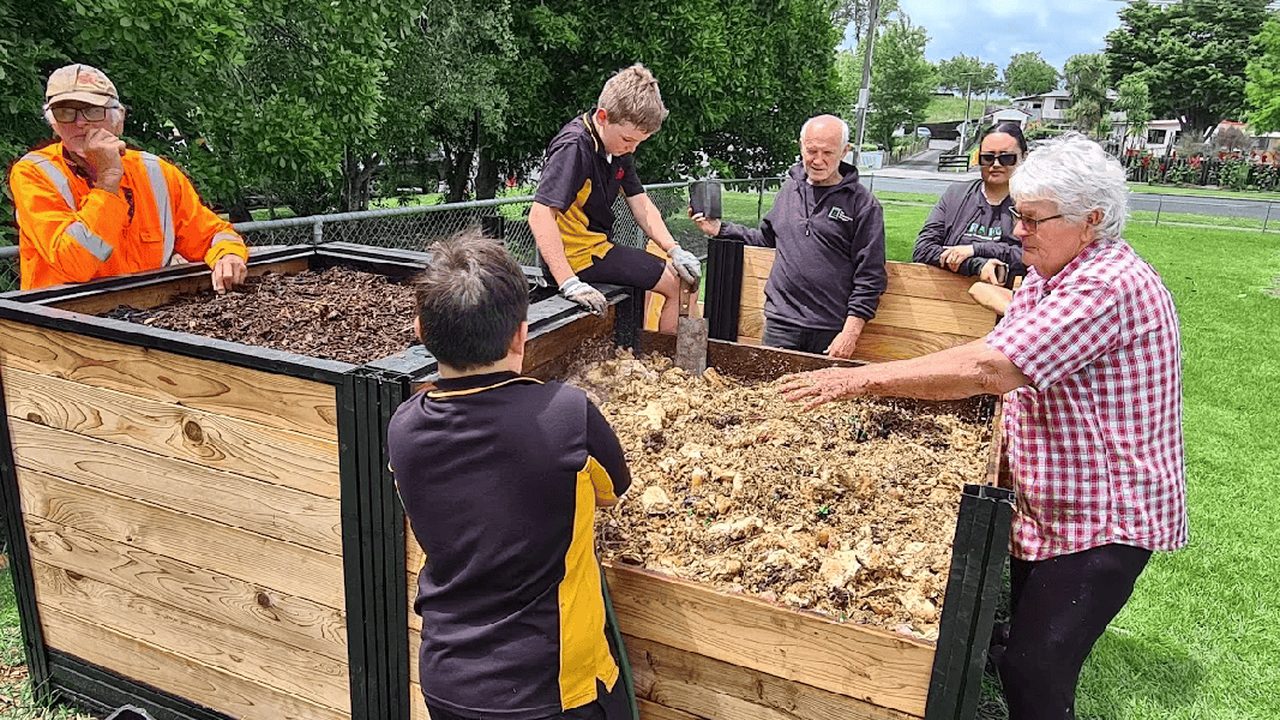
A community compost hub was established using a managed hot-composting system designed to process food scraps from the school and the surrounding community.
Key components
- Installation of a hot composting system suitable for regular community inputs 1
- Appointment of a compost hub coordinator role to manage operations and education 1
- Integration of composting activities into school learning and community engagement programmes 3
- Alignment with council-supported waste minimisation funding and reporting frameworks 1, 2
Implementation notes
Design & delivery considerations
- System performance depends on consistent input quality and active management
- Ongoing coordination is required between school operations, community users, and council reporting processes 1
- Compost end-use is limited to local school and community garden contexts, not commercial distribution
- No formal soil or ecological monitoring framework is embedded in project reporting 1, 2
Outcomes
Observed or reported outcomes
- Diversion of several thousand litres of food scraps from landfill during early operation, as reported by Waikato District Council 2
- Establishment of a functioning, staffed community composting facility integrated with a primary school 1
- Documented participation by students and community members in composting and waste education activities 3
What is plausible but unmeasured
- Improved soil condition in gardens using the compost
- Increased community awareness and behaviour change around organic waste
- Broader environmental benefits associated with reduced landfill disposal
Evidence & limits
What the evidence supports
Available council and partner reporting demonstrates measurable local organic waste diversion and sustained operation of a community-scale composting system when supported by coordination and funding. 1, 2
Key limitations or uncertainties
- No site-specific data on soil quality, soil biology, or biodiversity outcomes
- Outcomes are reported at a small, local scale and are not indicative of district-wide waste reduction
- Performance is dependent on ongoing resourcing and policy support within council waste frameworks 4, 5
Relevance to design practice
- Community compost hubs require dedicated management roles and clear operational responsibility to remain effective 1
- Co-location with schools or community facilities can support participation and education outcomes, but requires governance alignment 3
- Avoid implying soil or biodiversity benefits without monitoring data
- Transferability depends on council policy support, waste levy funding mechanisms, and committed host organisations 5
References
- Waikato District Council. (2023). Te Kauwhata Primary launches community composting hub.
- Waikato District Council. (2024). Te Kauwhata celebrates environmental win thanks to community composting hub.
- New Zealand Association for Environmental Education. (2024). Te Kauwhata Community Compost Hub – Spotlight.
- Para Kore. (2024). Ngā Karere a Para Kore (community composting coverage).
- Waikato District Council. (2025). Waste Minimisation and Management Plan 2025–2031.