Location: Wellington City Centre, Te Whanganui-a-Tara, Aotearoa New Zealand
Project type: Street-side stormwater treatment and streetscape upgrade
Delivery/lead organisations: Wellington City Council
Date/period: 2010s – ongoing
Scale: Site / Urban
Primary system or theme: Urban stormwater, water-sensitive urban design
Context
Why this site matters
Central Wellington streets discharge untreated stormwater runoff directly to the municipal stormwater network and ultimately to Te Whanganui-a-Tara / Wellington Harbour. 1 Street-side rain gardens were introduced to integrate stormwater quality treatment into dense pedestrian and transport corridors as part of wider water-sensitive urban design (WSUD) and public-realm upgrades. 2
Challenge or constraint
What wasn’t working/what needed to change
Conventional kerb-and-pipe systems conveyed sediment- and metal-laden runoff from heavily trafficked streets with limited on-site treatment, contributing to contaminant loads in receiving waters. 3 Retrofitting treatment systems was constrained by narrow road reserves, underground services, pedestrian movement, and streetscape performance requirements.
Intervention
What was done
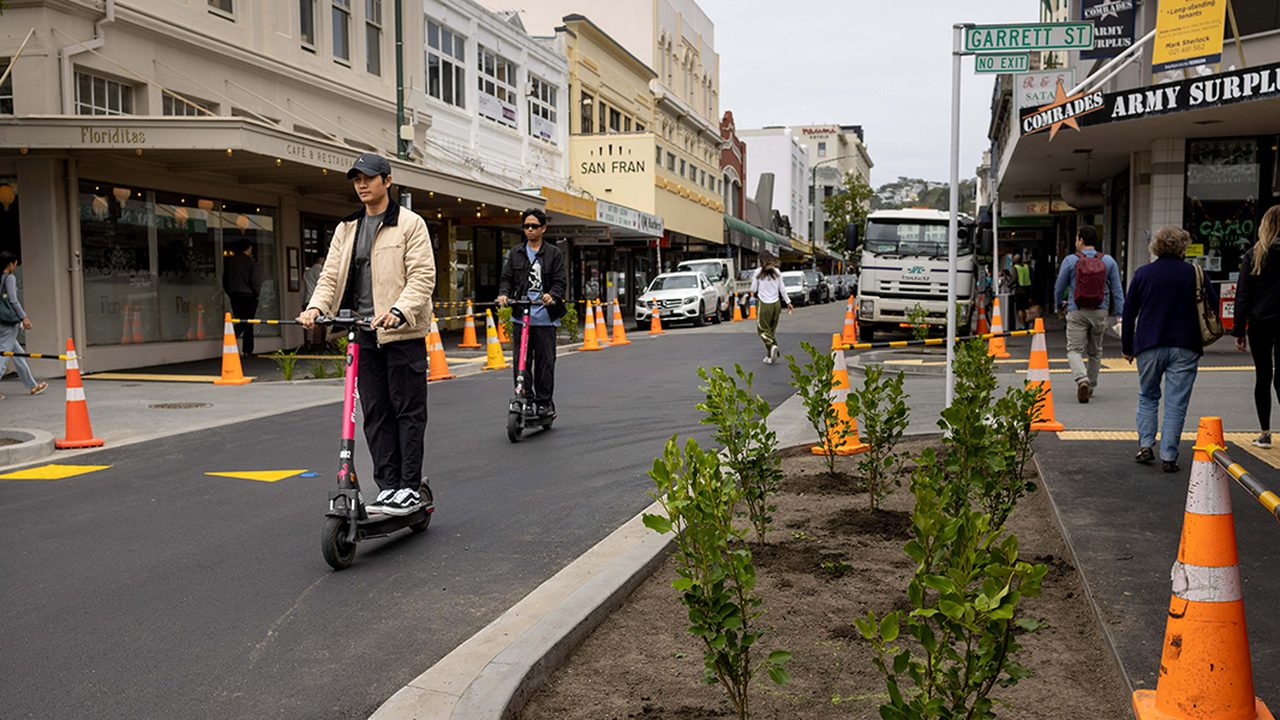
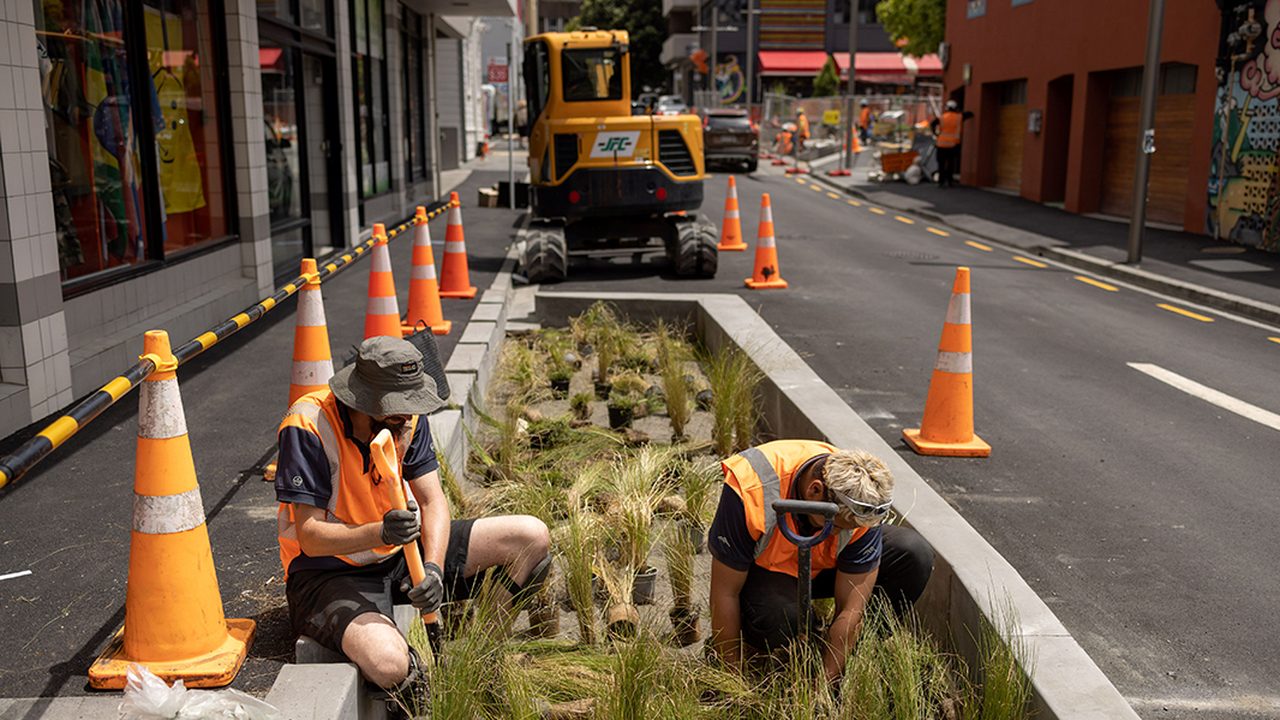
Wellington City Council implemented street-side rain gardens and tree pits along Lower Cuba Street and the waterfront quays as shallow bioretention systems integrated into streetscape upgrades.
Key components
- Kerb inlets directing road runoff into planted bioretention cells
- Engineered soil media for filtration and pollutant capture
- Predominantly native planting tolerant of urban hydrology and maintenance regimes
- Controlled overflow back to the stormwater network 2, 4
Implementation notes
Design & delivery considerations
- Systems function as at-source treatment devices within a conventional piped network
- Design performance is based on standard bioretention principles rather than site-specific ecological targets 2, 4
- Maintenance access and sediment removal are critical to long-term function
- Treatment effectiveness depends on inflow capture, soil media condition, and traffic-derived pollutant loads 4
Outcomes
Observed or reported outcomes
- Implementation of functioning street-side bioretention systems consistent with Wellington City Council WSUD guidance 2
- Reduction of suspended solids and sediment-bound contaminants is supported by design intent and evidence from comparable bioretention systems, rather than site-specific performance monitoring 4, 3
- Improved streetscape amenity through integrated green infrastructure 2
What is plausible but unmeasured
- Localised reduction in contaminant loads entering the stormwater network draining to Wellington Harbour
- Contributions to urban greening and visual amenity beyond stormwater function
Evidence & limits
What the evidence supports
Rain gardens are an established WSUD tool for improving urban stormwater quality by filtering sediments and associated contaminants at source. 2 – 4
Key limitations or uncertainties
- No published site-specific water-quality or ecological monitoring for Lower Cuba Street or The Quays
- Benefits are local and incremental, not catchment-scale
- Performance is sensitive to maintenance, sediment loading, and retrofit constraints
- No evidence of measurable downstream improvements in harbour or stream ecological condition attributable to these installations
Relevance to design practice
- Integrate bioretention into streetscapes where conventional treatment retrofits are spatially constrained
- Avoid claiming quantified ecological or harbour-scale outcomes without site-specific monitoring data
- Street-side rain gardens should be selected as part of a broader stormwater management strategy, not as standalone ecological restoration measures
References
- Wellington City Council. (2012). Case study: Street-side rain gardens, Wellington.
- Wellington City Council. (2014). Water sensitive urban design: A guide for WSUD stormwater management in Wellington (Appendix 1).
- Greater Wellington Regional Council. (2008). Stormwater contaminants in urban streams in the Wellington region.
- RCA Forum. (n.d.). Stormwater treatment case studies.