Compact high-yield urban agriculture techniques
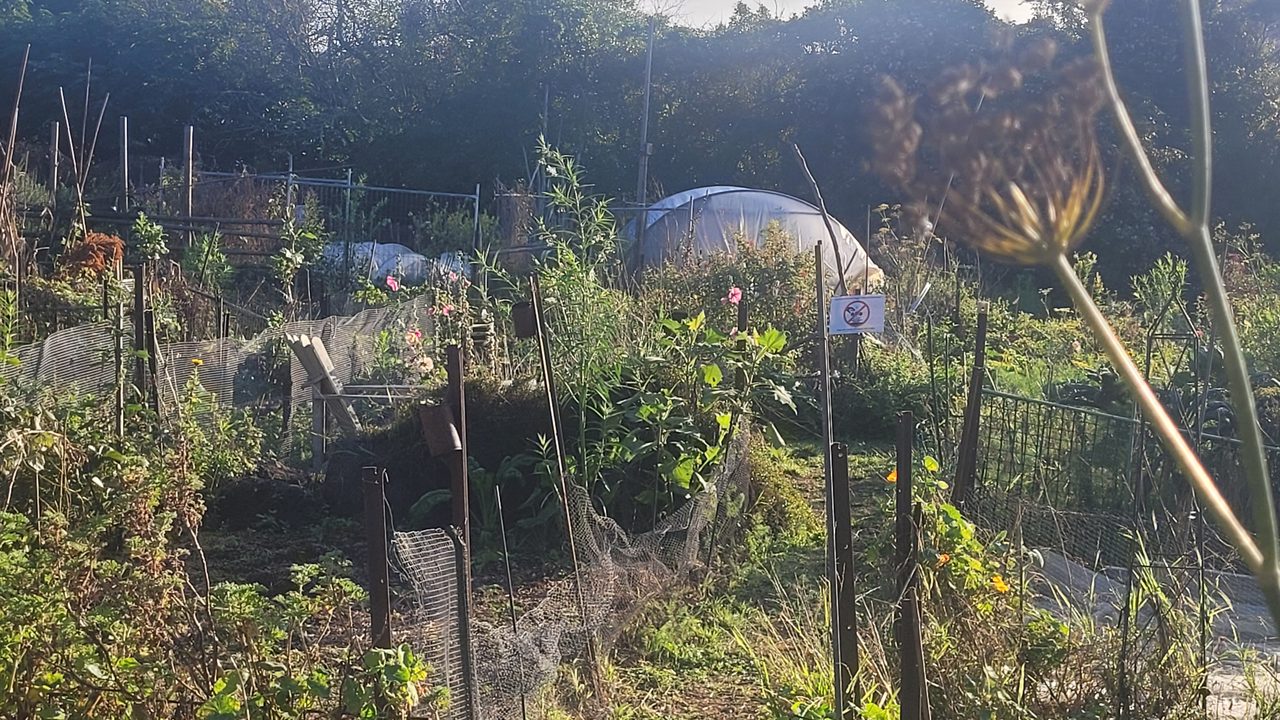
Definition
Design approaches that enable intensive food production in limited urban space through efficient spatial layouts, resource use, and crop management.
What this strategy does
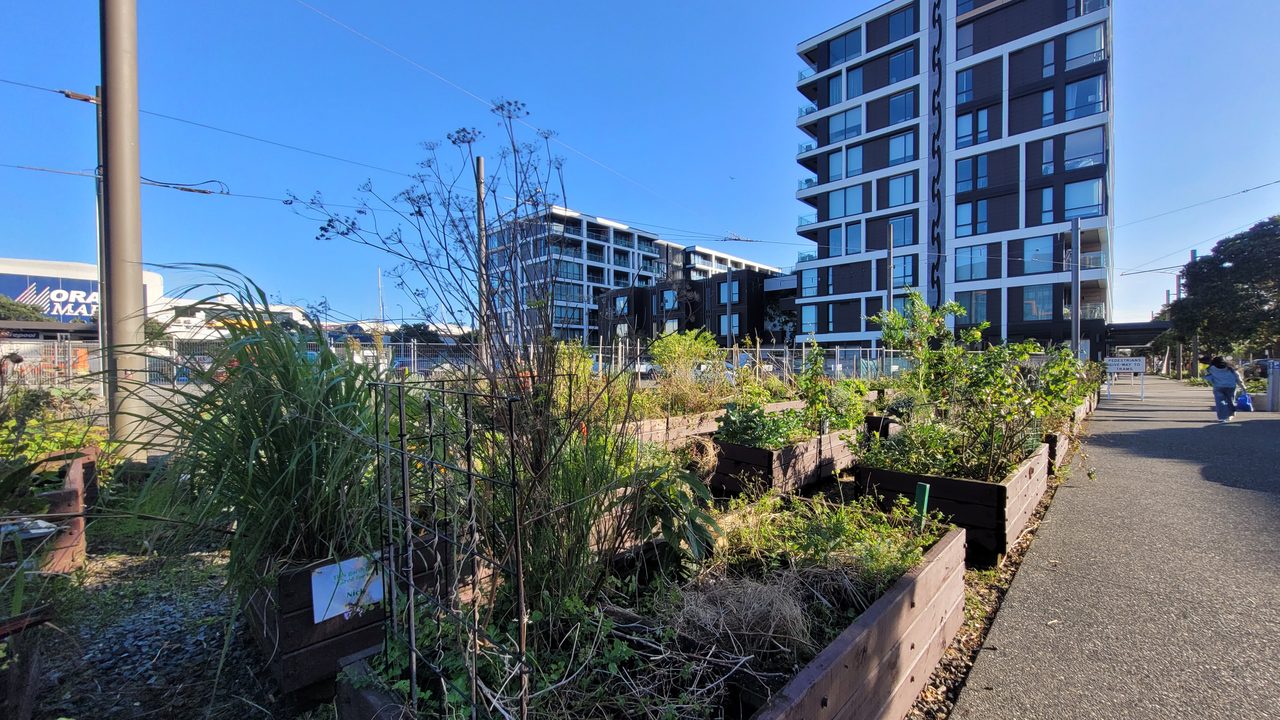
Supports food production on constrained sites through intensive planting, controlled growing systems, and small-footprint infrastructure, helping to avoid low-density or land-extensive agricultural models. This approach may be particularly relevant in urban contexts where land availability is limited. In biodiversity terms, it can mean more land is available for conservation or regeneration, rather than being converted or maintained for agricultural use.
Context
In urban and peri-urban New Zealand settings, land scarcity, soil contamination, and competing land uses limit conventional food production. Compact systems allow food growing to be integrated into urban form while managing environmental and regulatory constraints. Making food growing more compact may enable more land to be used for conservation purposes.
Technical considerations
Design considerations
Crop diversity and layout
- Use polycultures, mixed planting, and edge planting to reduce pest pressure and support beneficial invertebrates in small plots.1, 2, 3
Resource-efficient systems
- Prioritise drip irrigation, compost-based fertility, and closed-loop nutrient systems to maintain yields while limiting water and nutrient losses.3, 4
Soil and growing media
- Use raised beds or imported clean growing media where urban soil contamination is likely.5
Compact production systems
- Apply vertical growing, hydroponics, or lightweight substrates only where energy demand and biodiversity impacts are addressed at the design stage.6, 7
Implementation considerations
Design priority
- Locate food production where access to water, sunlight, and management oversight can be reliably maintained.
Key constraint
- High-yield systems are input-sensitive; poorly managed systems can increase energy use or reduce ecological value over life cycles.3, 4, 6
Issues & barriers
Biodiversity outcomes
- Food-growing areas dominated by non-native crops generally provide lower native biodiversity value unless complemented by adjacent native planting.8, 9
Space and land cost
Resource inputs
- High-yield systems can require significant water, nutrient, and energy inputs, reducing sustainability if poorly designed.3, 4, 6
Regulatory complexity
Synergies & opportunities
- Climate change – Contributes to urban cooling, stormwater interception, and local climate resilience when integrated with green infrastructure.13, 14
- Human wellbeing – Supports access to green space, community interaction, and physical activity.14, 15
- Food security – Improves local food access and supply resilience, particularly at the neighbourhood scale.16, 17
- Waste and pollution management – Enables composting, nutrient recovery, and organic waste reuse within urban systems.18, 19
Financial case
Ecosystem services & performance value
Cost-effectiveness: Investment logic
- Best suited to targeted sites where land efficiency, community benefit, or resilience outcomes justify higher management inputs.3, 10
Monitoring & evaluation metrics
Core metric
Advanced or long-term metric
- Invertebrate abundance and diversity
- Soil health indicators (organic matter, contamination screening)5, 8
Additional resources or tools
- Sustainable Living – Urban Farming & Permaculture. Practical guidance and NZ-based examples.
- MfE Urban Design Toolkit. Urban planning and design guidance.
- NUWAO Urban Agriculture. Design and practice resources.
References
- Wan, N. et al. (2018). Increasing plant diversity with border crops reduces insecticide use and increases crop yield in urban agriculture. eLife, 7. https://doi.org/10.7554/eLife.35103
- Tscharntke, T. et al. (2021). Beyond organic farming—harnessing biodiversity-friendly landscapes. Trends in Ecology & Evolution. https://doi.org/10.1016/j.tree.2021.06.010
- McDougall, R., Kristiansen, P., & Rader, R. (2018). Small-scale urban agriculture results in high yields but requires judicious management of inputs to achieve sustainability. Proceedings of the National Academy of Sciences, 116, 129–134. https://doi.org/10.1073/pnas.1809707115
- Dorr, E. et al. (2023). Food production and resource use of urban farms and gardens: a five-country study. Agronomy for Sustainable Development, 43. https://doi.org/10.1007/s13593-022-00859-4
- Salomon, M. et al. (2020). Urban soil health: A city-wide survey of chemical and biological properties of urban agriculture soils. Journal of Cleaner Production, 275, 122900. https://doi.org/10.1016/j.jclepro.2020.122900
- Payen, F. et al. (2022). Food production and crop yields of urban agriculture: A meta-analysis. Earth’s Future, 10. https://doi.org/10.1029/2022EF002748
- Al-Kodmany, K. (2020). The Vertical Farm: Exploring Applications for Peri-urban Areas. In The Vertical Farm. https://doi.org/10.1007/978-3-030-37794-6_11
- Barratt, B. I. et al. (2015). Biodiversity of Coleoptera and other invertebrates in urban gardens in a New Zealand city. Insect Conservation and Diversity, 8(5), 428–437.
- van Heezik, Y. et al. (2016). Influence of vegetation composition and structure on beetle communities in private gardens in New Zealand. Landscape and Urban Planning, 151, 79–88.
- Hardman, M., Clark, A., & Sherriff, G. (2022). Mainstreaming urban agriculture: opportunities and barriers to upscaling city farming. Agronomy. https://doi.org/10.3390/agronomy12030601
- Whittinghill, L., & Sarr, S. (2021). Practices and barriers to sustainable urban agriculture. Urban Science. https://doi.org/10.3390/urbansci5040092
- Srinivasan, K., & Yadav, V. (2023). Barriers to adoption of smart urban agriculture systems. Journal of Decision Systems, 33, 878–912. https://doi.org/10.1080/12460125.2023.2189652
- Nassary, E. et al. (2022). Urban green packages as nature-based solutions for climate adaptation. Journal of Environmental Management, 310, 114786. https://doi.org/10.1016/j.jenvman.2022.114786
- Schmidt, K., & Walz, A. (2021). Ecosystem-based adaptation through residential urban green structures. One Ecosystem, 6. https://doi.org/10.3897/oneeco.6.e65706
- Ilieva, R. et al. (2022). Socio-cultural benefits of urban agriculture. Land, 11(5). https://doi.org/10.3390/land11050622
- Lucertini, G., & Di Giustino, G. (2021). Urban and peri-urban agriculture as a tool for food security and climate adaptation. Sustainability, 13, 5999. https://doi.org/10.3390/SU13115999
- Pradhan, P. et al. (2023). Multiple benefits of urban agriculture beyond food. Global Food Security. https://doi.org/10.1016/j.gfs.2023.100700
- Weidner, T., & Yang, A. (2020). Urban agriculture and organic waste valorisation. Journal of Cleaner Production, 244, 118490. https://doi.org/10.1016/j.jclepro.2019.118490
- Mohareb, E. et al. (2017). Reducing food system energy demand while scaling urban agriculture. Environmental Research Letters, 12. https://doi.org/10.1088/1748-9326/aa889b
RELATED DESIGN STRATEGIES //
Specific design interventions that support ecological health, habitat quality, and species diversity across urban and built environments.